quick summary
- Large corporate headquarters are still useful for some organizations, but many companies are reviewing whether they really need that much permanent space.
- Private offices allow you to maintain a professional presence in Madrid with greater cost control and more adaptability.
- Flexibility, talent attraction, and productivity are now factors as important as office size.
- Hybrid models are driving demand for flexible offices, on-demand meeting rooms, and ready-to-use spaces.
- The future of offices lies in more efficient and adaptable spaces, designed for how companies work today, not for work models of the past.
For years, having a large corporate headquarters was almost a statement of power. More square footage, more workstations, more meeting rooms, a stronger image. For many companies, the office was the visible center of the organization.
Today, however, the question has changed.
The future of private offices versus large corporate headquarters isn't simply a matter of choosing between "big" and "small." The real question is more practical: what kind of space helps a company work better, spend more wisely, and adapt to teams that are no longer always in the same place?
For many organizations, especially those with hybrid teams, traveling employees, or a presence in multiple cities, the small and flexible offices They are gaining ground. Not because large headquarters have ceased to make sense, but because they no longer fit as well with the way many companies work.
A company may need an address in Madrid, professional meeting roomsa meeting point for your sales team or a private space for regular visitsBut that doesn't mean you need a large, permanent headquarters, with all the costs, contracts, and responsibilities that entails.
Why companies are rethinking the large corporate headquarters model
The large corporate headquarters hasn't disappeared. For certain companies, it remains useful: large on-site staff, highly centralized teams, daily customer service, or a strong need for institutional representation. But many companies no longer operate this way.
Hybrid work has altered the actual occupancy of offices. In some organizations, there's less activity on Mondays and Fridays. In others, employees only come in for meetings, team sessions, or specific project phases. The result is clear: there's square footage that's paid for every month, but not always used.
A company that previously needed 150 permanent positions may discover that, in practice, it rarely occupies more than 60 or 70 at any one time. Another may have teams spread across Madrid, Barcelona, Lisbon, London, or Paris, with periodic visits but no daily presence. In such cases, maintaining a large headquarters can become a rigid solution for a much more flexible reality.
Operating costs also play a role. A large headquarters isn't just about rent. It involves maintenance, supplies, furniture, connectivity, cleaning, reception, incident management, security, daily operations, and constant decisions about the space.
Sometimes it's not visible from the outside, but anyone who manages offices knows: every square meter requires attention.
For an established company seeking a presence in Madrid, this consideration is especially important. Being in the city can be strategic. It can facilitate client meetings, interviews, internal sessions, or visits from international employees. But having a presence doesn't always mean adopting a large, permanent structure.
The traditional office setting reflected a more predictable way of working. All employees went to the office, almost every day, with similar schedules. Today, that predictability is less. Teams change, projects are launched and completed, some people travel, others work remotely, and still others only need physical spaces at specific times.
That's why many companies are reviewing their model. Not from an abstract idea of modernity, but from a simple question: are we using the space we pay for effectively?
The operational and economic advantages of private offices
More private offices offer a clear advantage.They allow you to adjust the space to the company's actual needs. Not to the total staff on a spreadsheet. Not to an optimistic occupancy forecast. To the reality of day-to-day operations.
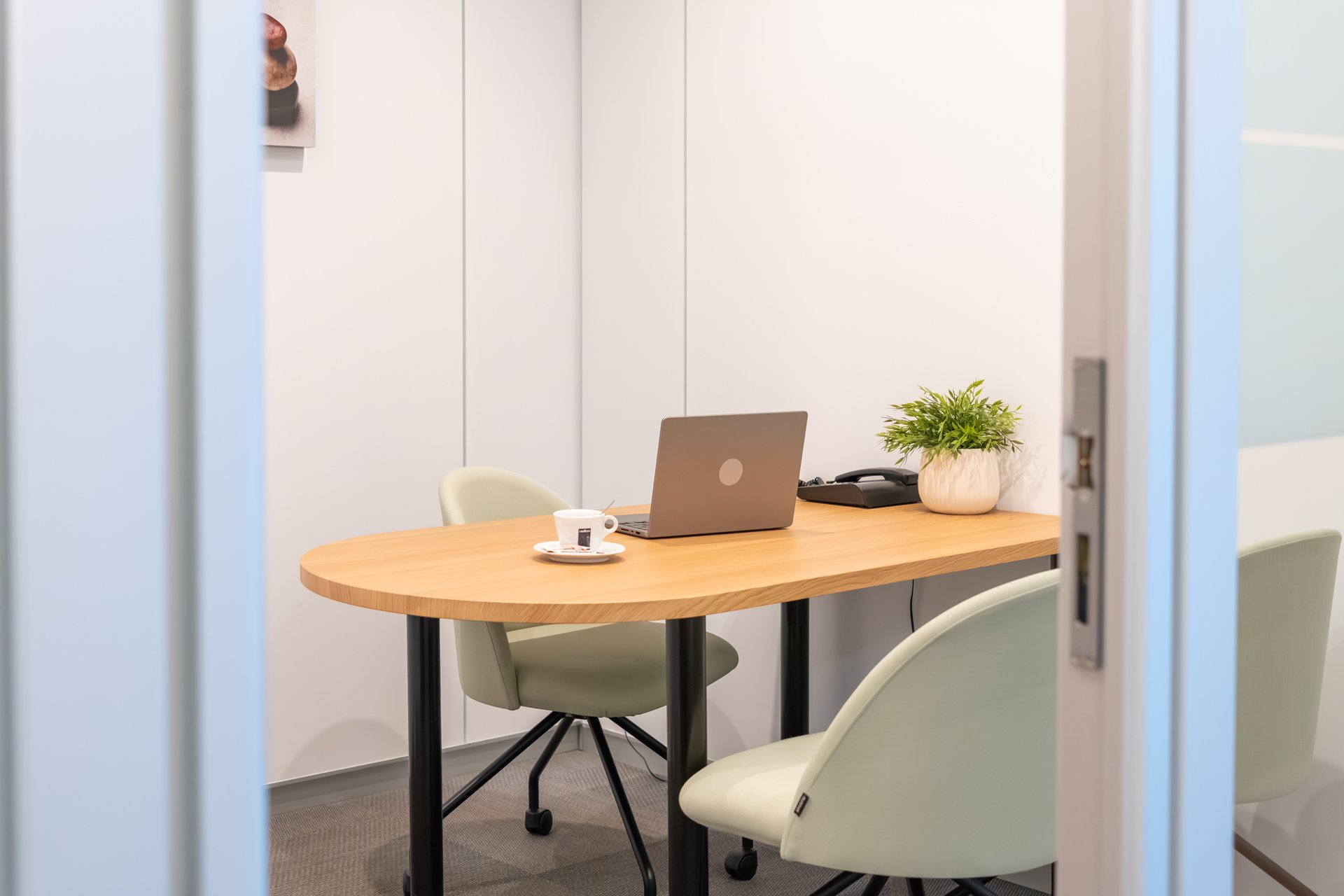
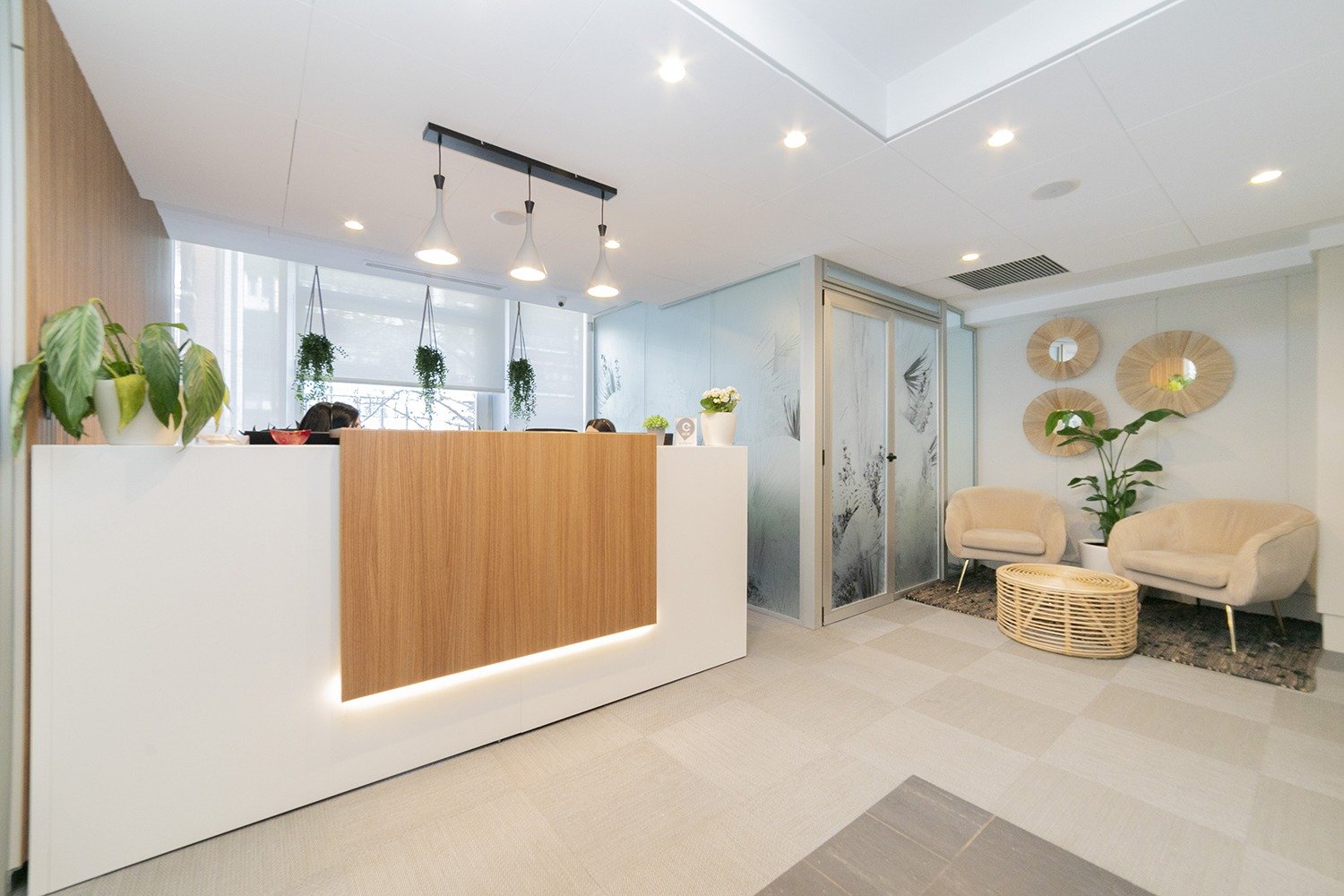
This is especially useful for companies that need a professional base in Madrid without opening a large branch of their own. For example, an international company might need an office for three or four people, an operational management, access to meeting rooms and a suitable environment for receiving clients. With a small office, you can achieve this without taking on a full headquarters.
A small, well-managed office can reduce fixed costs while maintaining a professional image. The company still has a private space, a clear address, and access to useful services. But it avoids overexposing its physical presence.
Among the most common advantages are:
- Lower financial commitment.
- Faster start to work.
- Possibility of growing or reducing space according to need.
- Less time spent on operational tasks.
- Access to shared services without managing them internally.
- Better use of each job position.
Let's consider a sales team that visits Madrid two or three times a month. They need to meet, prepare proposals, receive clients, and work for a few hours between visits. A large headquarters wouldn't make sense. A flexible office, with available meeting rooms and good transport links, would.
The same applies to companies testing a new market. They might want to launch operations in Madrid, but they don't yet know if the team will grow in six months or if the operation will remain small. In that context, a long-term contract and a traditional office can be more of a hindrance than a help.
Private offices They also simplify management. When the space is ready for use, with furniture, a professional network, reception, cleaning services, and meeting rooms available, the company can focus on its core business. It doesn't have to figure out every detail from scratch.
And this has practical value.
Because the cost of an office isn't just the monthly bill. It's also the time it consumes. Every breakdown, every supplier, every connection problem, every furniture change, and every occasional need becomes another task for someone within the company.
When the space is ready, that load decreases.
For companies with lean structures, hybrid teams, or traveling employees, this difference can be decisive.
Flexibility, talent and productivity: the new decision factors
Previously, many decisions about offices were made based on the logic of space: how many employees, how many positions, how many square meters.
Flexibility has become a core criterion because companies need to respond to rapid changes. A team might expand for a project. A branch office might need a temporary presence in Madrid. A major client might require more in-person meetings for several months. Or a department might only meet once a week.
The office must be able to keep up with those changes.
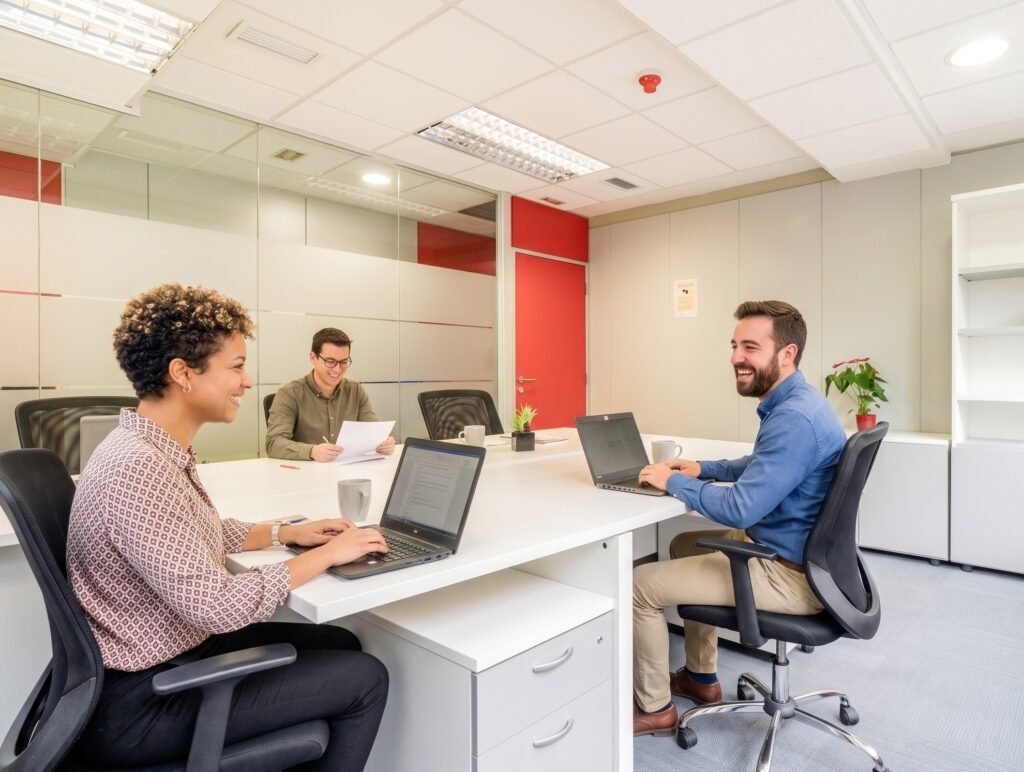
There's also the talent factor. Many professionals value autonomy, but they don't want to completely lose face-to-face contact. They want to work from home some days, but they also need a place to meet, concentrate, or feel part of a team.
This is where the small office serves an interesting purpose. It doesn't try to replicate the old model in miniature. It can function as a connection point.
A hybrid team can use it for:
- Weekly meetings.
- Planning sessions.
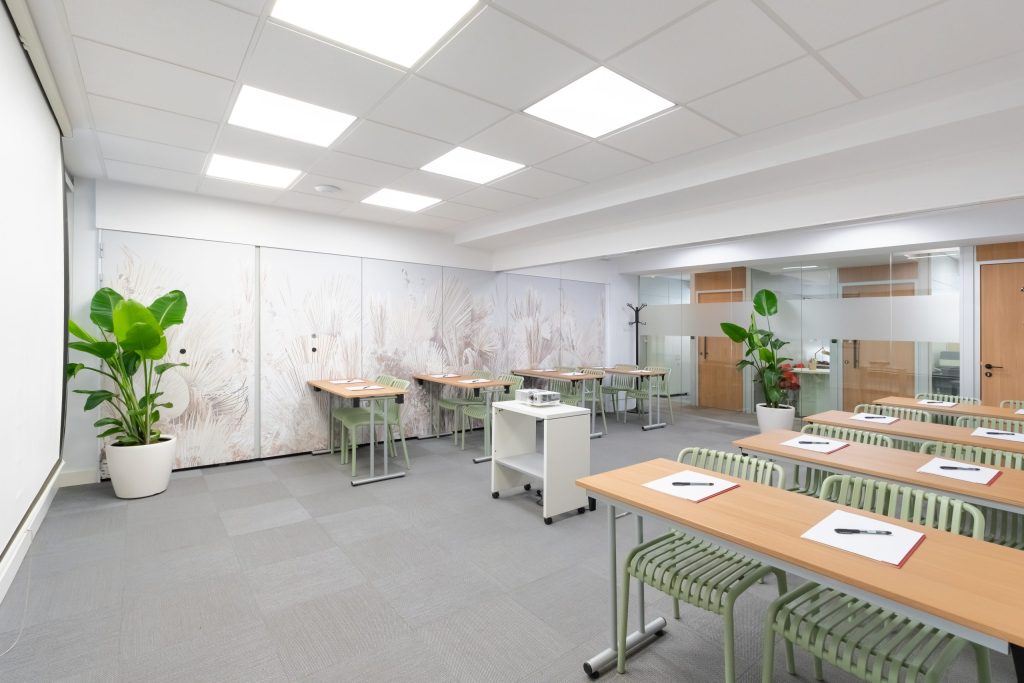
- Internal training.
- Interviews with candidates.
- Visits from employees from other cities.
- Sessions with clients or suppliers.
The space doesn't need to be there every day for it to have value. In fact, its value can lie precisely in its use when it contributes something concrete.
Productivity is also understood in another way. It's not just about having an assigned desk. It's about creating conditions for working well: good internet connection, quiet, suitable rooms, easy access, reliable services, and an environment that doesn't force the team to improvise.
An employee traveling to Madrid for two days of meetings needs something very simple: arrive, log on, and work. They shouldn't waste time looking for cafes with power outlets, available meeting rooms, or a stable connection for an important video call.
When multiple people are traveling, when clients are waiting, or when a meeting is crucial to a business decision, the environment matters. A professional workspace reduces friction. It prevents delays, interruptions, and the need for emergency solutions.
In Madrid, location remains key. Well-connected areas such as Atocha They facilitate arrival by train, metro or taxi. Established business areas such as the surroundings of chambery They offer another advantage: a professional presence, proximity to businesses, and good connections to different parts of the city.
Not all businesses need to be in the same neighborhood. But they do need their employees, customers, or visitors to be able to get there easily.
The office of the future will not just be a place to sit. It will be a tool for working better when in-person work truly makes sense.
How hybrid workspaces are transforming the office real estate market
The office market is changing because the way we use space has also changed. For a long time, traditional leasing was the default solution. You found a space, signed a contract, fitted it out, and took on the management. That model still exists. But it's no longer the only answer.
Hybrid workspaces, flexible offices, and professional coworking spaces They have grown because they fulfill a need that was previously poorly addressed: companies that need quality, privacy and services, but not necessarily a conventional headquarters.
The word coworking is sometimes still associated with freelancers, startups, or shared desks. That image falls short. Many flexible workspaces today also cater to corporate needs: private offices, meeting rooms, reception, professional services, reliable connectivity, and availability for specific days or periods.
For an established company, this can make a lot of sense.
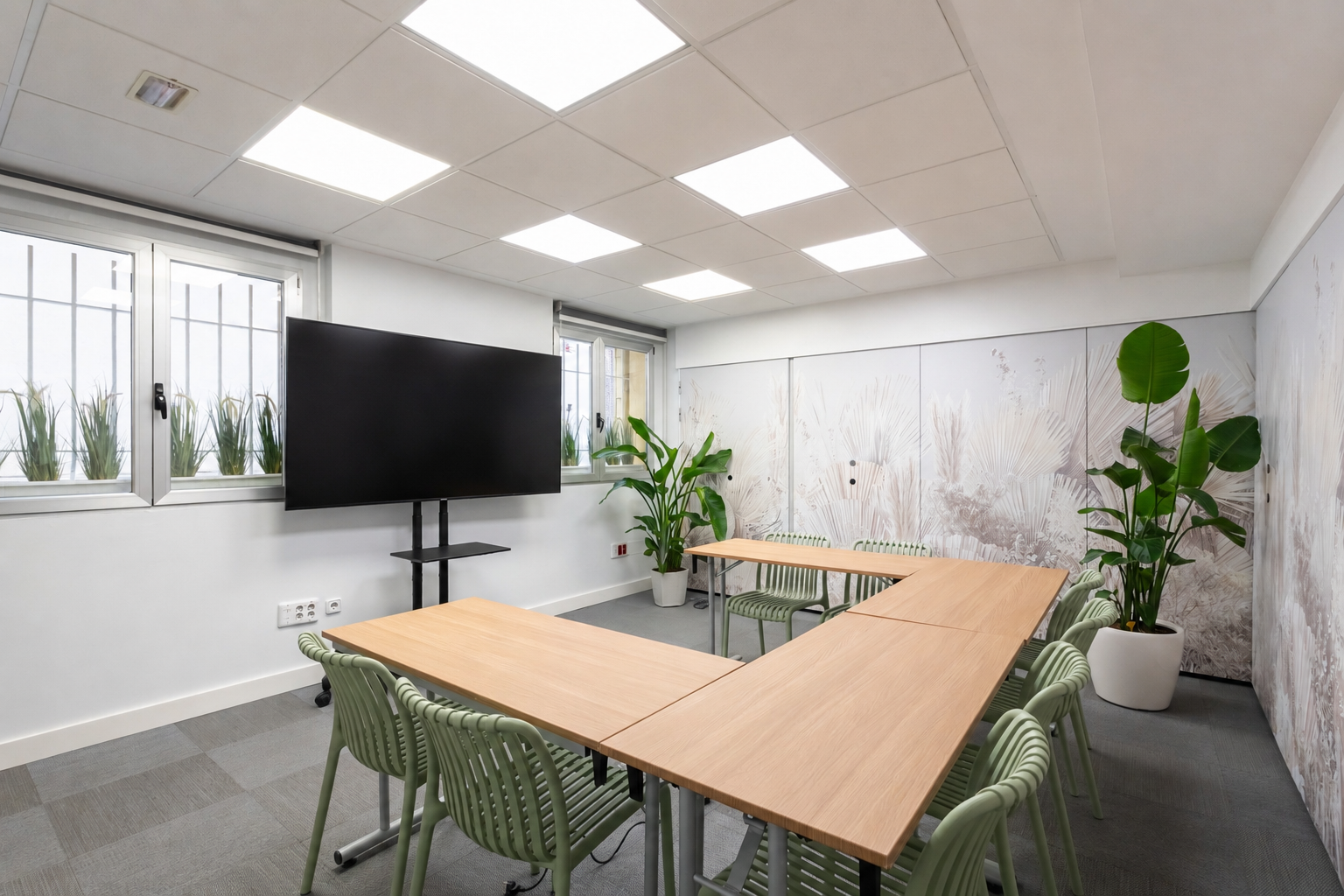
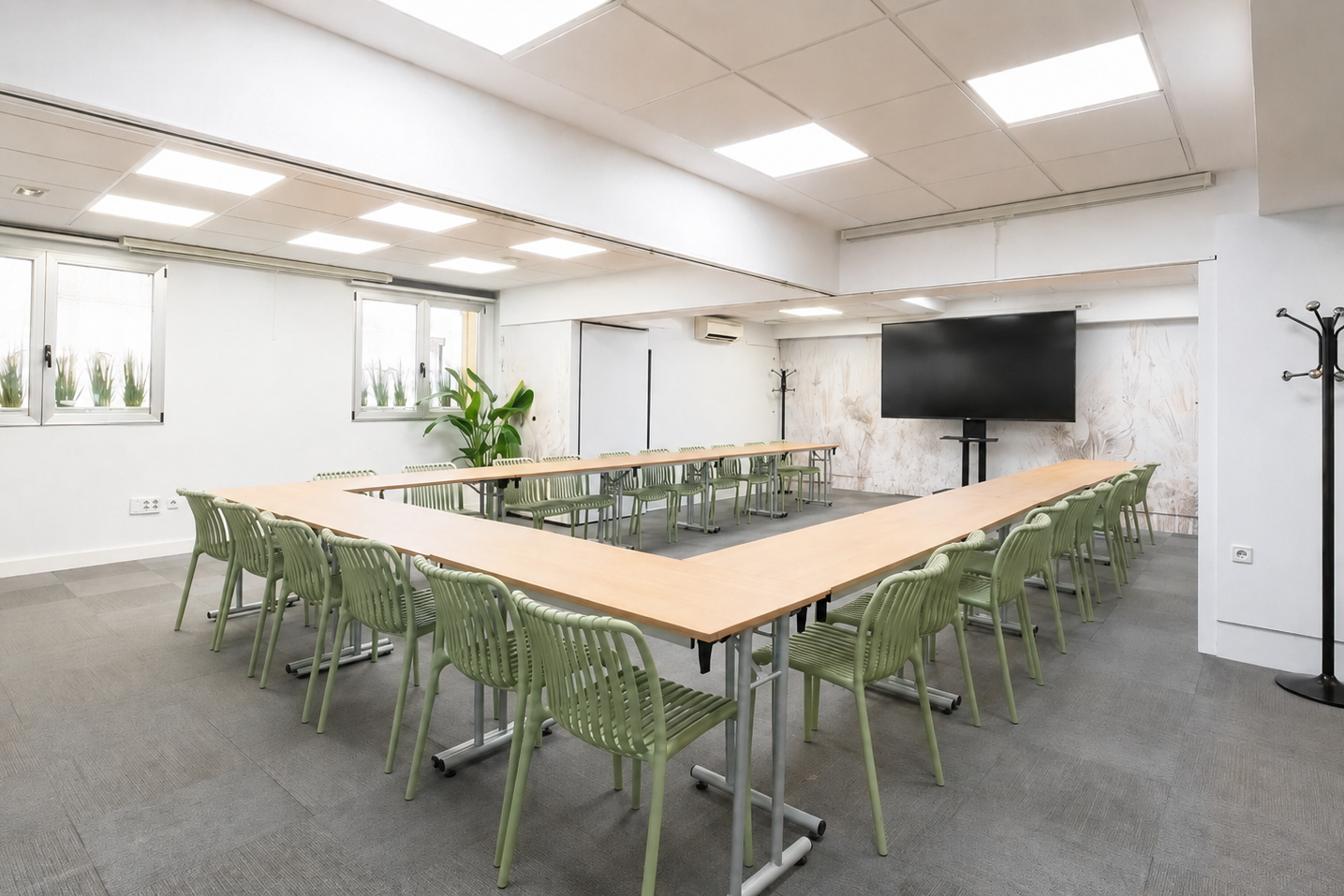
Imagine a company headquartered in another city that needs to bring its management team together in Madrid once a month. It could book a hotel room, yes. But perhaps it needs something more practical: a well-equipped meeting room, a private space for calls, simple catering, reception support, and a less impersonal environment.
Or consider a company with employees who commute from different regions. They arrive at Atocha station in the morning, hold several meetings during the day, and return in the afternoon. In that case, location and ease of use are more important than having a permanent office that's empty for the rest of the month.
Hybrid spaces are transforming the market because they allow the office to be used more closely to actual needs. Not everything has to be fixed. Not everything has to be long-term. Not everything has to be designed for peak occupancy days.
This doesn't mean working haphazardly. On the contrary. For the model to work, the space must be professional, reliable, and well-managed.
This is where details come in that matter more than they seem:
- Rooms available when needed.
- Good connection for video calls and cloud work.
- Visitor reception.
- Possibility of contracting additional services.
- Privacy when the team works with sensitive information.
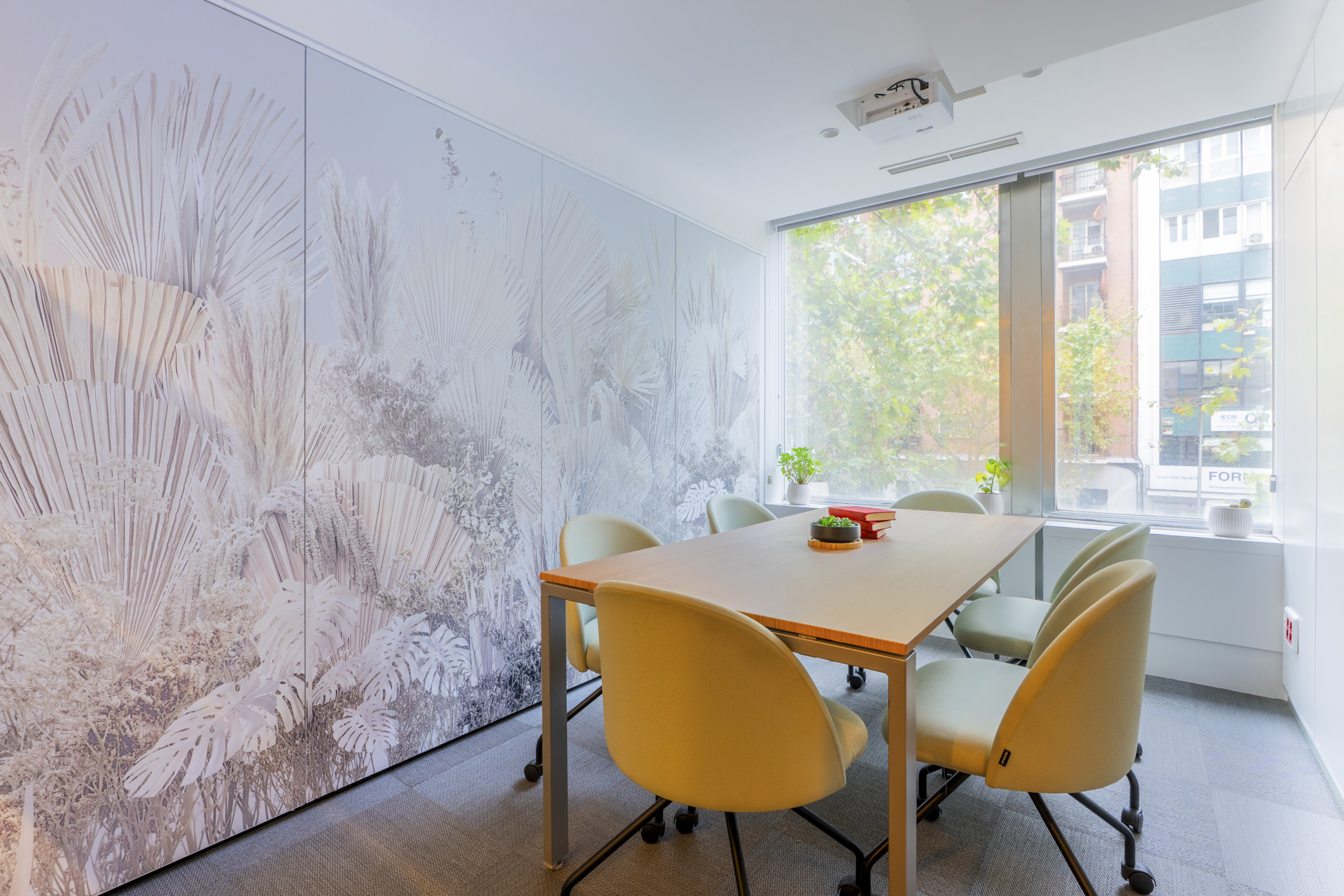
- Spaces designed for meetings, not just individual tables.
Companies aren't simply looking to save money. They're looking for efficiency. And efficiency isn't about paying the bare minimum, but about paying for what you actually use and getting a service that works.
That's why flexible workspaces don't replace all corporate headquarters. But they do occupy an increasingly important place between the traditional office and fully remote work.
In many cases, they are the missing middle ground.
What can companies expect from the offices of the future in Madrid and other major cities?
The offices of the future will likely be less uniform. There will be large headquarters, yes. There will be small offices. There will be hybrid spaces, remote teams, on-demand meeting rooms, and different combinations depending on the company.
The difference is that the decisions will be more precise.
A company won't choose an office based solely on size, but also on its intended use. What does it need it for? Who will use it? How often? What kind of meetings will be held there? What image does it want to project? What level of privacy does it require? What transport connections do employees and clients need?
In Madrid, this evolution makes particular sense. The city combines business activity, national and international connections, institutions, corporate clients, and strong professional mobility. For many companies, having a presence in Madrid remains important. What's changing is how they establish that presence.
A company might keep its headquarters outside the capital and still have a professional space in Madrid for meetings, sales management, or customer service. Another might use private offices for small teams and meeting rooms for larger gatherings. Yet another might book spaces by the day when employees travel from other cities.
The model will be more modular.
Less space dedicated to fixed workstations that remain empty. More spaces designed for collaboration, decision-making, training, presentations, and receiving visitors. Less rigidity. Greater ability to adapt the space to the needs of each week.
This will also affect design. Offices won't have to look large to be professional. They'll have to function well. A comfortable room, a stable internet connection, good acoustics, natural light, attentive reception staff, and an accessible location can offer more value than a large, underutilized space.
For hybrid teams, the office will be a meeting point. For international companies, a local base. For sales departments, a place to coordinate between visits. For executives, a space to meet with clients without relying on hotels or cafes.
And for employees who travel, something simpler but just as important: a place to work without wasting time.
It's not advisable to present private offices as the universal solution. Some companies need large headquarters and will continue to do so. But the trend is clear: more companies want spaces that adapt to them, not the other way around.
In this context, private offices have a natural advantage. They are more agile. They allow for decision-making without the burden of excessive structures. They facilitate a presence in key cities like Madrid without turning every move into a heavy investment.
They also fit better with a corporate culture where the office is no longer measured solely by the number of positions, but by what it allows you to do.
Meeting better. Receiving better. Coordinating better. Working with less friction.
That's the fundamental change.
The large corporate headquarters will still exist, but it will no longer be the automatic aspiration for many companies. The future points toward a smarter network of spaces: some permanent, some flexible, some private, some shared, all designed to respond to real work needs.
For a company that needs a presence in Madrid, the question should no longer be how many square meters it can rent. It should be more specific: what space does it need to work effectively, serve its clients, and support its team without taking on more infrastructure than necessary?
That's where private offices and flexible workspaces are gaining traction.
Not because it's trendy. Because it's practical.
Key points
The future of offices doesn't necessarily lie in larger spaces, but rather in spaces that better adapt to how companies work today. For many organizations, especially those with hybrid teams, employees who travel frequently, or evolving needs, private offices and flexible workspaces offer a hard-to-beat combination: professional presence, cost control, and adaptability.
The decision should no longer focus solely on how many square meters a company needs, but on how it actually uses the space. A well-located office, with good services and designed for collaboration, meetings, and receiving clients, can provide more value than a large, underutilized headquarters.
If you are evaluating options for your business in Madrid, a visit can help you understand what type of space best suits your current needs. Book a free visit and discover different ways to work with more flexibility.
FAQ
Are private offices suitable for established companies or only for startups?
Private offices can be an effective solution for both startups and established companies. Many organizations use smaller spaces for regional branches, sales teams, specific departments, or a corporate presence in a particular city. The size of the office doesn't determine the level of professionalism of the company; rather, it should meet the actual needs of its business.
How can I tell if a large corporate headquarters still makes sense for my company?
The key is to analyze the actual use of the space. If most employees work in the office every day and the company needs to centralize operations in a single location, a large headquarters may still be suitable. However, if occupancy is irregular or a large part of the team works remotely, it's worth reviewing whether the current space is still efficient.
What advantages does a flexible office have over a traditional rental?
Flexible offices typically allow for faster onboarding, more adaptable contracts, and immediate access to services such as reception, meeting rooms, professional internet, and maintenance. This reduces the administrative burden and makes it easier for companies to adjust the space to their needs without making large initial investments.
Is it possible to maintain a strong corporate image in a small office?
Yes. The perception of professionalism depends more on the quality of the space, the location, the attention given to visitors, and the organization of meetings than on the number of square meters. Many companies receive clients and collaborators in compact, perfectly equipped offices that project a professional and efficient image.
What types of companies benefit most from hybrid spaces?
Hybrid workspaces tend to work particularly well for companies with distributed teams, international organizations, consultancies, sales departments, and companies whose employees travel frequently. They are also useful for businesses that need to meet in person regularly without maintaining a large, occupied office every day.
Why does Madrid remain a strategic location for many companies?
Madrid remains one of Spain's leading business centers, with excellent national and international connections. Having a professional space in the city facilitates client meetings, recruitment processes, team gatherings, and corporate visits. For many organizations, the question is no longer whether to have a presence in Madrid, but rather how to establish one most effectively.