A practical guide for growing companies in Madrid that need space without long-term contracts. It analyzes private offices and flexible coworking spaces as viable alternatives to the traditional office, designed for small and hybrid teams seeking focus, flexibility, and the ability to adapt their work methods.
There is a rather recognizable moment.
Your company is no longer small. But it's not big enough to afford structural errors either.
The team is growing. Sometimes slowly. Sometimes faster than expected. Some work remotely. Others need to see each other. Meetings are starting to not work quite right.
And yet, signing a traditional office lease for five or seven years doesn't suit you.
Not because you don't believe in in-person work. But because you don't want to commit yourself prematurely.
If your company is at that point, this isn't about trends.
It's about practical decisions.
Scale in Madrid without immobilizing your company
Madrid drives growth. Clients, talent, connections. It all happens here.
The problem arises when that growth seems to demand a large, long-term, permanent office. As if there were no middle ground.
In practice, this often leads to scenarios that are repeated far too often:
- offices half empty for months
- spaces that become too small before they pay for themselves
- teams trapped in contracts that no longer reflect how they work
Scaling up shouldn't mean losing flexibility. Especially not in a phase where you're still adjusting.
What we see time and time again in companies that are growing
These aren't theories. It's accumulated experience.
Companies that:
- They sign up for more square meters than they need "just in case"
- They take on long-term contracts to gain a sense of stability
- They delay changes because moving forward is expensive and complex.
The result is rarely an immediate disaster. It's something more subtle. Fixed costs weigh heavily. Decisions are postponed. Spaces don't support the team.
Climbing should allow you to correct your course, not block it.
Traditional office versus flexible workspace: the real comparison
It's best to be clear, without embellishment.
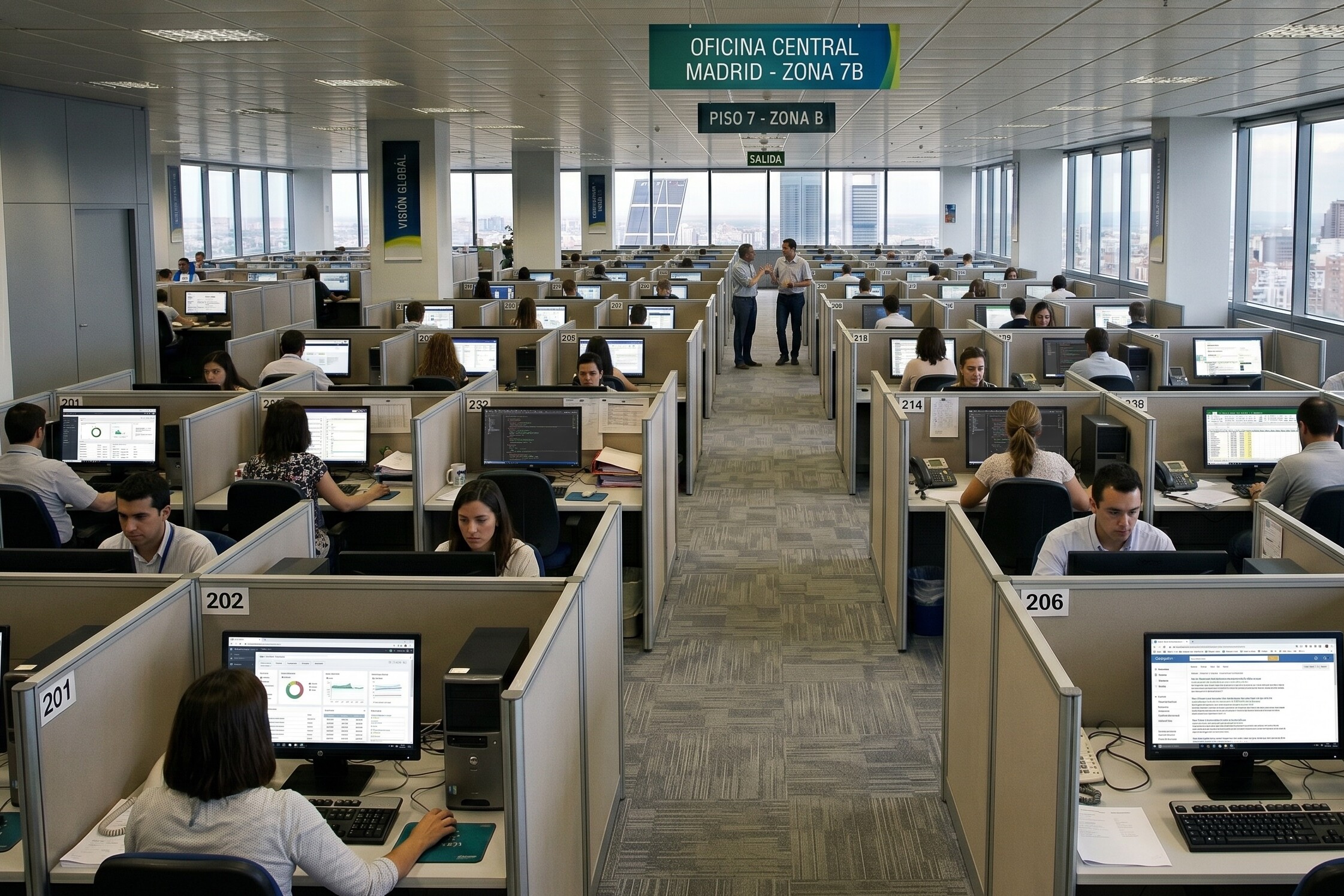
Traditional workshop
Pros:
- total control of space
- closed corporate image
Cons:
- long-term commitments
- high initial investment
- limited adaptability
- risk if the team changes
It works well when the team size is stable and the working model is very well defined.
Not before.
 Flexible spaces
 Flexible spaces
Pros:
- scales according to your needs
- You adjust the space without penalties
- You reduce financial risk
- You maintain a presence in Madrid without becoming immobilized.
Cons:
- It's not for those who need absolute control from day one.
It works especially well when growth is gradual and the team is still finding its way of working.
When coworking falls short for your team
Here a key point emerges that many companies experience.
The team no longer wants shared tables and needs to talk normally. Ending a meeting without asking permission. Leaving materials on the table and returning the next day.
But a traditional office is still excessive.
Many teams believe there are only two options.
Either open coworking, or a long-term contract.
And it is not like that.
Private offices for small teams, a very common solution
 Private offices They resolve that blockage within a flexible environment.
They allow:
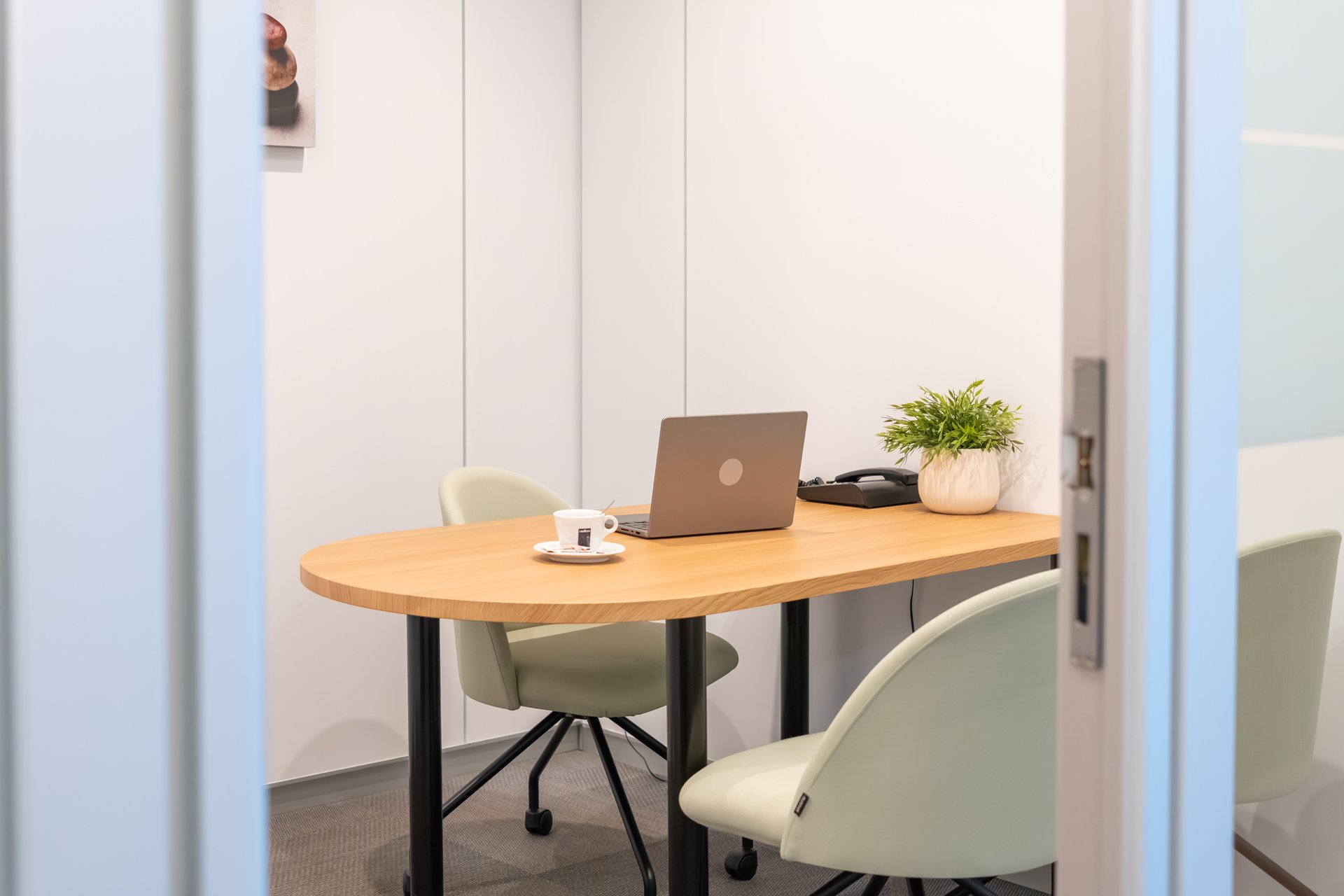
- to have your own space, with a door
- maintain confidentiality and focus
- work as a team, not as isolated individuals
And at the same time:
- no initial investment
- without rigid contracts
- without assuming square meters that are superfluous today and lacking tomorrow
It is a very common solution for teams of 2 to 8 people that are growing, but still adjusting their structure.
It is not a step backwards in relation to coworking.
It's a natural evolution.
Coworking and private offices are not opposites
This is constantly seen in practice.
Companies that arrive looking for coworking and end up in private offices. Or teams that start in offices and combine them with flexible workstations depending on the situation.
It works because not everyone works the same, and not every day is the same.
A well-designed flexible space allows for mixing:
- private office for the core of the team
- flexible workstations for hybrid profiles
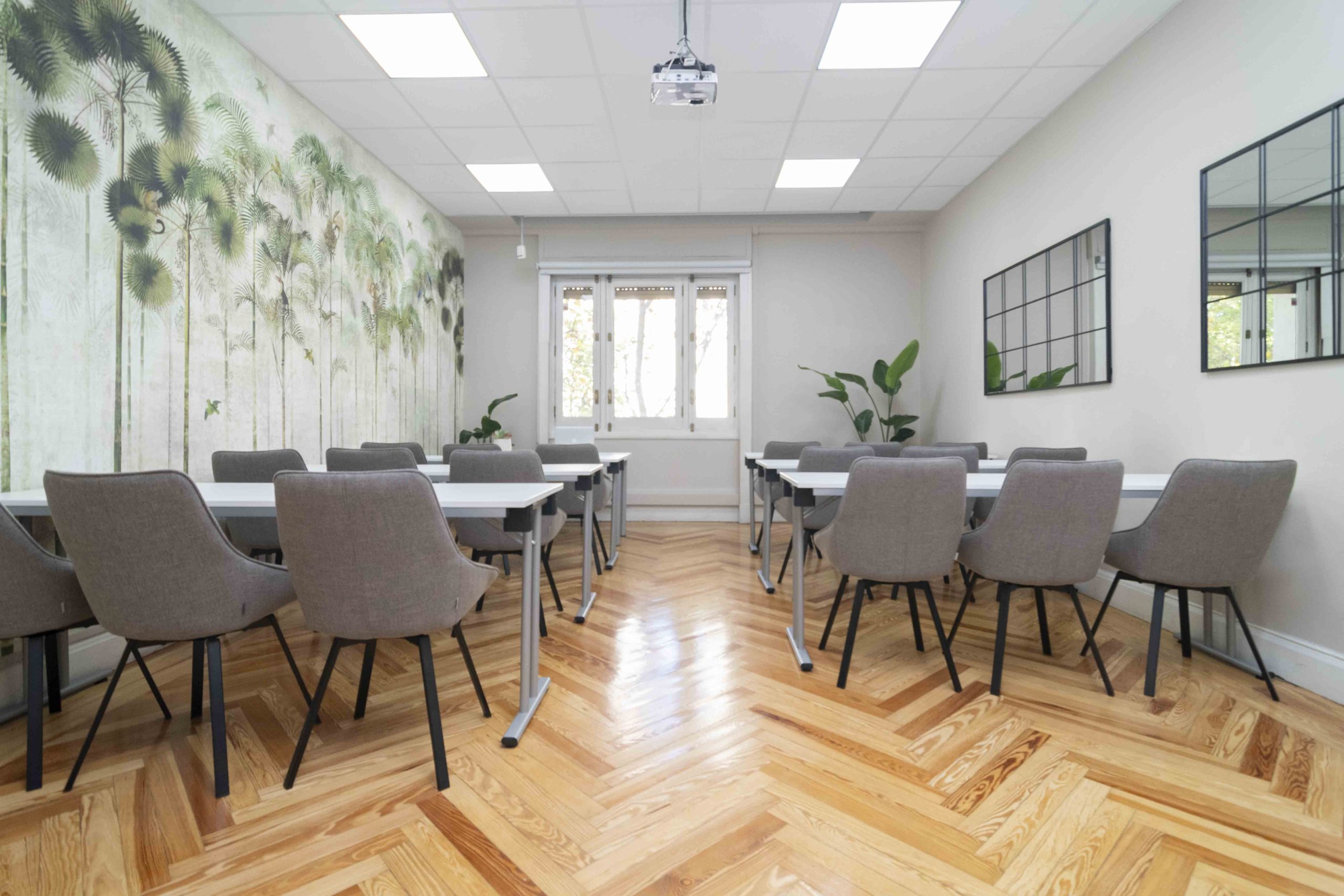
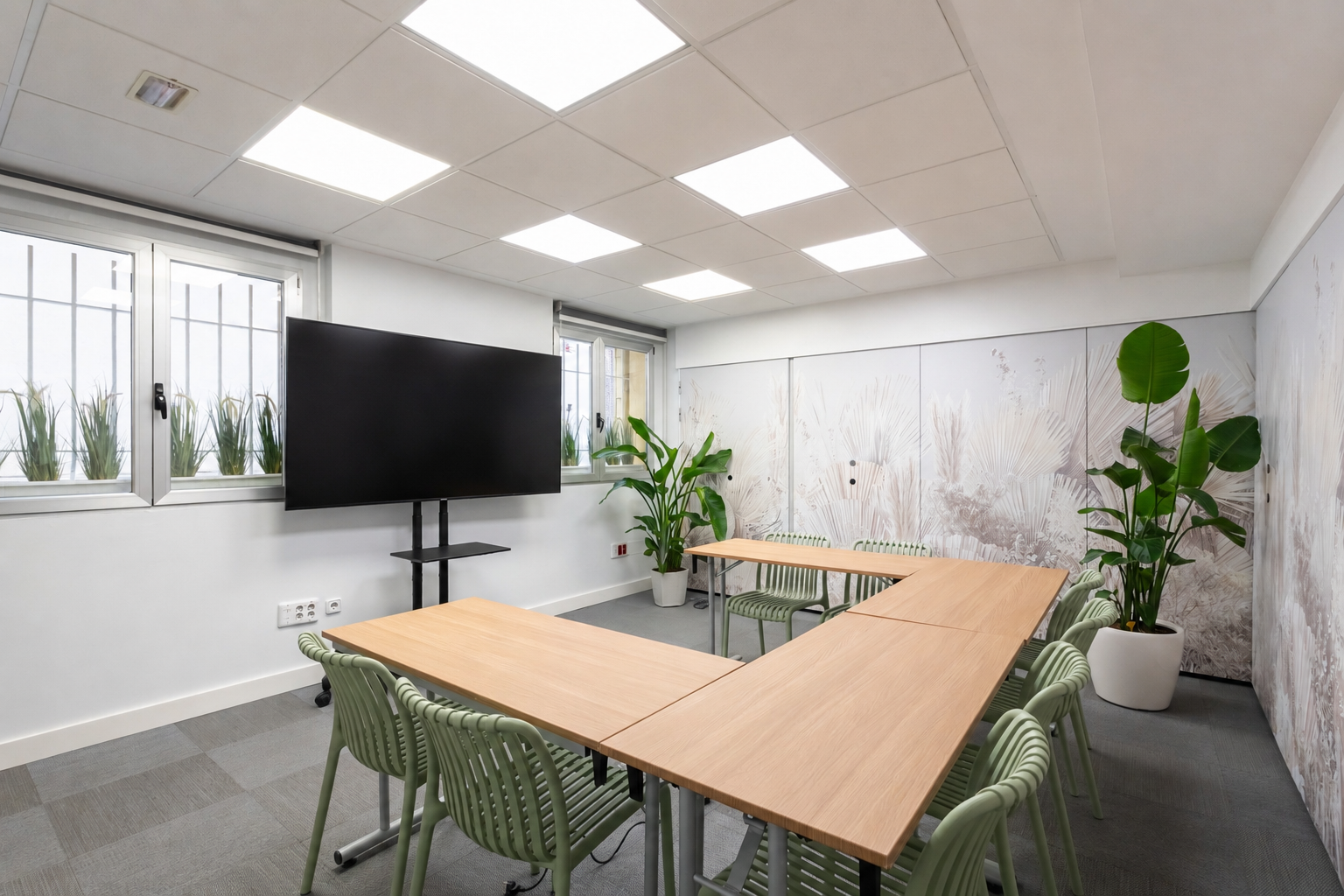
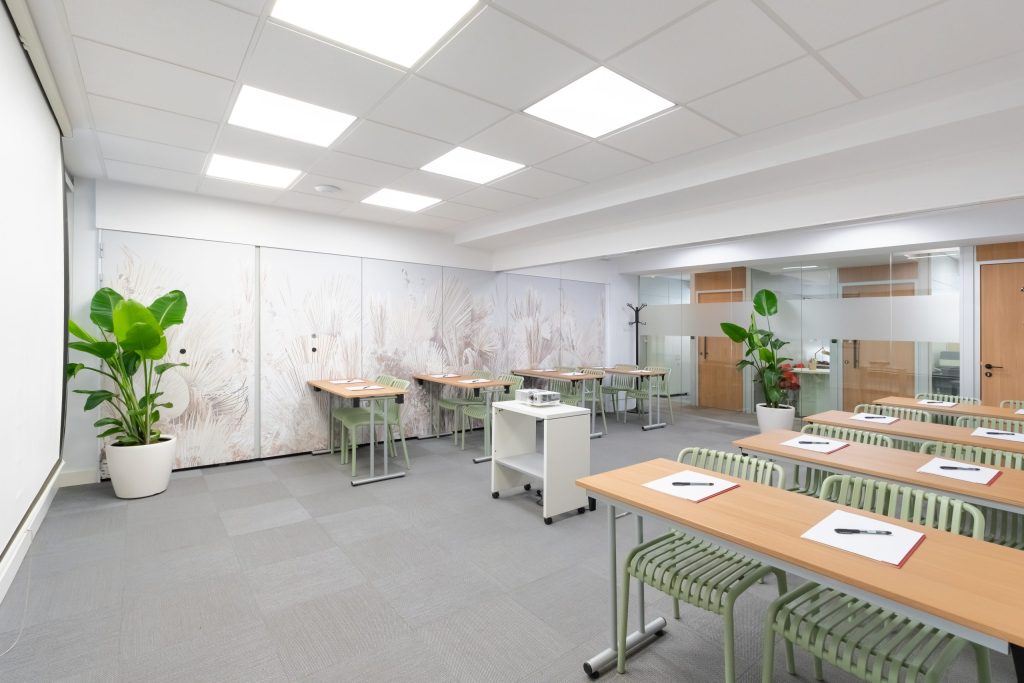
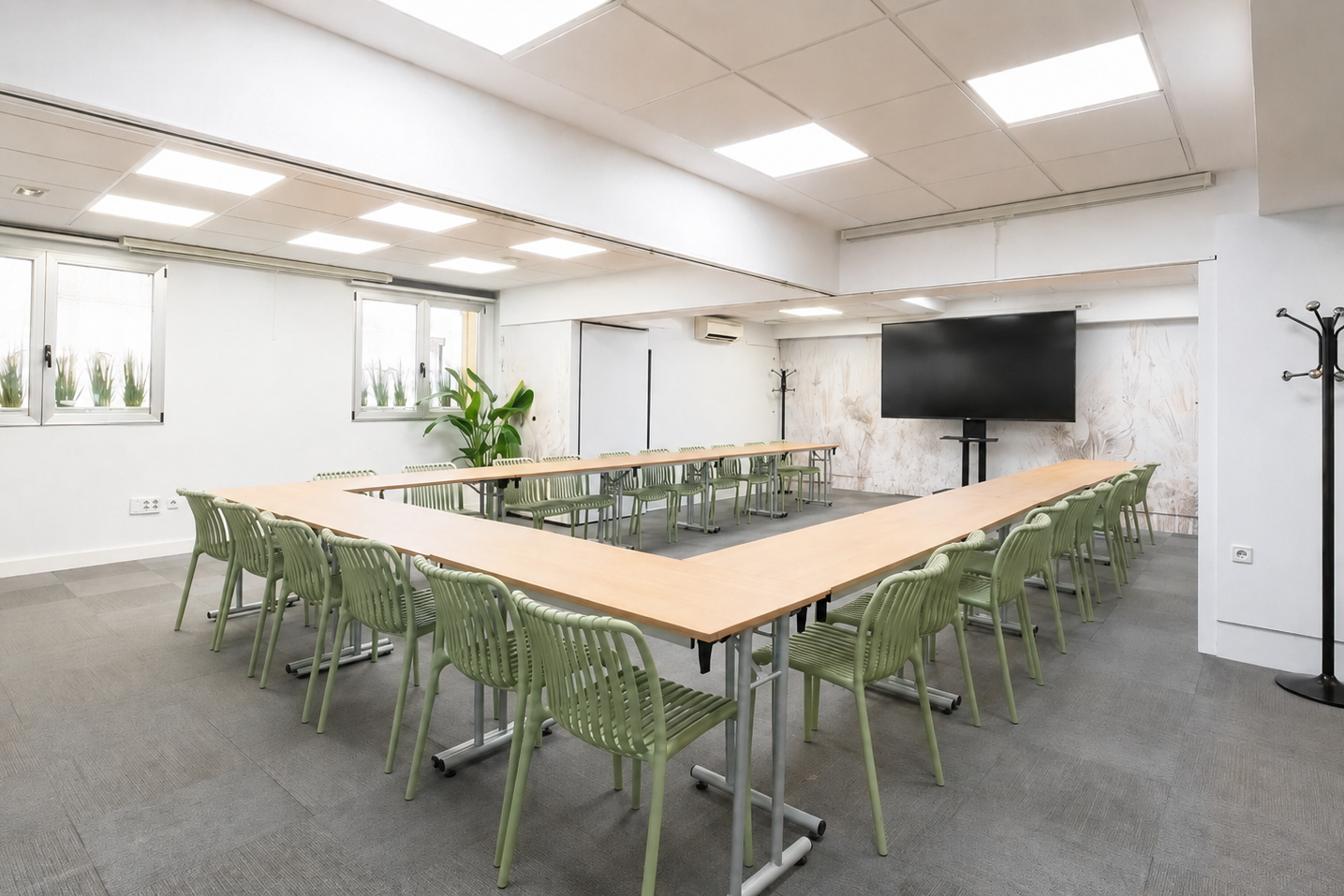
- meeting rooms when they are really needed
That fits much better with how we work today.
Scaling up isn't about taking up more space, it's about using it better.
Many companies still measure growth in square meters. And that criterion no longer works.
Today, the space has to support the team, not impose a way of working on it.
This implies:
- days with more people and days with fewer
- meetings that require real rooms
- Concentration when it's time to work, not constant noise
A flexible private office allows all of that without forcing definitive decisions.
The silent value of flexible offices
There is something that is rarely mentioned.
Private offices Flexible environments eliminate mental friction.
You don't think about:
- maintenance
- Supplies
- removals
- forced expansions
You think about work.
And when the team grows, shrinks, or changes its dynamics, the space adjusts without drama.
In growth phases, that weighs heavily.
Madrid city center and small teams, a delicate combination
For small teams, location matters more than it seems.
If getting there is inconvenient, people stop coming.
If the environment isn't conducive, the meetings become empty.
If the neighborhood doesn't fit in, the space is gradually abandoned.
That's why private offices in central Madrid work so well for this type of company.
You are allowed:
- real presence in the city
- good connection for the whole team
- professionalism without rigidity
Without assuming a structure that is not yet appropriate.
Hybrid work requires more than just good intentions.
Hybrid work doesn't fail due to a lack of commitment.
Failure due to lack of structure.
Without adequate space:
- The meetings are becoming diluted
- culture is cooling down
- The team disconnects
A private office combined with shared spaces allows for clear rhythms. Team days. Focus days. Moments to see each other without constant obligation.
That sustains the team without imposing an artificial presence.
Moving up the ladder without a long-term contract is also a financial decision
Not signing a long-term contract isn't indecisiveness. It's risk management.
Especially when:
- the market changes rapidly
- The team is still coming together.
- You don't know how you'll be working a year from now.
Reducing fixed commitments creates flexibility.
And that margin often makes the difference between growing calmly or growing tensely.
The most common mistake is putting up with too much.
Many companies hold onto spaces they no longer need "just a little longer." They don't want to make any changes. They don't want to complicate things.
That delay usually ends up being expensive.
Switching to a flexible model is not a leap into the void. It's a gradual adjustment.
You start small. You test. You correct.
That's also climbing.
Where does Coworking Inspira fit into this scenario?
In spaces like Coworking InspiraThe logic is simple.
- private office when you need it
- coworking when it suits you
- real flexibility when the team changes
There is no single correct model. Some decisions make sense at different times.
And the space should help you make them, not condition them.
Climbing in Madrid doesn't require signing long-term contracts. It requires making realistic decisions, with room for error.
That often starts with space.
If your company is growing and you don't want to sign an office lease that ties you down prematurely, It might be worth taking a look at how a flexible office in Madrid works It can accompany you now, without conditioning you later.
FAQ's
Is a private office in a flexible space suitable for small teams?
Yes, especially for teams of 2 to 8 people who need to work together, maintain confidentiality and focus, but without taking on a traditional long-term office contract.
Is a flexible private office the best option for any company?
No. If your team is very stable, doesn't foresee changes in the medium term, and needs absolute control of the space and corporate image, a traditional office may be a better fit than a flexible model.
How does a flexible private office differ from a conventional office?
The main difference lies in the commitment. A flexible office allows you to adjust size and duration according to the team's evolution, without initial investments or long-term contracts.
Is it possible to combine a private office and coworking in the same space?
Yes. It's a very common formula in hybrid teams, where part of the team needs a fixed space and other profiles work more flexibly depending on the day or the project.
Does it make sense to opt for a flexible office if the team continues to grow?
Yes, because the model allows for expansion, reduction, or format change without blocking future decisions, which is key when the company is still adjusting its structure.