We've all been in that meeting that starts off badly, with no one saying a word. The client arrives ten minutes late because the access directions were confusing. Someone spends the first five minutes searching for the projector cable. And by the time the conversation finally begins, much of the energy everyone brought with them has already dissipated.
None of this has anything to do with the business proposal. It has to do with preparation.
A meeting with an external client begins long before anyone says "good morning." It begins with the invitation, how arrival is organized, and whether the space itself is conducive to conversation. When all of that is in place, it shows—and when it isn't, that shows too.
It all starts with the announcement, not the meeting.
One of the most common mistakes is thinking that the first impression is made when the client walks through the door. In reality, it happens earlier, with a simple email or message confirming the appointment.
If that invitation raises doubts—what time exactly?, where's the entrance?, who do I ask when I arrive?—the client starts the day with an added layer of complexity. And that friction, however small, seeps into the tone of the entire meeting.
Before sending it, it's worth double-checking the basics: time, approximate duration, exact location, who to contact upon arrival, and if there are any documents that should be reviewed beforehand. It doesn't need to be a lengthy dossier. Just make sure no one has to guess.

Before preparing anything, decide what you want to achieve with the meeting
It's tempting to immediately open a presentation and start filling in slides. But it's worth pausing for a moment and asking a simpler question: when they leave the room, what needs to have happened for the meeting to have been worthwhile?
It could be closing a deal, better understanding a need, resolving a specific question, negotiating terms, or simply agreeing on the next step. Whatever it is, having clarity completely changes what needs to be shared and what can be left out.
A meeting with a client, for example, doesn't have to showcase everything your company knows. It has to steer the conversation in the direction you need it to go.
Arriving with context is more valuable than arriving with more slides.
Preparing for a meeting also means preparing to listen better. Spending ten minutes beforehand reviewing who the person or people you'll be speaking with are completely changes how the meeting unfolds.
A report isn't necessary. With a client, it's enough to understand what their company does, what challenge they might be trying to solve, and whether they're already familiar with your proposal or coming to you from scratch. This context avoids questions that should already be answered, and the client notices: they know you're not going to give them the same old script.
A five-line agenda is already enough.
A detailed document isn't necessary. Often, simply outlining the topics to be covered in the confirmation email—context, needs, proposal, questions, and next steps—is sufficient. Five lines are all it takes for attendees to know what to expect.
However, that agenda is a guide, not a cage. If something important comes up mid-conversation that wasn't planned, it's worth pausing there. A good meeting has structure, but it also knows when to deviate.
Space is also part of the message
This is where many companies let their guard down. They take care of the presentation, prepare the talking points, rehearse the negotiation—and then the meeting is held in the least suitable room in the office, with people walking by or at a table that doesn't invite anything.
It's not that a beautiful room should replace a good idea; that's still what truly matters. But the environment can either facilitate conversation or hinder it. A room with background noise, no privacy, or where everyone constantly interrupts causes attention to wander precisely when it's most needed.
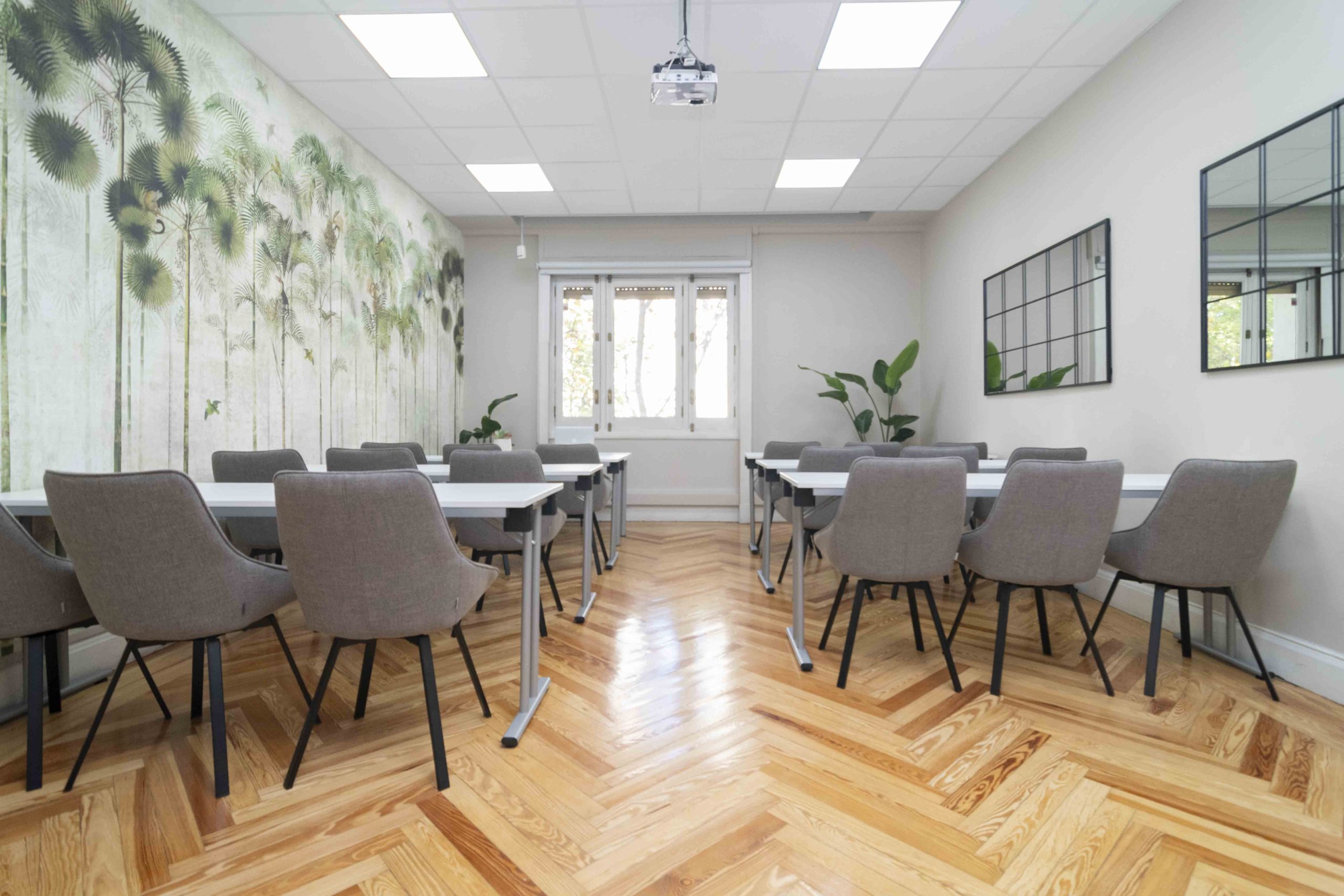
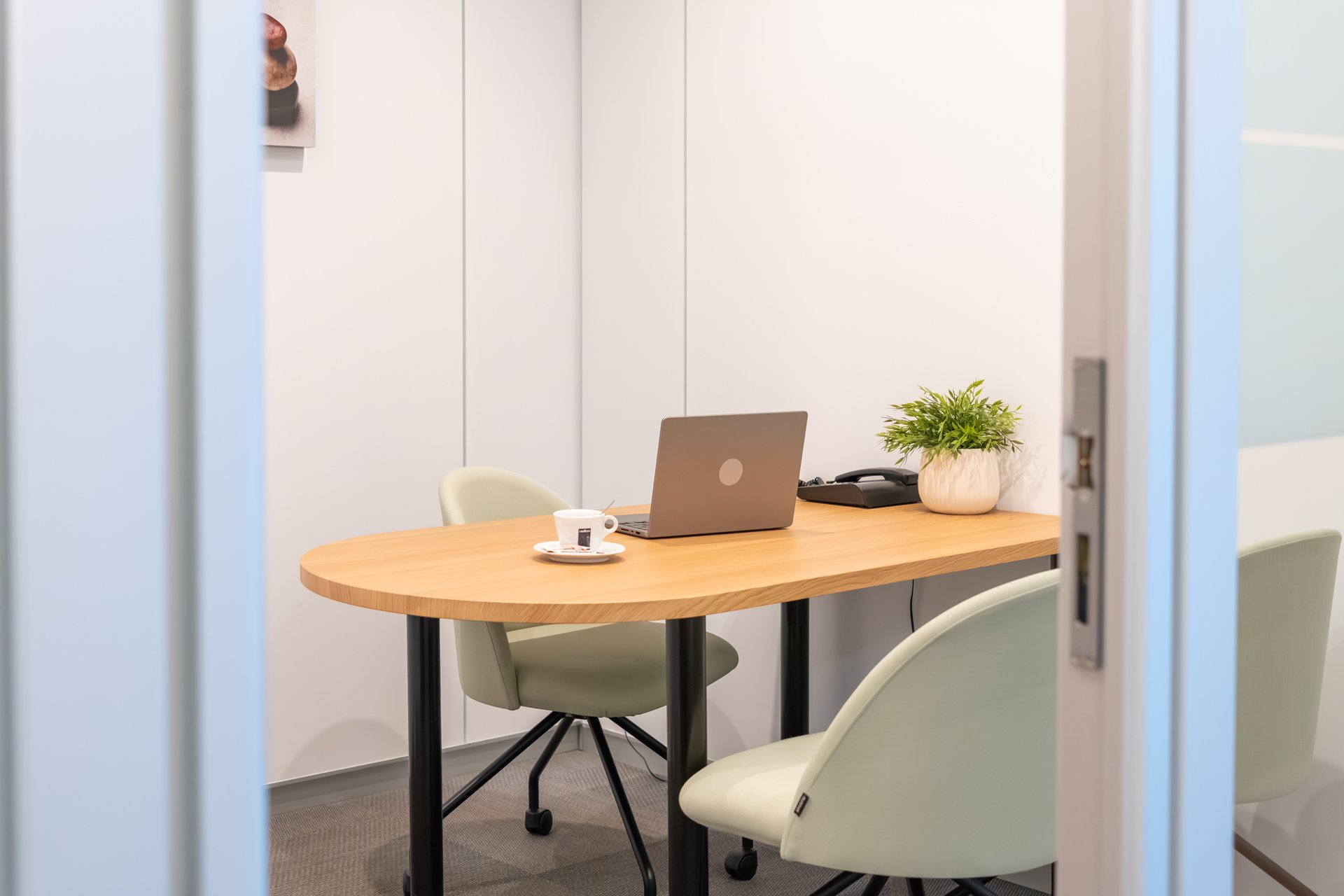
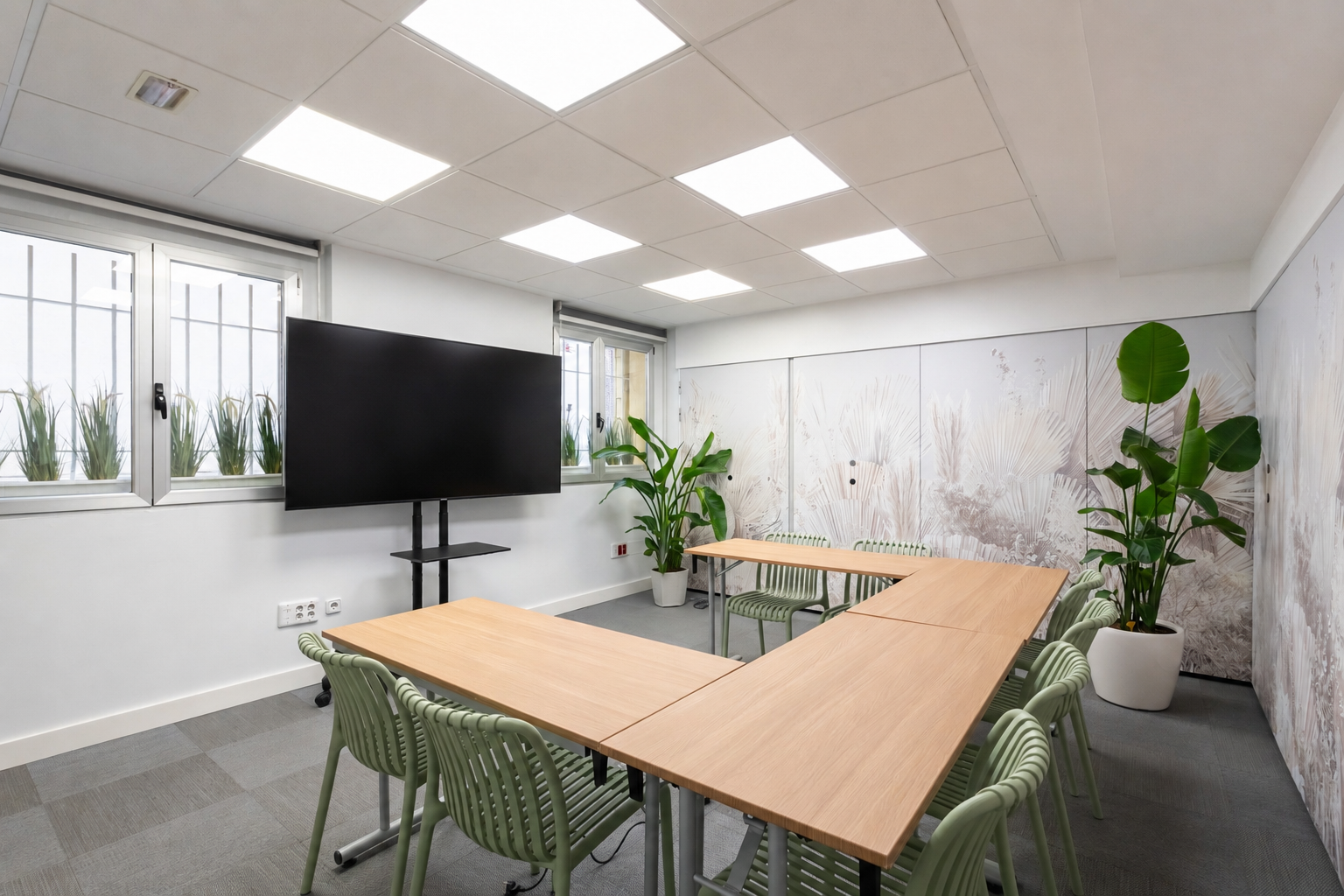
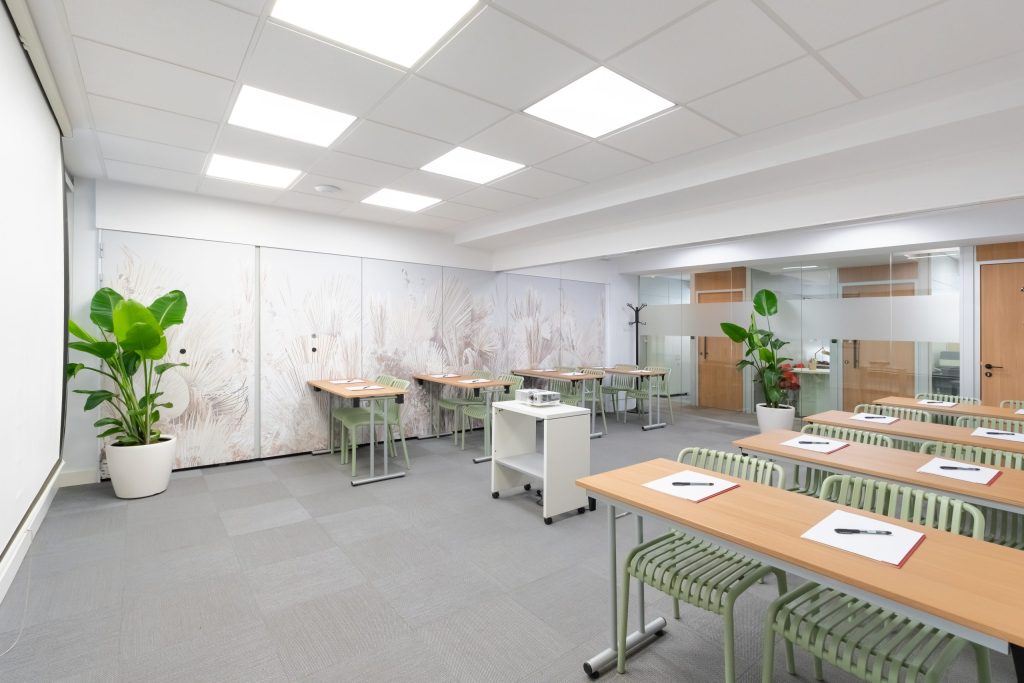
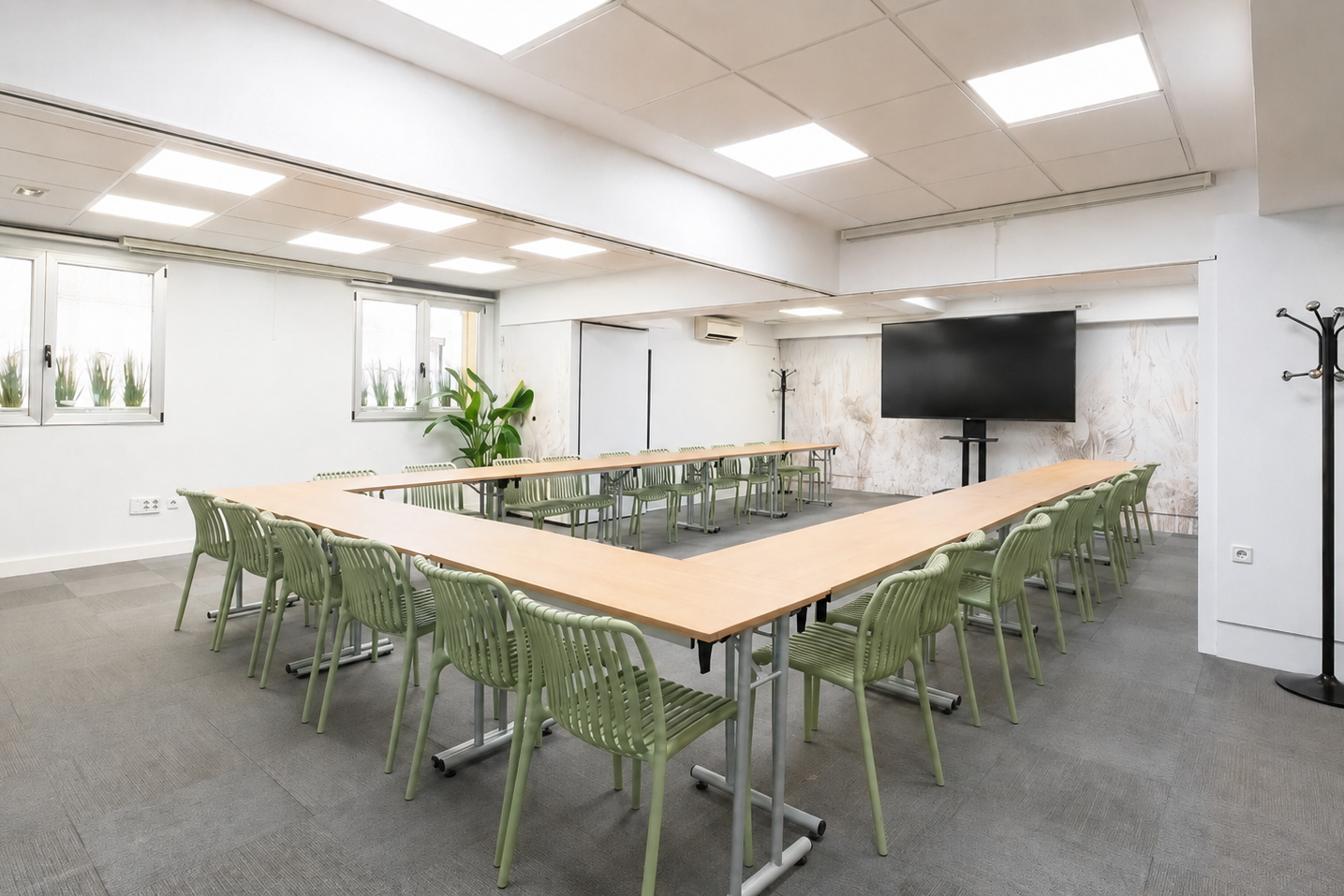
When the usual office doesn't meet these conditions—because the team works remotely, because there's no room available that day, or simply because the client deserves better than a makeshift corner—having a dedicated space for this purpose ceases to be a luxury and becomes an essential tool for the meeting. In Madrid, the Inspira Workspaces meeting rooms in Atocha They are designed precisely for this type of meeting: quiet and private environments where the client can focus on the conversation, without office noise in between.
Privacy in a meeting is important.
When a meeting involves discussing prices, contract terms, or any information that shouldn't leave that room, privacy ceases to be an aesthetic detail.
And it's not just about protecting information. It also changes how the conversation flows. When both parties know they can speak freely, it's much easier to raise uncomfortable questions or negotiate openly. In an impromptu setting, where anyone can overhear, that naturalness disappears.
You don't need a spectacular room. You need one that allows the conversation to flow normally.
Every point of contact counts, not just the meeting itself
The customer experience isn't built solely in the forty minutes the meeting lasts. It begins with the invitation, continues with arrival, reception, any waiting time, the meeting itself, and ends with follow-up afterward.
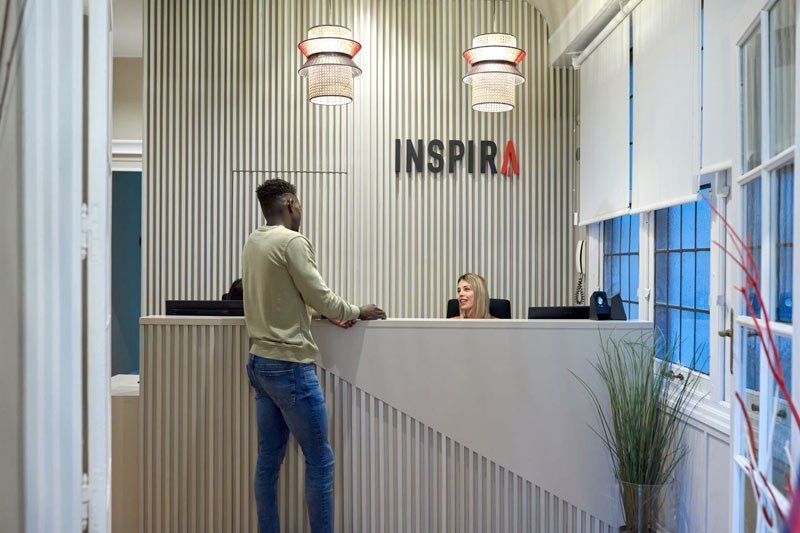
If the customer arrives a little early, do they know where to wait? If they need help getting into the building, is there someone to ask? These are small details, but each one reduces friction. And the less the customer has to think about logistical issues, the more attention they have for the conversation that really matters.
Review the technology before it arrives, not during.
A technical problem always seems bigger in front of a client. A presentation that won't open, a video call that cuts out, a cable that's missing—any of these can eat up the first few minutes of a meeting and break the flow before it even begins.
It's worth checking the presentation and documents, the internet connection, the screen or projector, the audio, and, if anyone is connecting remotely, that they know how to log in and that the platform is working. The technology should be unobtrusive, not the main focus.
Arriving on time is not the same as being prepared on time
If the meeting starts at ten, ideally everything should be ready before then, not right at that moment. Arriving early allows time to check the room, test the equipment, and resolve any unforeseen issues without the client having to wait standing outside.
And it also changes how you greet the other person. It's not the same to open the door while you're still looking for the presentation file as it is to be able to greet them calmly and start when everything is sorted.
During the meeting: listen more than you speak
It's easy to fall into the trap of using every minute to explain the proposal in as much detail as possible. But a meeting isn't won by talking more; it's won by better understanding what the other party needs—and that can only be achieved by giving them space to speak.
A well-placed open question is often worth more than ten minutes of argumentation. "What worries you most about this right now?" or "How are you addressing this today?" open the conversation to where it really needs to go, instead of simply following the planned script.
And when the client raises an objection or a question, resist the urge to respond immediately. A second of silence before answering isn't as awkward as it seems—and often the other person finishes clarifying what they meant, which gives you much more information than if you had jumped in to respond right away.
Don't end with "we'll talk again"
The last few minutes are just as important as the first. Before saying goodbye, summarize in two sentences what has been agreed upon and what remains to be done: what decisions have been made, who is sending what, who is responsible for each task, and when you will speak again.
A brief follow-up email afterward, confirming what was discussed, closes the loop and prevents misunderstandings that can be time-consuming to resolve later. A well-prepared meeting shouldn't end when you leave the room, but rather clearly define the next step.
An example we frequently see at Inspira Workspaces
A few weeks ago, a remote consulting firm had to meet with a potential client arriving by train from Valencia to finalize a deal. They didn't have a physical office in Madrid—the entire team works remotely—and they didn't want to risk improvising in a café, with all the noise and interruptions that entails.
They booked a small room at our Atocha office that morning, and we were there to assist them with everything: projector ready, Wi-Fi checked, and a fifteen-minute buffer to allow the client time to arrive from the station. The meeting went well, but what was interesting was what they said afterward: that this small detail of ensuring the environment had given them more confidence than they expected, because they felt supported and didn't have to worry about anything other than the conversation itself.
A good impression is built, not improvised.
Preparing for a meeting with an external client isn't just about having your presentation ready. It's about knowing the person you'll be speaking with, being clear about what you want to achieve, organizing the conversation effectively, and considering their entire experience, from the initial invitation to the follow-up email.
And the space where it takes place is part of that same preparation. If your usual office doesn't offer the conditions that the meeting requires, having an environment designed for it simplifies things considerably. You can see what ours are like. meeting rooms in Madrid Or, if your next important meeting is downtown, take a look directly at the meeting rooms in Atocha.
Because a good impression doesn't depend on a single detail. It's built from the first contact to the last minute of the meeting.
FAQ's
How far in advance should a room be booked to receive a client?
One day in advance is usually enough for a standard meeting, but if you need specific equipment (videoconference, catering, a room with more capacity) it is advisable to confirm it with a little more advance notice, especially during peak morning hours.
What happens if the customer arrives early?
The best thing to do is have a comfortable waiting place arranged, even if it's just for a short time, and let reception know you'll be expected. Arriving early shouldn't be a logistical problem for anyone.
Is it unusual to ask the client to confirm if they need anything special before the meeting (diet, accessibility, equipment)?
No, on the contrary: asking conveys precisely the kind of attention to detail we've been discussing throughout this article. A brief email before the meeting—any dietary restrictions if catering is provided? Do you need anything specific to access the building?—is usually enough to avoid last-minute surprises.
Is it worth recording or taking notes during the meeting with the client?
It depends on the type of conversation, but if you are going to agree on specific conditions or next steps, taking notes (or asking permission to record) avoids relying on everyone's memory when it comes to follow-up.
What if my company doesn't have an office in Madrid but I need to meet with a client here?
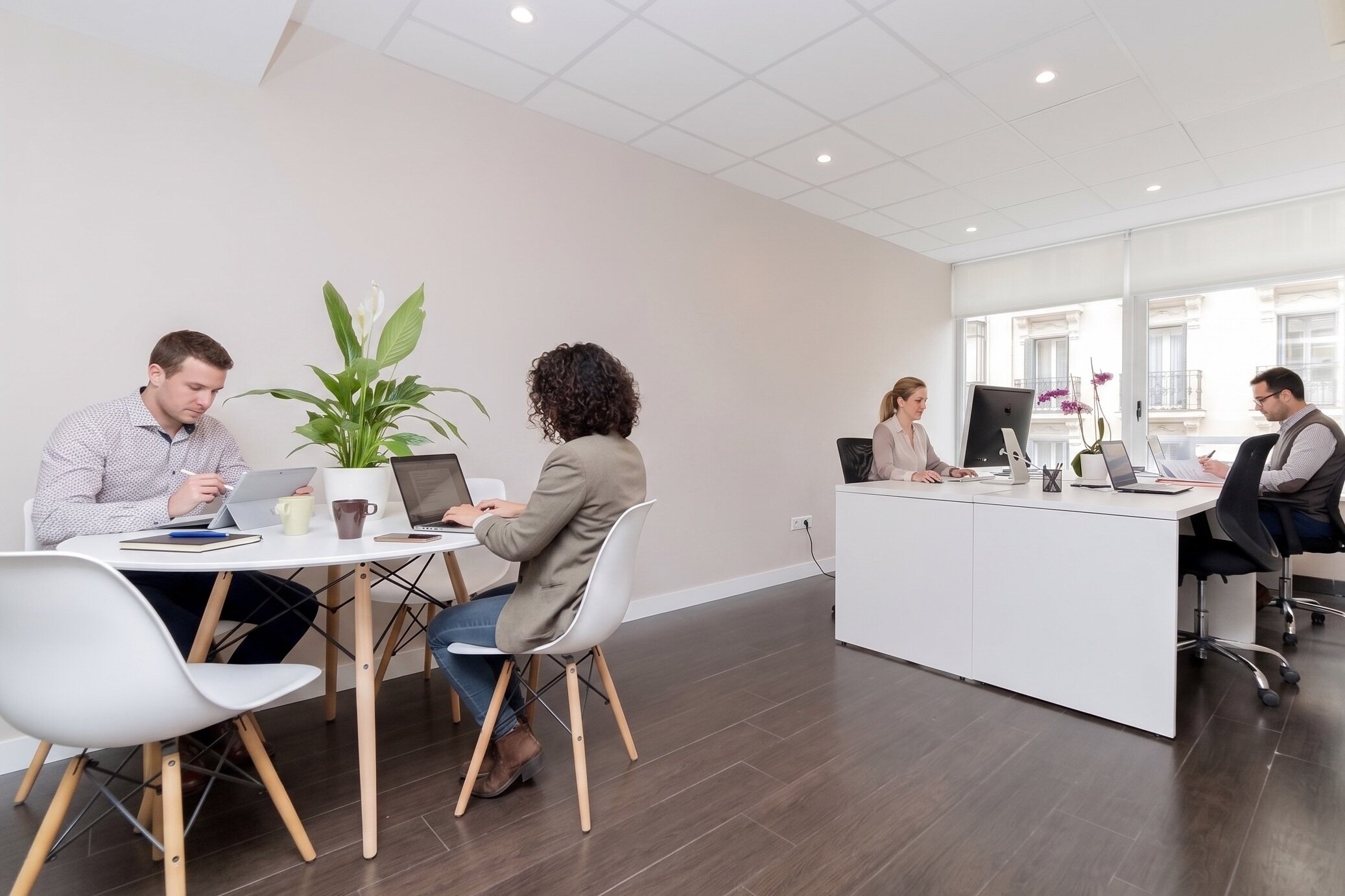
You don't need your own office to make a good impression. Booking a meeting room by the hour, in a well-connected location, solves exactly that problem—the client doesn't distinguish between a private office and a well-chosen space, as long as the meeting is well-organized and the environment is professional.