When you prepare a training session, you put so much effort into the development of the topics, the presentations, the invitation of the attendees and the planning in general, that when the time comes you need everything to go as expected.
For this reason, it is important to minimize risks by taking into account every detail. Of course, there may be some contingencies, but the important thing is to be able to mitigate any situation that may arise in the best possible way.
One of the most important aspects of face-to-face training is the place where it will take place. If the training course you have prepared is excellent but the place chosen is not suitable, the effort put in may end up being useless.
How do you know if a space is suitable for a training course?
The type of room and its layout will depend on the type of training, number of attendees and the proposed objectives.
For this reason, before looking for a place, it is vital to be clear about these three factors. But, in addition, you should consider:
- The length of the training. How many days a week will it be? Is it an intensive program? Will they also attend on weekends?
- Specific needs regarding technological equipment and personnel.
- Location and connectivity, all attendees must be able to get there easily.

Tips for choosing the best room
- Check the place out in person: visit the place in advance whenever possible, photos are good for a first idea, but it is important to be in the space and see if it really fits what you need.
- Check the capacity of the room, especially if you will be doing activities that require movement. The room should be large enough and comfortable enough for a group to be able to stay for several hours without feeling overwhelmed.
- Don't forget the importance of lighting. If you can choose a room with natural light, don't hesitate. Natural light helps improve your mood and when people feel good, they work better. In any case, a room with quality artificial light is also a good option.
- Make sure it has the right equipment: projector, flipchart, high-speed Wi-Fi connection and also the furniture, for example, the chairs should be as comfortable as possible.
- Pre-check: Even if everything is fine on the day of your visit, once you have booked the room, make sure you go a few minutes early to check the connections because there can always be a technical failure. A basic thing to do is to test: speakers, computer and projector.
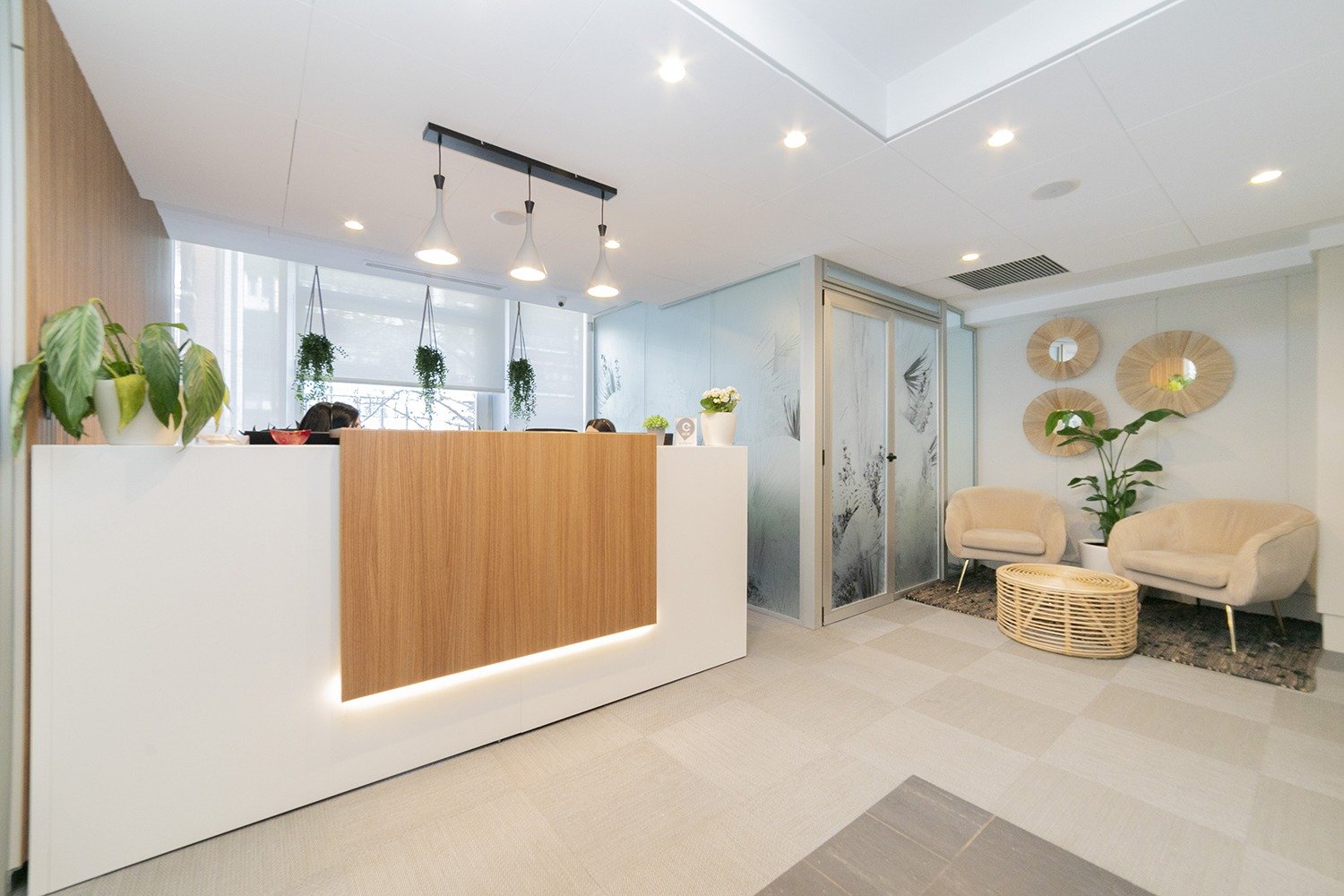
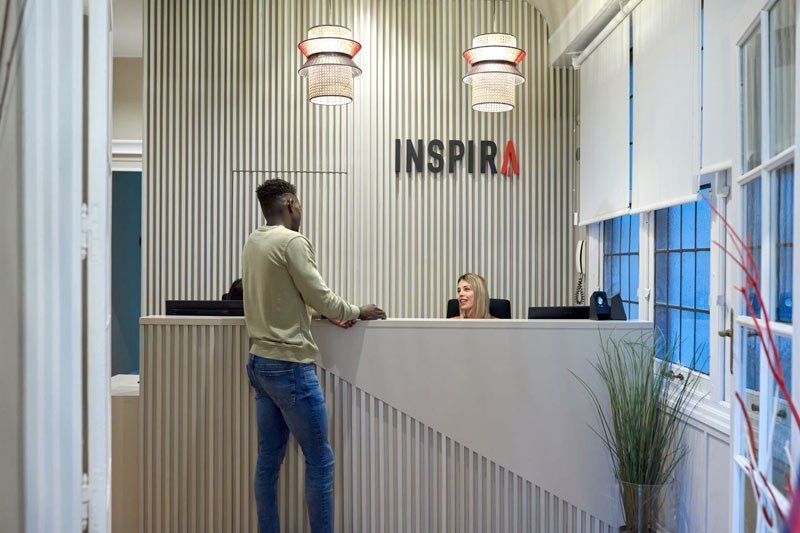
- Ask about additional services: Do the rooms have administrative staff? Can the staff greet attendees? Do they offer catering services? Can they provide materials such as paper and pens?
Correct layout of the coworking room
The order of the room and the location of the people are not minor details. If the arrangement is not in accordance with the objectives and activities proposed in the training, it is likely that problems will be experienced in participation.
There are many options when it comes to arranging seats and tables in the rooms. We share with you the most common configurations that we offer at Inspira Workspaces.
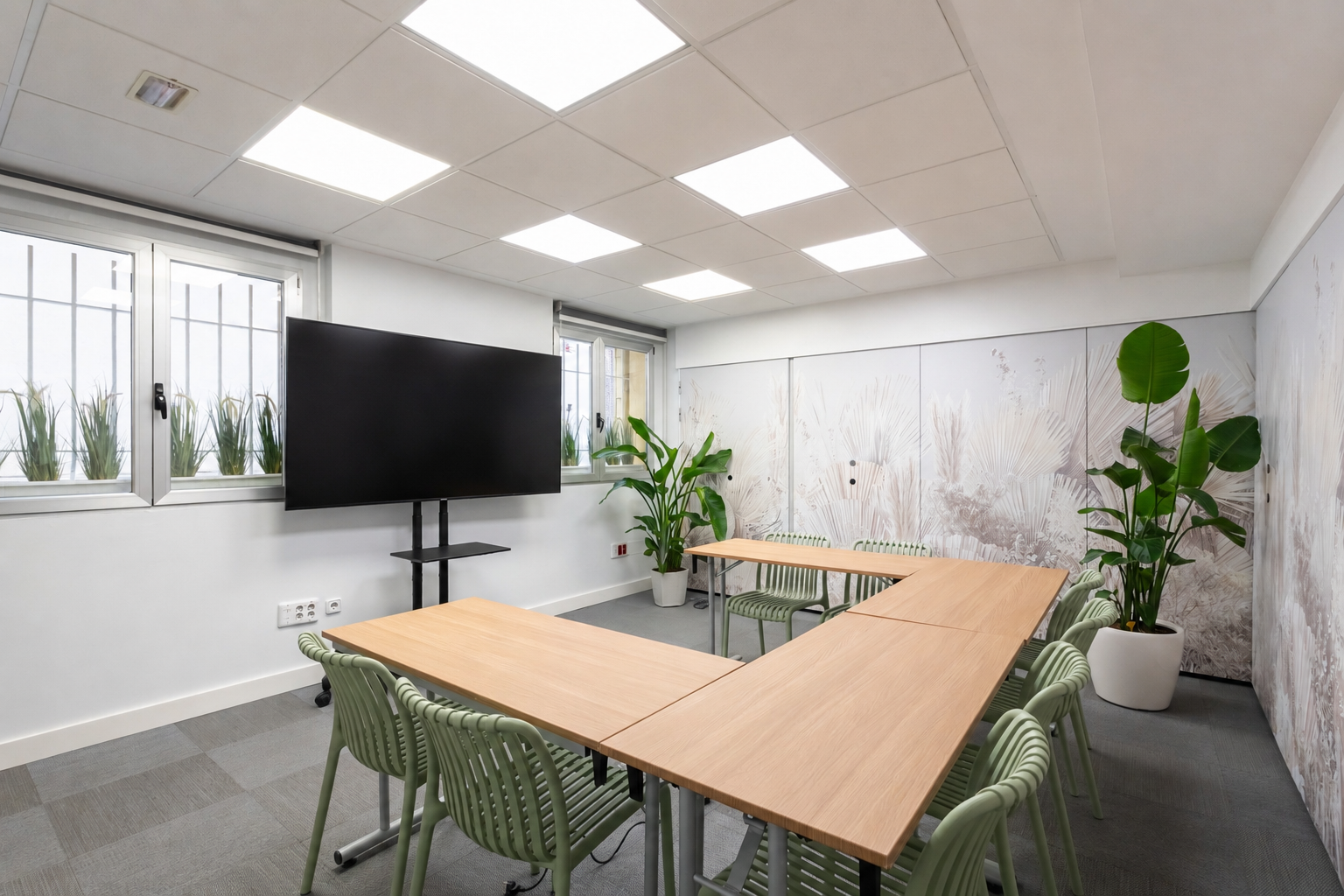
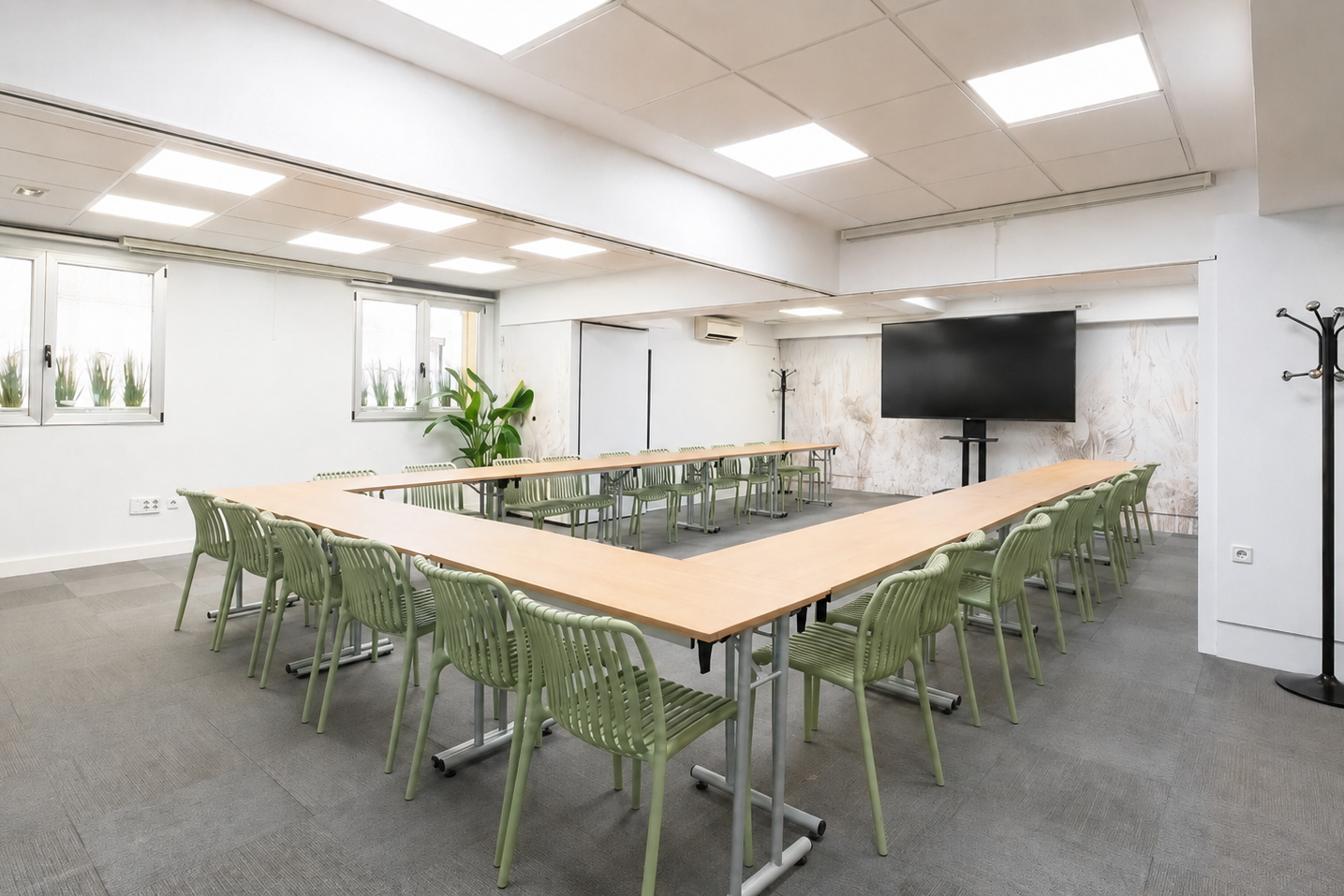
- U-shaped: Chairs are arranged in a U-shape around a centrally located table or an open space. This configuration allows participants to easily see each other and encourages communication between people, leading to open discussions. The main use of the U-shaped setup is for group dynamics and training courses. As a trainer, you will have the advantage of being able to move freely, as well as get closer and establish a more personal connection.
- Meeting format: All attendees sit around a large table. This setup is useful for team meetings, discussions, and creativity or problem-solving activities. This type of setup is likely to be a bit limiting in terms of space, both for attendees and trainers.
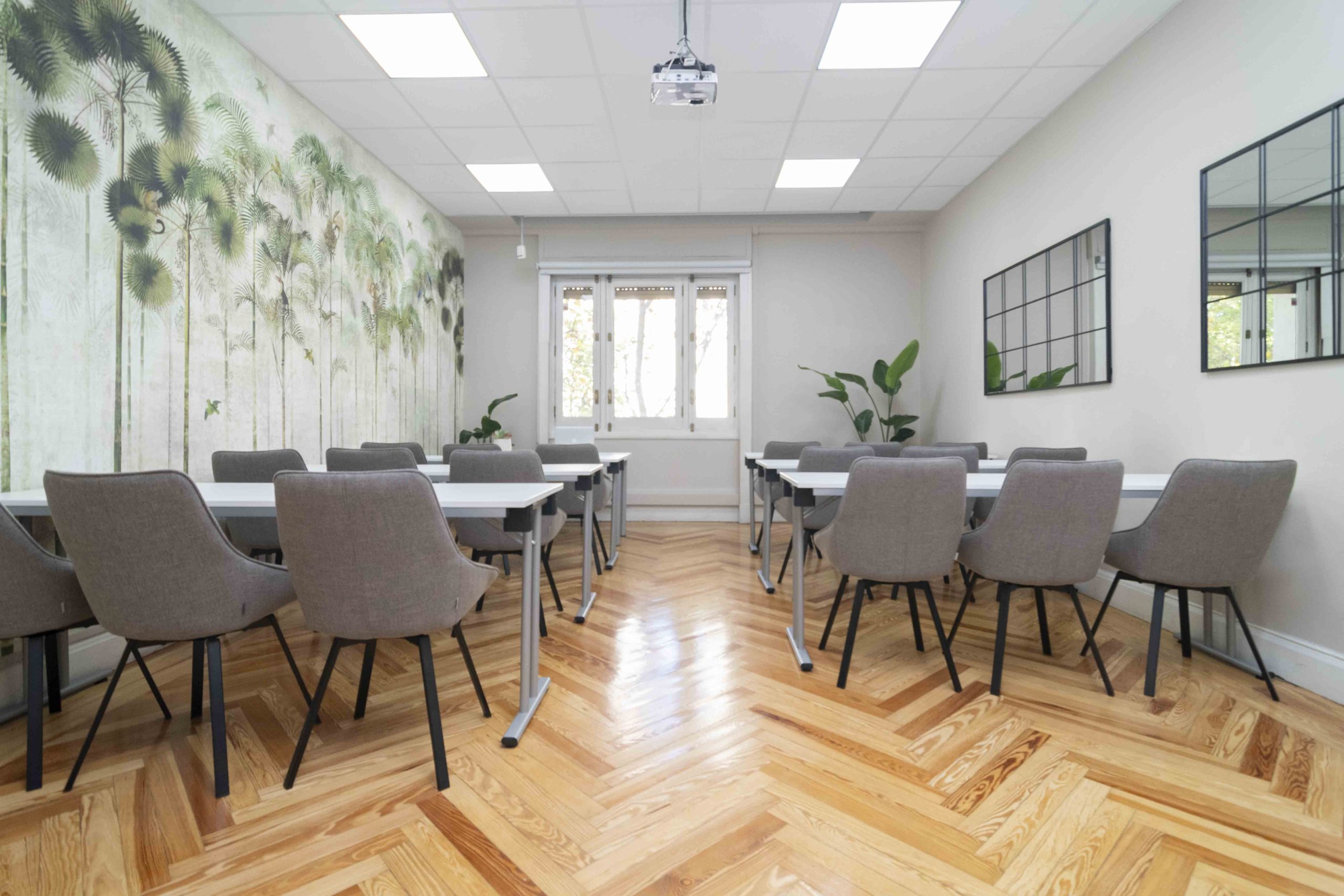
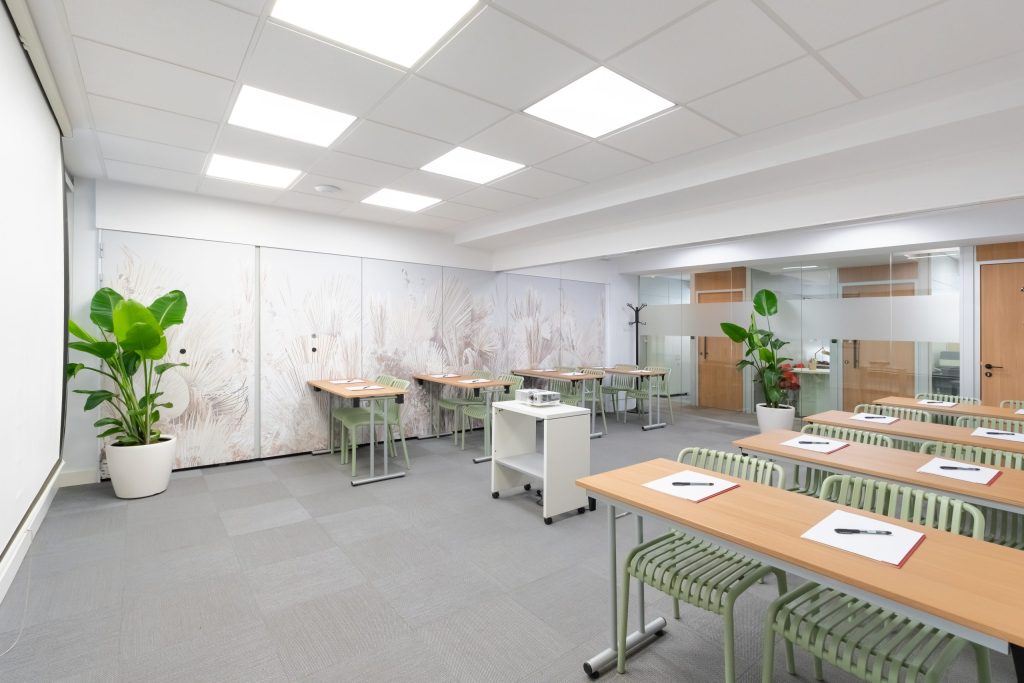
- School format: This is the most commonly used format for training. It consists of the classic layout that can be seen in schools, with chairs placed one behind the other and tables that can be for individual or shared use. This can be a disadvantage if interaction is required.
- Theatre format: the layout is exactly the same as in school, but with the difference that there are only chairs. It is frequently used for presentations or conferences. The advantage is that it allows for a larger number of people, the disadvantage is that there is not as much participation, the attendees are more listeners.

Training and food
Is food necessary for training? That will depend on each training, but we can say that it is a smart choice.
The key is to include at least one bottle of water per participant. You can then also offer coffee, some healthy snacks or fruit – this helps people stay focused without having to worry about having everything they need in the room.
For this, the best option is to choose places that also offer catering services and if the chosen space has a terrace where you can go out for a moment or even eat there, even better.
At Inspira Workspaces we have experience in organizing meetings and training sessions with coffee and lunch service.
Do you want to organize a training in Madrid?
If you are looking for a meeting room in Madrid for training in Inspira Workspaces We have everything you need to make your training course a success.
Discover all our spaces and services.
.