Working in Madrid without your own office is a viable option for companies seeking flexibility and cost control. This article analyzes flexible workstations, private offices, and virtual offices, comparing advantages and limitations, and explains how to choose between areas like Atocha or Chamberí based on your team's pace and needs.
There is a very specific moment when many companies ask themselves this question.
The traditional office no longer works, but you also don't want your team working from home without seeing each other for weeks. You've tried full remote work. You've tried keeping a large office "just in case." And now you're in between.
If your company is at that point, working in Madrid without your own office isn't a resignation. It's a strategic decision.
It's not about not having space. It's about not carrying around space you don't need.
This is what usually happens when you maintain an office that no longer fits.
We've seen this many times.
- Meetings in rooms too big for three people.
- Offices closed for half the month.
- Hybrid teams that never coincide on the same day.
- Five-year contracts signed at another stage of the business.
The office, which should facilitate productivity, is starting to generate friction. High fixed costs. Rigidity. A feeling of being overstaffed.
And at the same time, fully remote work isn't quite working either. Meetings drag on. Coordination becomes more complex. The culture fades away.
That's where flexible offices in Madrid start to make sense.
Flexible offices in Madrid: how they really work
When we talk about flexible solutions, we're not just talking about open coworking.
We're talking about a model that adapts to the stage your company is in.
In practice, this usually translates into three main formats:
Flex positions
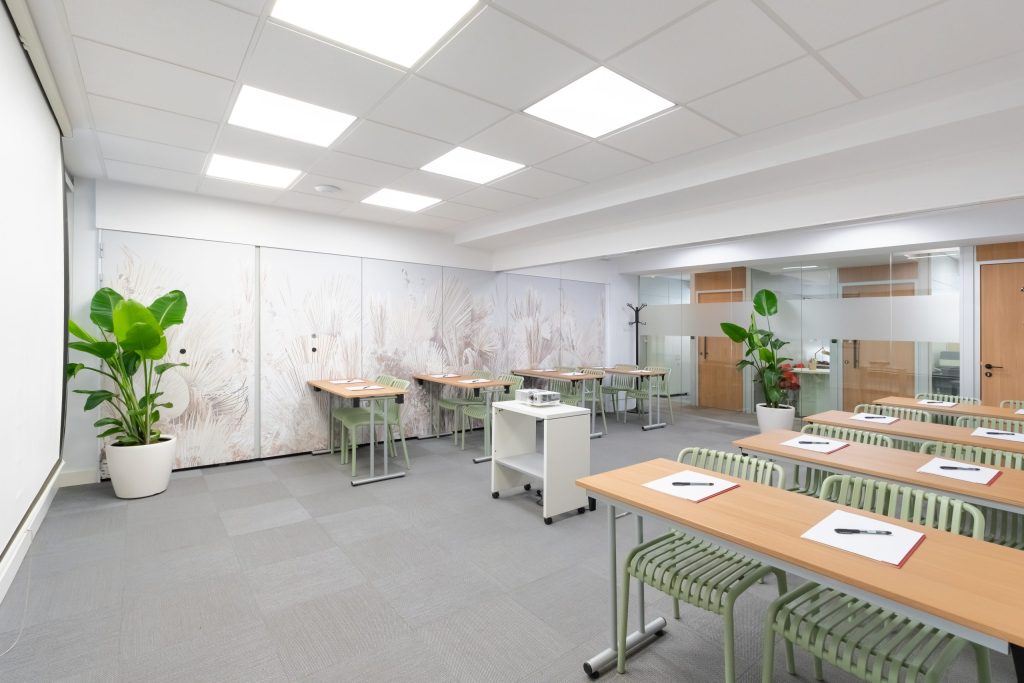
Flex positions They work well if your team doesn't need to come in every day.
Some members come two or three times a week. Others only when there are key meetings. You pay per use or for monthly packages. No initial investment. No long-term commitments.
Clear advantage: you reduce fixed costs and maintain a professional meeting point.
Limitation: It's not ideal if you need constant confidentiality or sensitive calls.
Private office
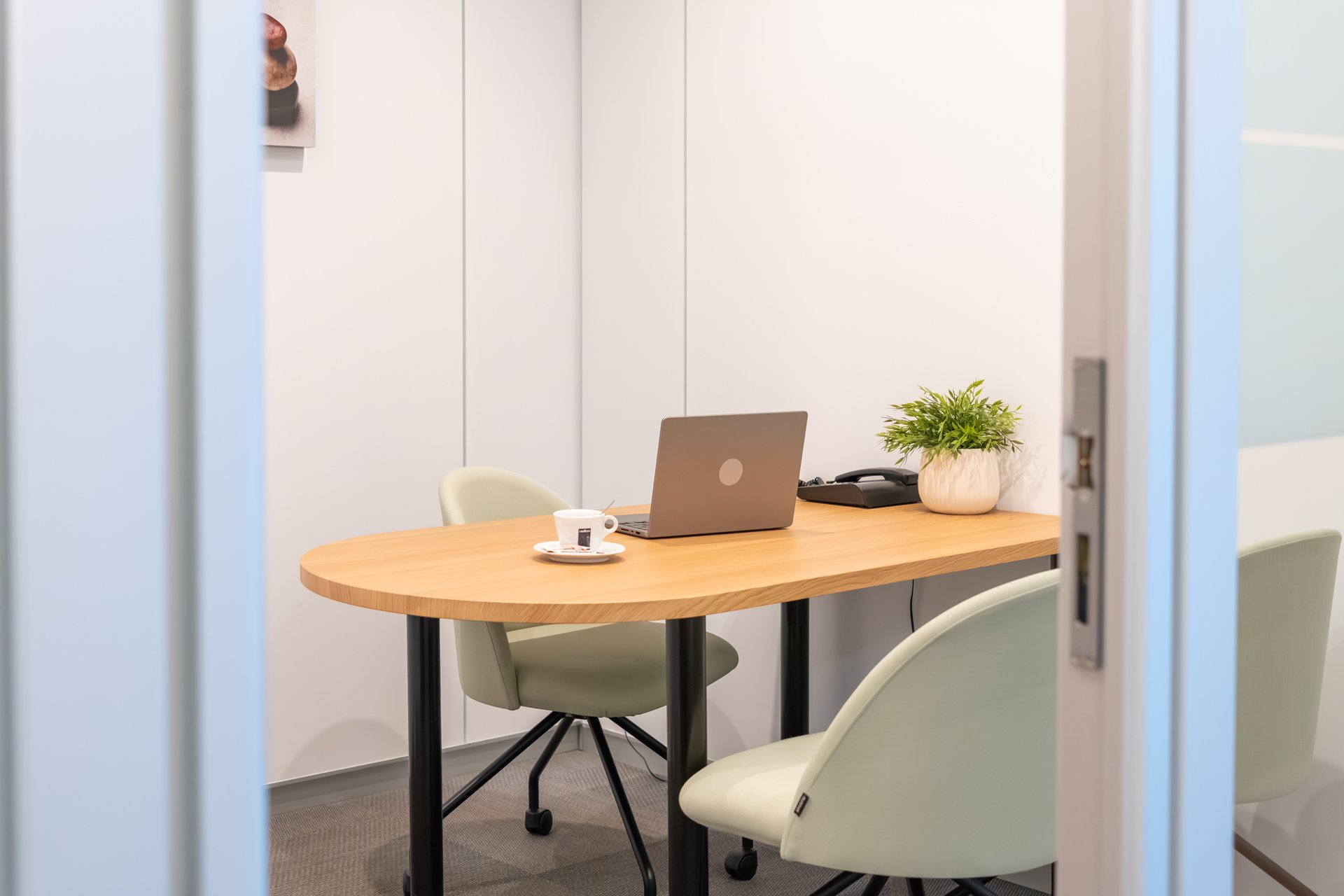
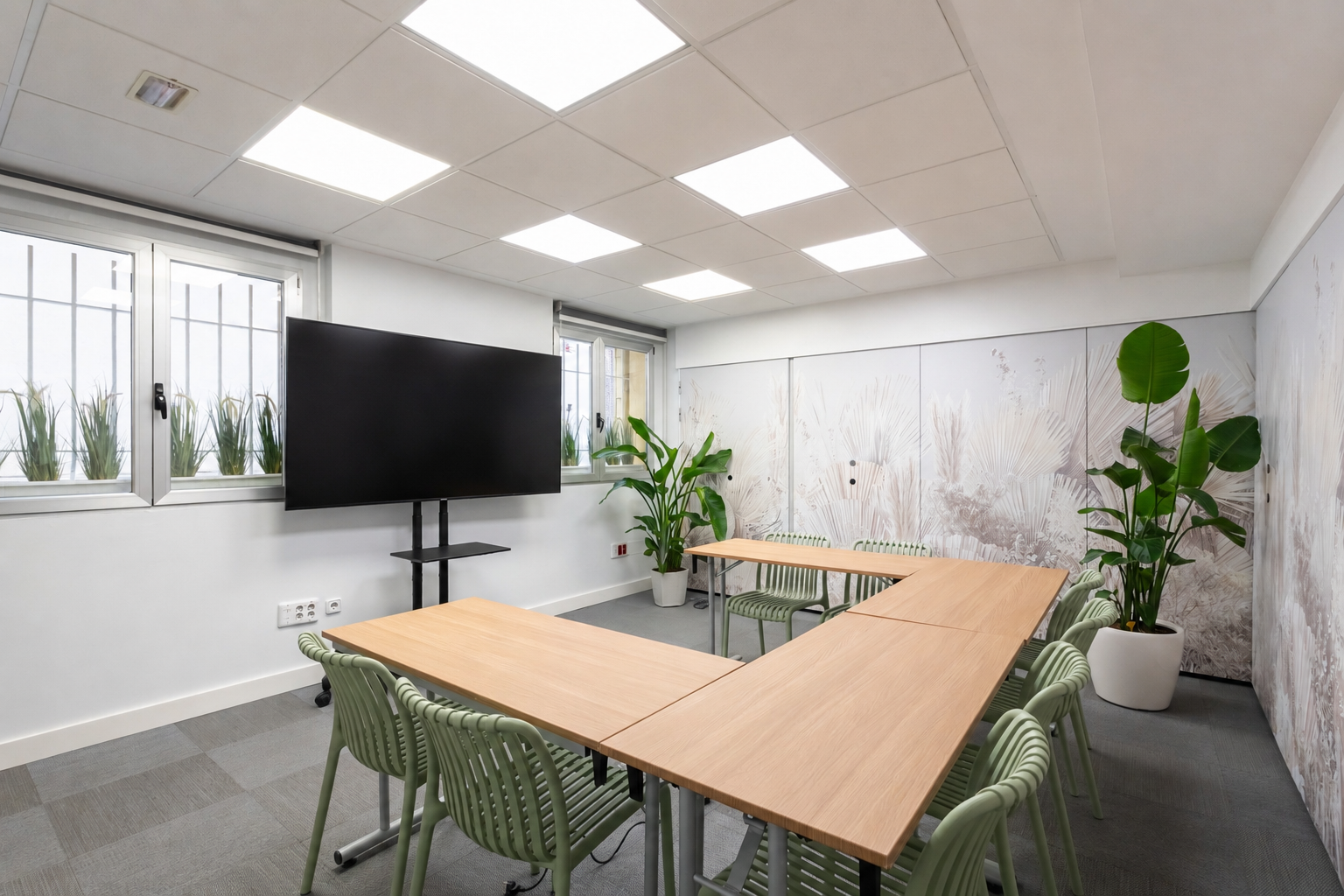
If your team is small, between two and eight people, a private office It is usually the most balanced option.
You have your own space. A closed door. A polished image. And at the same time, the flexibility to grow or downsize as your business evolves.
The difference compared to a traditional office lies in the commitment. You don't sign long-term contracts or take on separate construction, furniture, or supplies.
It works especially well when you're consolidating your team and don't yet want to commit to a five-year rental agreement.
Virtual office
There are companies that don't need a physical space on a daily basis, but do need a professional presence in Madrid.
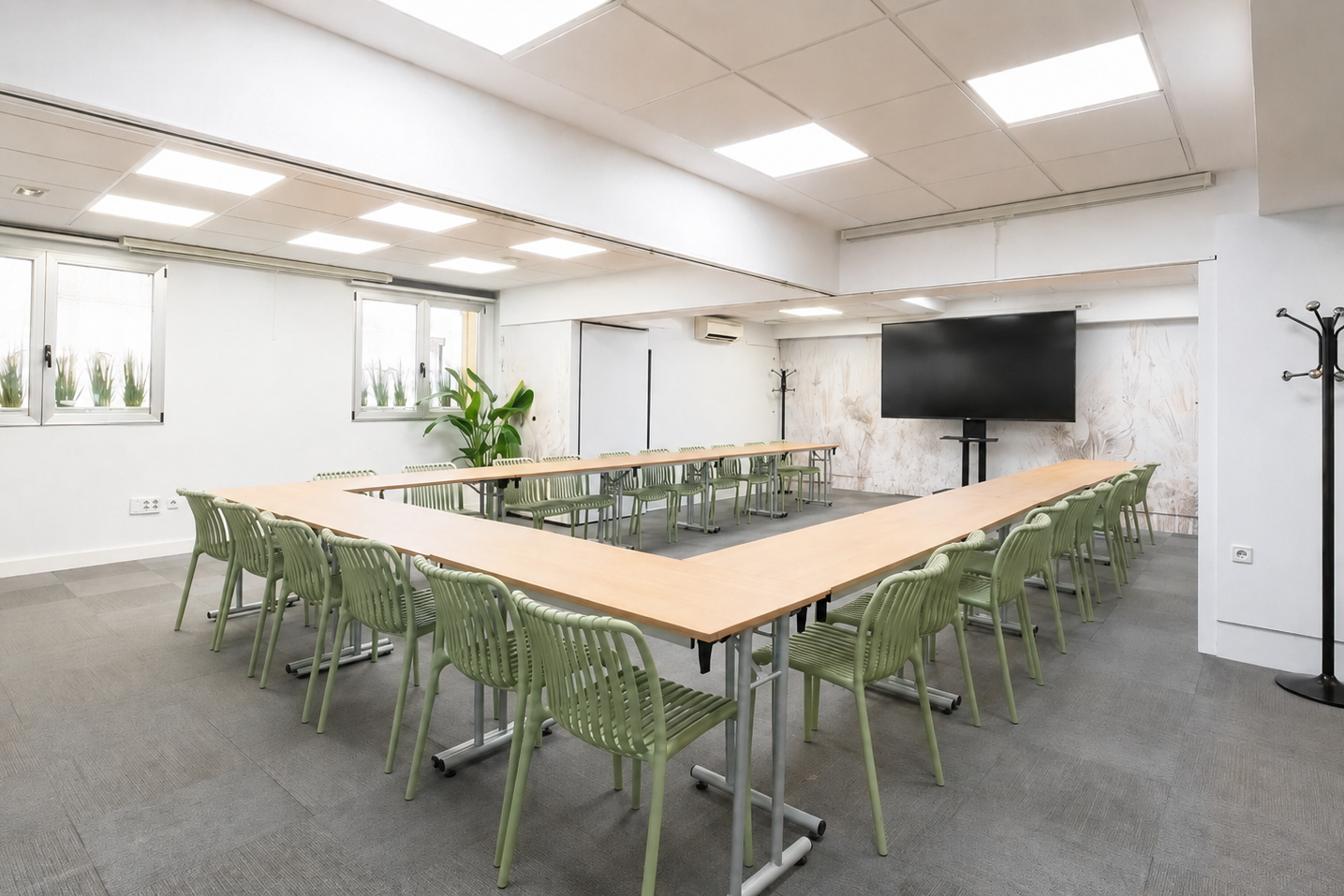
Registered office, correspondence management y possibility of using meeting rooms when you need it.
It's a practical solution if you operate remotely but want to maintain a formal structure.
Madrid changes depending on the area, and that matters
Working near Atocha is not the same as working in Chamberí.
The city has different rhythms. And so does your team.
Atocha, connection and dynamism
The Atocha Station area It has something very practical: it connects everything.
If part of your team lives outside the city center or travels frequently, this location makes logistics much easier. Commuter rail, high-speed train, metro. Everything nearby.
The atmosphere is dynamic. There's constant movement. Cafes with diverse clientele, professionals coming and going, a feeling of activity.
For companies that value accessibility and receive clients from outside, working in this area brings agility.
It's not the most residential Madrid. It's a working Madrid.
Chamberí, balance and consolidated professional environment
Chamberí has a different rhythm.
More relaxed. More stable. Wide streets, classic buildings, an interesting mix of tradition and business activity.
If your company is looking for a professional environment with a certain calmness, without losing its centrality, this area is usually a good fit.
It is common to see teams that appreciate being able to go out to eat with clients in quiet restaurants, or to work in a less fast-paced environment than other areas of the center.
It's not about aesthetics. It's about how your team feels when they arrive in the morning.
And that has more influence than it seems.
Working without your own office is not improvising
Flexibility is sometimes associated with a lack of structure. This is not the case.
In fact, when a company decides to leave the traditional office, it usually does so after carefully analyzing its real needs:
- How many people come regularly?
- How many in-person meetings are there per month?
- What level of confidentiality do we need?
- Do we expect to grow in six months?
When you have these clear answers, the flexible model becomes a management tool.
You can expand an office. Reduce positions. Change your business model. Adjust without disproportionate penalties.
That gives us some leeway.
And in stages of growth or transition, margin is key.
Real pros and cons of not having your own office
It's best to be honest.
Advantages
- Reduction of fixed costs.
- Greater adaptability.
- Lower risk in the medium term.
- Access to professional spaces without initial investment.
Drawbacks
- Less absolute customization of the space.
- Availability dependency if you need immediate expansion.
- Need to better coordinate the days the team is present.
It's not perfect. But for many SMEs and startups in Madrid, the balance is worth it.
If your company is in transition
There are companies that have gone through several phases in just a few years.
First fully remote. Then a partial return to the office. Then a reduction in square footage. Now uncertainty.
If you recognize yourself in that, perhaps you don't need a definitive solution. You need a well-managed intermediate stage.
A flexible private office in Chamberí while you build your team.
A set of flexible positions in Atocha while you define your structure.
A virtual office while maintaining distributed operations.
Nothing epic. Gradual decisions.
Working in Madrid without your own office doesn't mean sacrificing professionalism. It means adapting your workspace to the reality of your company today, not to what it was three years ago.
And that, in the current context, is usually a pretty sensible decision.
If you're considering options, the sensible thing to do is to compare calmly, look at spaces, talk to other teams that have already made the change, and analyze real numbers. Come to see us
From there, the choice usually becomes clear on its own.
FAQ's
Is it cheaper to work in a flexible office than to rent a traditional office in Madrid?
It depends on the size of the team and the length of stay. In most SMEs and startups, the flexible model reduces fixed costs because it doesn't require initial investment, construction work, or long-term contracts.
Which option is best for a hybrid team, flexible workstations, or a private office?
If your team doesn't work together every day, flexible workstations are usually sufficient. If you need confidentiality, frequent meetings, and a stable base, a private office offers more control without sacrificing flexibility.
Does it make sense to choose a zone based on the type of client or team?
Yes. A location like Atocha facilitates connections and frequent travel. Chamberí offers a quieter, more established environment. The choice influences daily logistics and professional perception.