Working in Madrid without your own office is a strategic decision for companies seeking flexibility and efficiency. Atocha offers connectivity and dynamism, ideal for hybrid teams and national clients. Chamberí provides stability and a well-established professional environment. Flexible workspaces allow you to adjust size, format, and commitment according to your company's actual growth.
There are times when having your own office no longer makes sense.
Your team doesn't come in every day. Meetings are crammed into two mornings. You pay for square footage that's barely used. And yet, when you really need a professional workspace, you don't have it.
If your company is at that point, you're not alone.
Working in Madrid without your own office is no longer unusual. It's an operational decision. And depending on where you work, it can be an advantage.
Today the question isn't whether you need an office. The question is what kind of presence you need and in which area it's most advantageous for you.
Atocha, dynamism and a real connection with Madrid

Working at Atocha It has something very concrete: movement.
It's not just the station. It's the constant feeling of connection. Commuter trains, high-speed trains, metro, buses. If your company has clients outside Madrid or a team that travels from other cities, Atocha makes things much easier.
I've seen this many times.
Meetings that used to be a logistical problem suddenly become easier. A client from Valencia arrives in the morning, meets with you, and returns the same day. No car. No complications.
Furthermore, the area boasts a diverse mix of profiles: established companies, independent professionals, and startups in the validation phase. This creates a varied professional environment, which is beneficial if your company operates in multiple sectors.
Clear advantages of working in Atocha:
Direct national and international connectivity
Easy access for hybrid equipment
Active professional environment all day long
Proximity to cultural areas and open spaces such as the Paseo del Prado
Drawbacks? It's a busy area. If you're looking for absolute peace and quiet, it's not the quietest part of Madrid. But if your business needs speed and connectivity, it works.
They usually fit in well here:
Flexible workstations for teams that come in 2 or 3 days a week
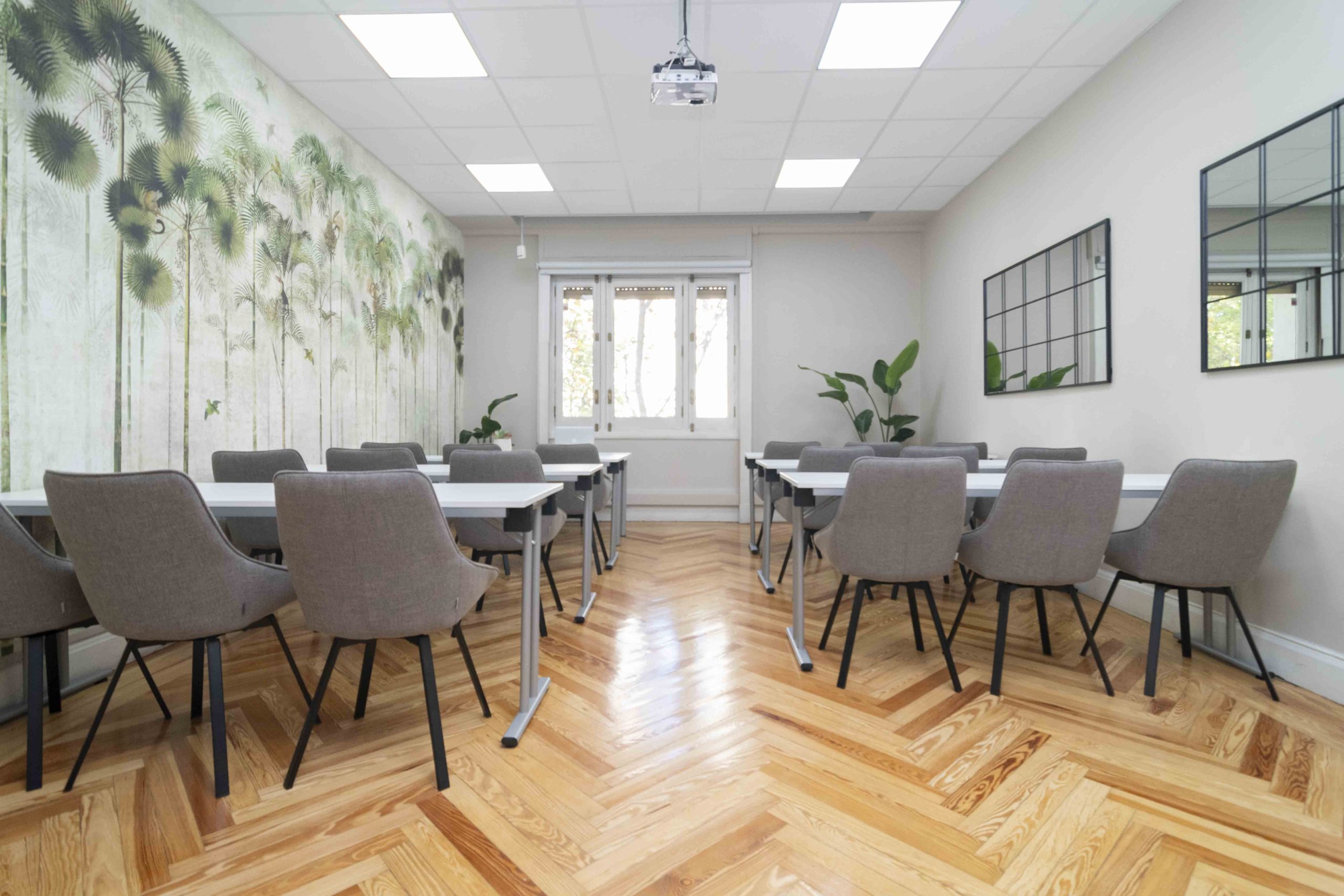
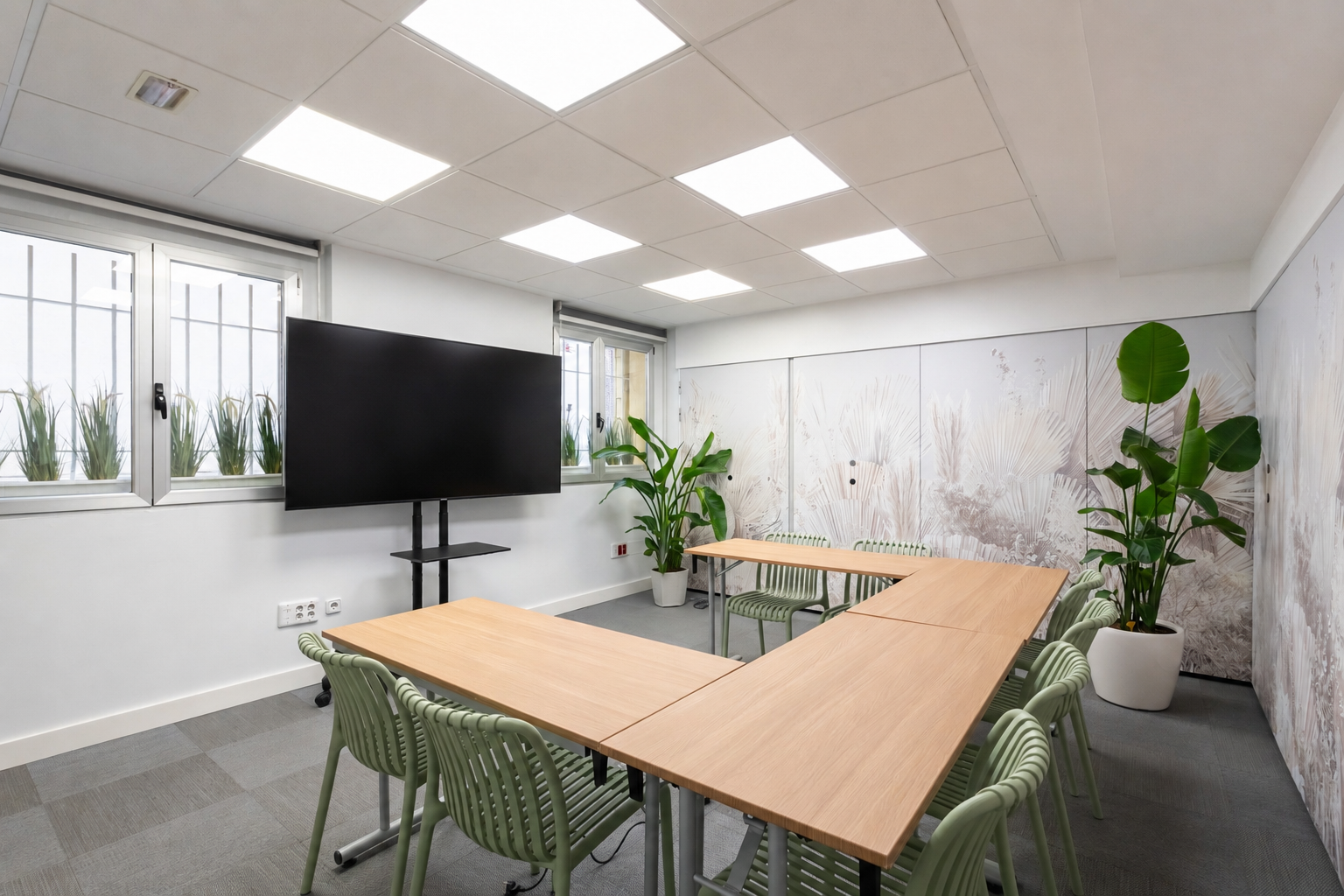
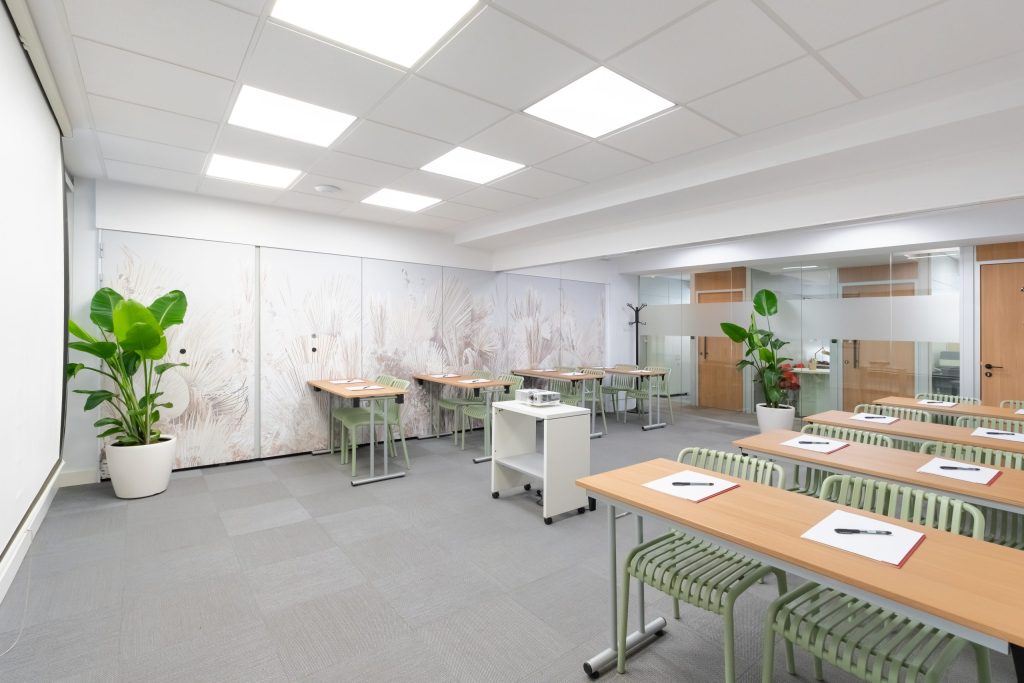
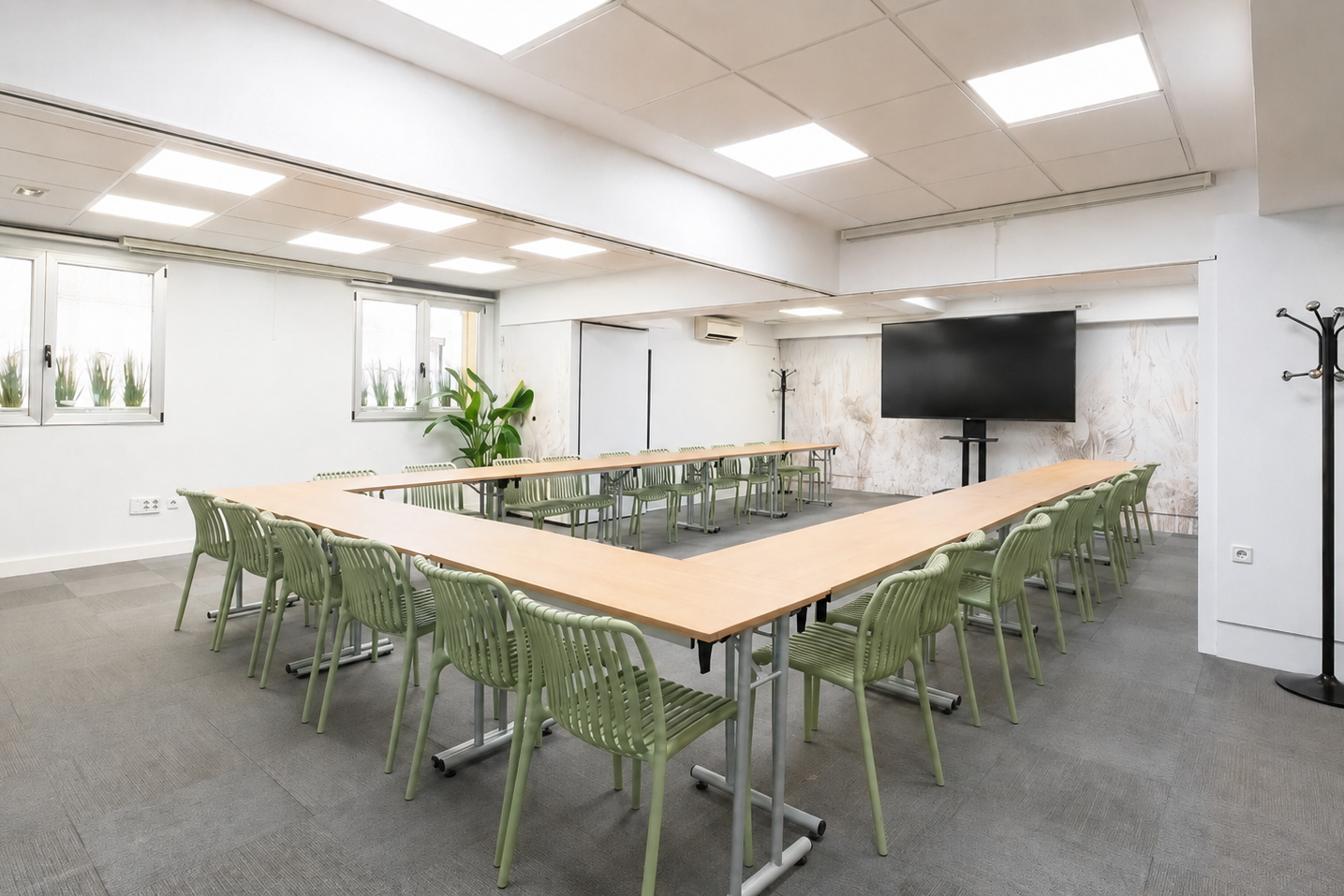
Meeting rooms well located for specific meetings
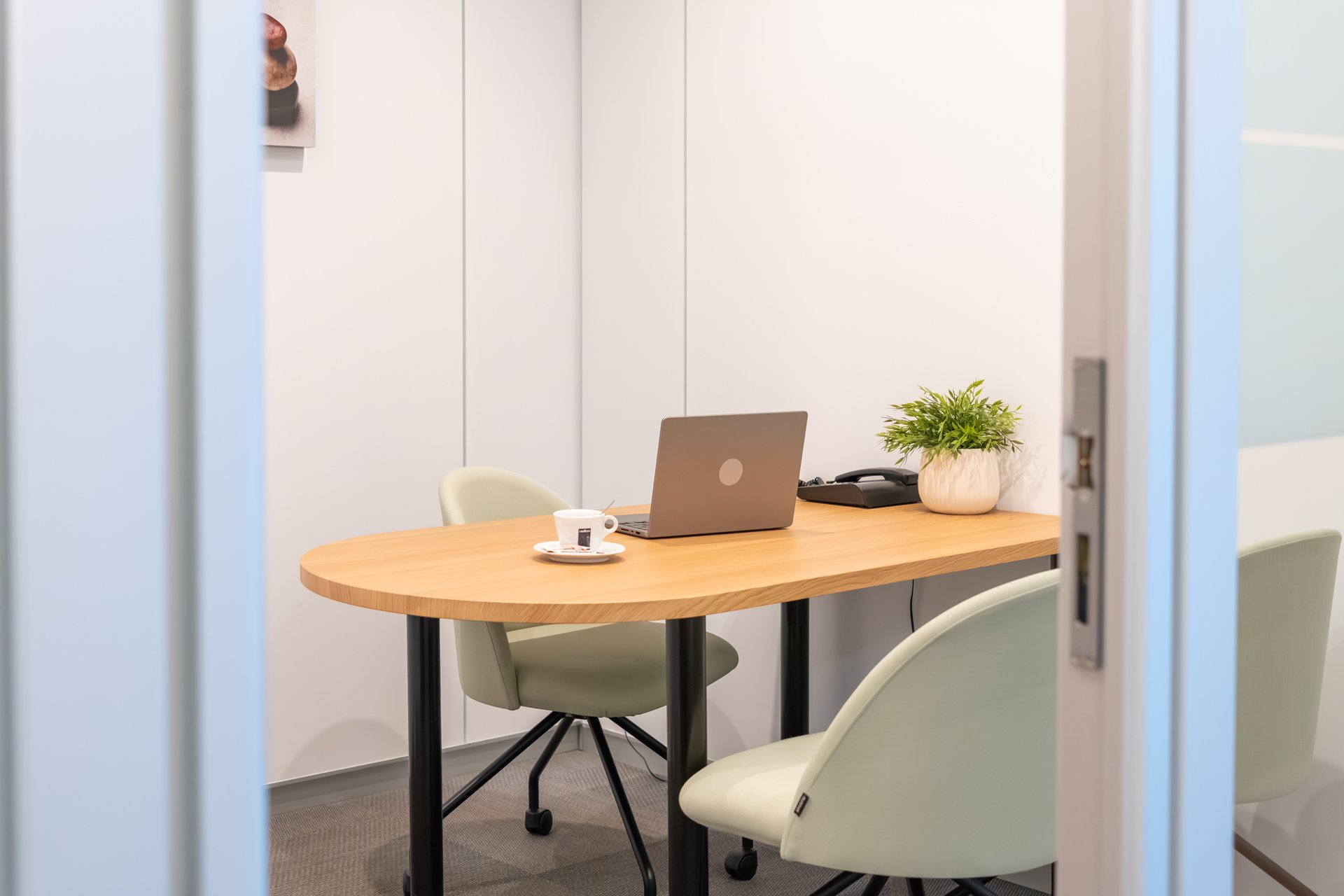
Private offices For small teams that need focus without a long-term contract
If your company is comparing coworking options in central Madrid, Atocha is usually the practical choice.
Chamberí, balance and stable professionalism

Here the pace slows down a bit. It's not touristy. It's not chaotic. It's a neighborhood with a clear professional identity. Small and medium-sized businesses, established firms, consultancies, technical professionals.
If your company is looking for a more stable presence, without losing a central location, Chamberí is usually a better fit.
Many teams that have tried full remoteness end up looking for something like this.
They don't want to go back to a traditional office with a five-year contract. But they also don't want to work from home all the time. They need a fixed location. A place to meet regularly. A place to leave materials. A place to have privacy.
In Chamberí, that is achieved through balance.
Typical advantages:
Quiet professional environment
Good connection to the centre without the intensity of busier areas
Solid image for client meetings
Neighborhood with services, restaurants and local shops
These tend to work especially well flexible private officesTeams of 3 to 8 people who want to work together without assuming a rigid structure.
They also fit virtual offices If your company needs a registered business address and correspondence management in a well-known area, but without taking up daily space.
Working without your own office, that's what really changes things
Beyond the area, something changes when you stop having a traditional office.
The burden of a long-term contract disappears. The initial investment in furniture disappears. Months of paying for empty space disappear.
But other questions arise.
How do I coordinate my hybrid team?
What happens if we grow in six months?
What if instead of growing we reduced our structure?
Flexible solutions work because they allow for adjustment.
I've seen companies go from four to eight positions in a matter of months. And also teams that reduce their physical presence because some of the work is digitized. Without penalties. Without endless negotiations.
That's not theoretical. It's practical.
What's the best fit for your company?
It depends on your moment.
If your company:
He has frequent meetings with clients who arrive by train.
He moves around to various parts of Spain
It needs high accessibility.
Atocha is usually more practical.
If your company:
Looking for stability and a consolidated professional environment
Prioritize focus and continuity
He wants a solid image without overexposure.
Chamberí usually offers a better fit.
In both cases, the flexible model allows combining formats:
Shared positions for profiles that come occasionally
Private offices for the core team
Meeting rooms on demand
Virtual office for tax presence
It's not an ideological decision. It's a decision of efficiency.
Madrid city centre without rigidity
Working in central Madrid without your own office is no longer a temporary solution. It's a common strategy for SMEs, consultancies, startups, and established teams.
The city has changed. Habits have too.
What once seemed unstable is now simply adaptable.
And when your company needs room to adjust structure, budget and space, that adaptability makes all the difference.
Sometimes it's not about having an office.
It's about having the right office, at the right time, and in the area that really makes your work easier.
if you are valuing Atocha o ChamberiThe best decision isn't the one that sounds the best. It's the one that fits with how your team works today.
And when you see it clearly, you can tell from the first month.
Would Atocha or Chamberí suit you better?
If you're considering working in Madrid without your own office, the most helpful thing to do isn't to make that decision from a screen.
Come visit us for a day. Try out the space. Sit down with your team. Have a real meeting. See how the area moves at the time you would use it.
Sometimes you see it clearly in a morning.
If you want, You can visit our flexible solutions in Atocha or Chamberí and calmly analyze which format best suits your company today, not the one from three years ago.
Without pressure. With sound judgment.
4 FAQs
1) Which option is better if my team only comes 2 or 3 days a week?
Typically, a combination of flexible workstations and a dedicated meeting room works better than a large, fixed office. You pay for actual usage and maintain a professional image when coordination is required.
2) Atocha or Chamberí, which is more suitable for meetings with clients?
It depends on how they arrive. If they come by train or travel frequently between cities, Atocha is usually more convenient. If your meetings require a quieter, more "stable" environment, Chamberí is generally a better fit.
3) Can I have a presence in Madrid without renting a space daily?
Yes. With a virtual office you can have a professional address, mail management and, depending on the service, access to meeting rooms when you need them.
4) What happens if my company grows or reduces its team in a few months?
That's where the flexible model usually wins. You can adjust positions, switch to a private office, or reduce your physical presence without being tied to a long-term contract or unused space.