What your team really needs is not another meeting, but simply some breathing room.
Not in the poetic sense. Real air. Getting away from the same table, the same screen, the same room where they always talk about the urgent and almost never the important. Because sometimes writer's block doesn't come from a lack of talent, or a lack of desire, or even a lack of time. It comes from always thinking about the same thing.
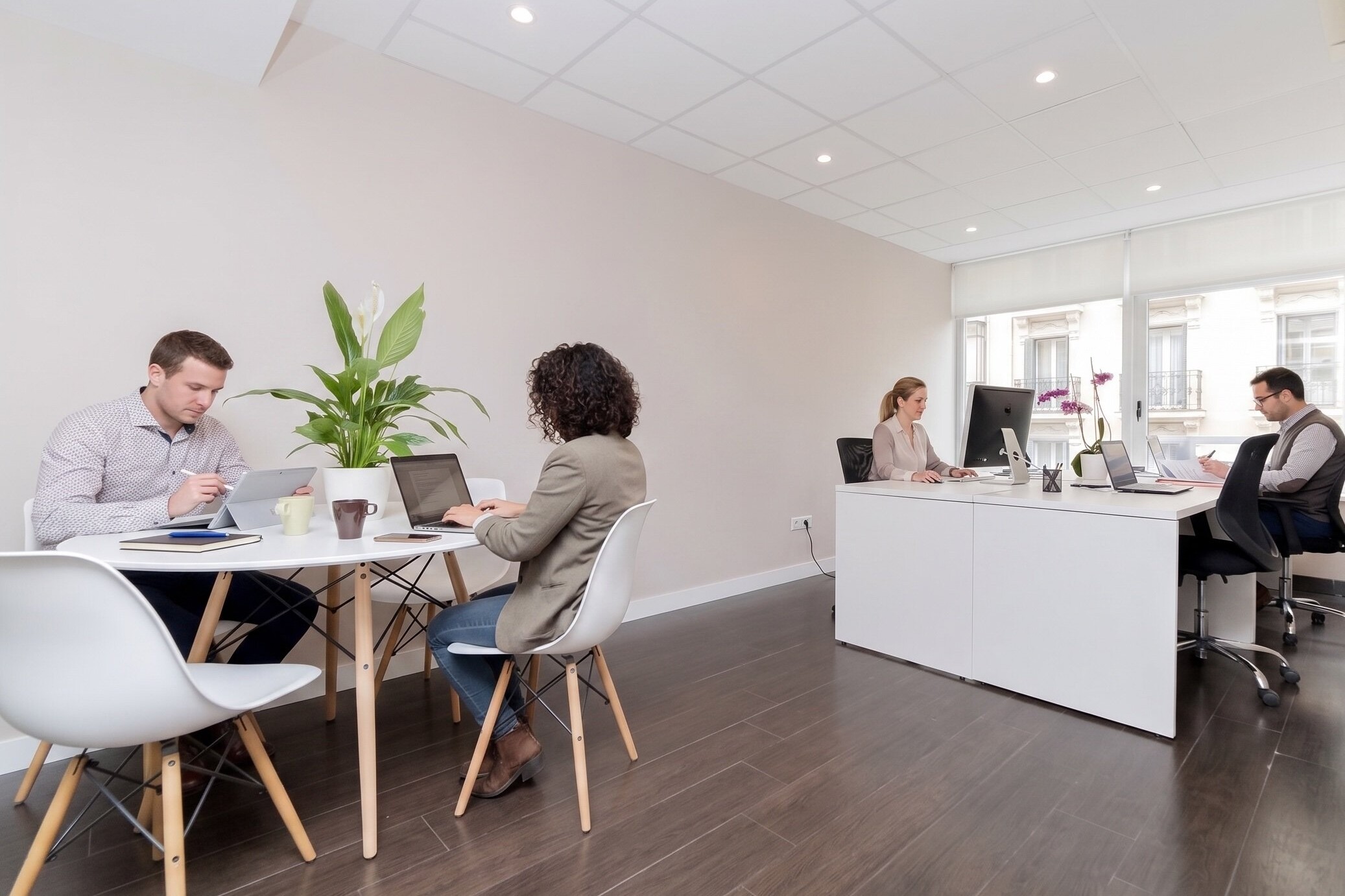
Coworking and creativity have a more practical relationship than it seems. It's not about setting up pretty tables, plants, and coffee and waiting for a great idea to appear. That would be too easy. It's about changing the context in which you work, about taking your company out of a routine that, without making a sound, may be limiting the way you think, make decisions, and collaborate.
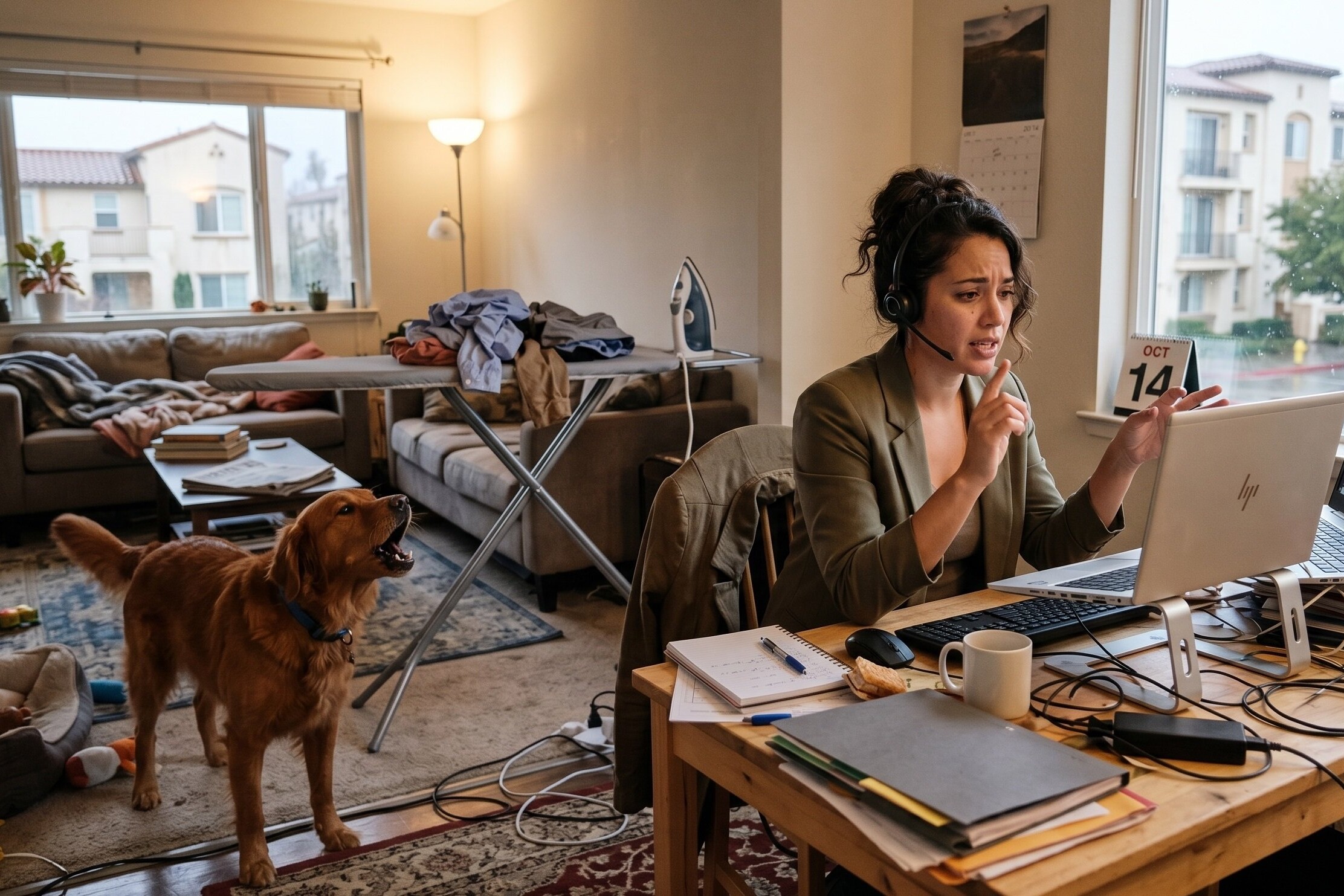
If your company has been working from home, from a half-empty office, or from a meeting room that no one pays attention to anymore, perhaps the problem isn't the equipment. Perhaps it's the environment.
When space starts to weigh more than it seems
It happens to many companies. They don't always say it like that, but it's noticeable.
The meetings start late. Two people connect from home, one from their phone, the other from a room with echo. Someone shares their screen, but no one really looks at them. They discuss tasks, review pending items, and end the call. All good. Also rather bland.
Then comes the usual phrase: "We need to think of something different."
The problem is that thinking differently from the same place, with the same format and the same dynamics, rarely works. It's not for lack of will. It's that context weighs more heavily than we realize.
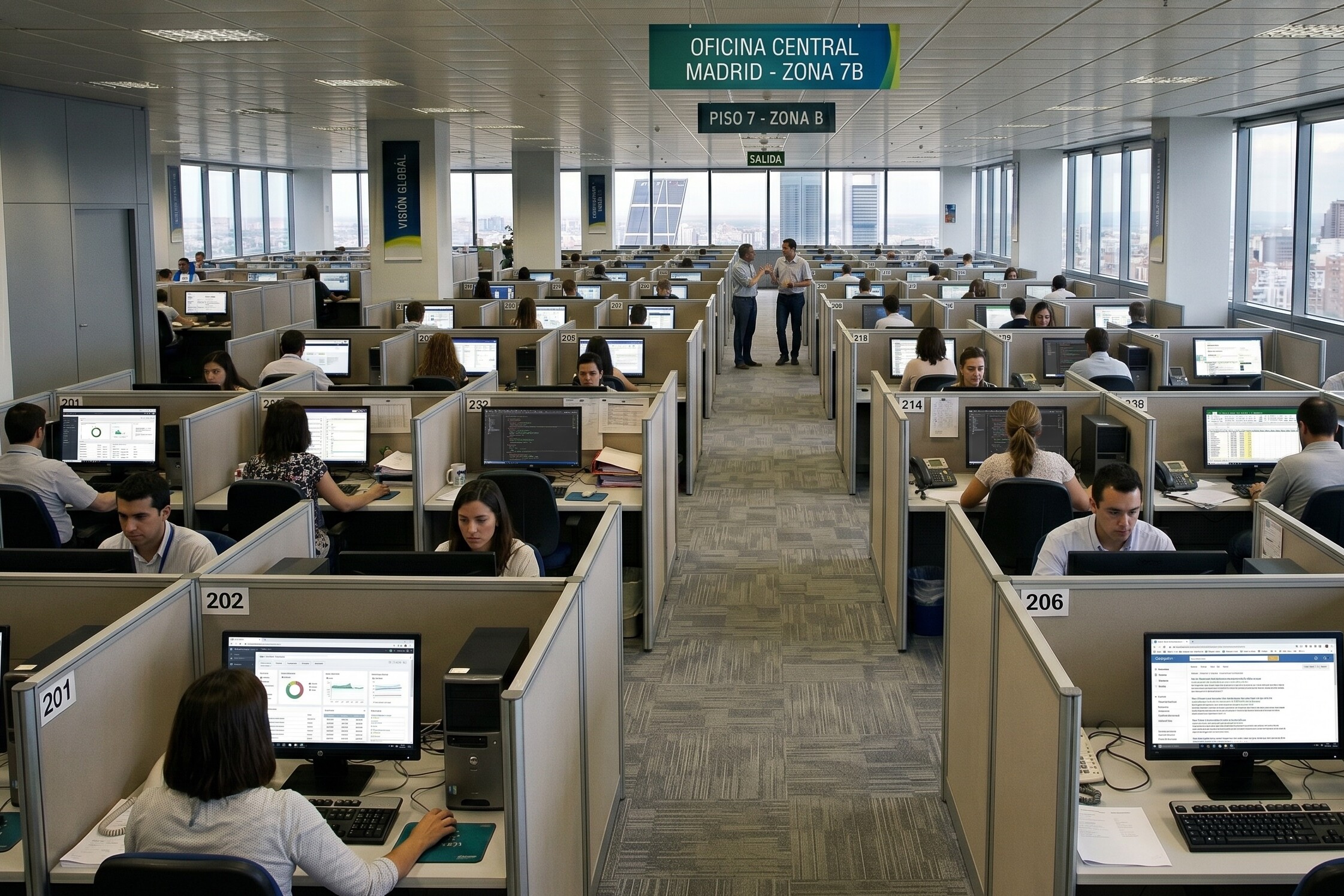
The environment doesn't do the work for you. But it does determine what kind of conversations are possible. An overly rigid office turns every meeting into a formality. Working from home offers comfort, but it also tends toward repetition. And a company that has grown without rethinking its space ends up, almost without realizing it, in a paradoxical situation: it has a team, it has projects, it has activity, but it lacks a place where all of that can take shape.
That's where a coworking space can make senseNot as a trend. Not as a business magazine aesthetic. As a pragmatic decision.
Why changing your environment helps you think better
Changing your environment breaks small patterns of inertia. When you enter a different space, your attention shifts. You see other people working. You hear background conversations. You move differently. You're not sitting in the same spot where yesterday you answered emails, discussed budgets, and reviewed an outstanding invoice.
In many teams, the best ideas don't emerge during the formal part of the meeting. They appear earlier, while someone is arriving with coffee. Or right after, when two people are still talking while standing. Or in that side comment that wouldn't have come up in a 30-minute video call with everyone watching their watch.
Creativity needs structure, yes. But it also needs room to maneuver. Spaces where a conversation isn't completely scripted. Moments where someone can say, "Wait, what if we approach this differently?"
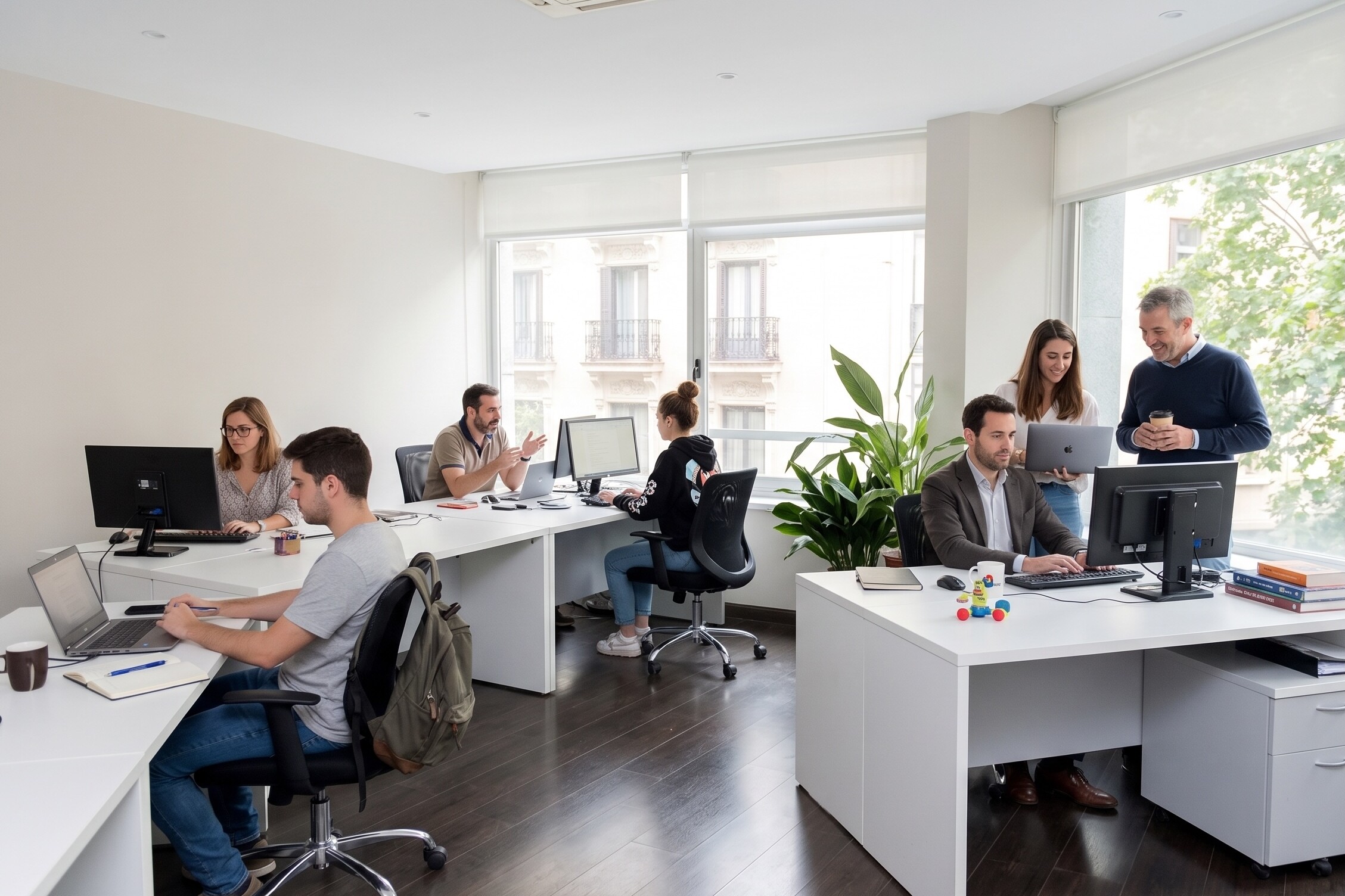
A well-used coworking space allows for that.It provides a professional environment, but not as closed off as a traditional office. It allows you to bring the team together without committing to a long-term contract. It helps you separate focused work from strategic discussions. And, above all, it changes the mental rhythm of the day.
Not all jobs require creativity, but almost all require clarity.
 Creativity is sometimes discussed as if it only matters to designers, agencies, or tech startups. That's not the case.
A small business reorganizing its team needs creativity. So does a company looking to improve its processes. A freelancer with an important proposal to present needs to take a step back and look at their work. Even a sales team that's been using the same pitch for months needs to stop and consider whether it still makes sense.
Creativity isn't always about inventing something new. Often it's about seeing what's already in front of you more clearly.
That's why space matters. Because when everything happens in the same place, everything starts to get mixed up. Emails, calls, urgent tasks, difficult conversations, interruptions. The mind works, but it doesn't always think clearly.
A coworking environment can help you create a useful separation. Today you're here for a work session. Today you're here to review a strategy. Today you're here to meet with your team without the usual distractions. That small intention makes a big difference.
Coworking for hybrid teams: a meeting point that doesn't weigh you down
Hybrid work has provided a lot of freedom. It has also created new problems.
Some teams work well remotely for individual tasks, but struggle when they have to coordinate. Others have lost some of the informal communication that used to resolve minor roadblocks. And some companies have discovered that having a fixed office every day is no longer worthwhile, but having no shared space at all doesn't work either.
A coworking space can serve as a meeting place without forcing you to return to the previous model. Your team can work from home part of the week and meet in a professional setting When it really makes sense. A monthly planning session. A client meeting. A morning of collaborative work before launching a project. A day to prioritize without everyone being on a different screen.
There's no need to force its presence. In fact, it usually works best when the use of the space has a clear purpose.
The change of environment shouldn't be just another obligation. It should help. If your team leaves an in-person meeting with greater clarity, better agreements, and less of a sense of distraction, then the space has served its purpose.
Creativity also needs a certain amount of positive discomfort
Working from the most comfortable place doesn't always help.
Comfort has its advantages. It reduces friction, saves time, and allows for concentration. But when everything is too familiar, it can also diminish focus. At home, the mind quickly falls into routine mode. In a traditional office, every corner is associated with a habit. The small room where problems are discussed. The table where nothing ever gets finalized. The video call that starts just like all the others.
Changing your environment introduces a slight discomfort. Not an annoying discomfort, but a gentle alertness. You're in a different place. There's a different kind of energy around you. You behave with a bit more intention, and that can spark ideas.
Not because the space is magical. Because it forces you to look at your work from a different perspective. And sometimes, that's enough to unlock a conversation that's been going around in circles for weeks.
Spontaneous conversations, a value that many companies underestimate
Something gets lost when everything is scheduled: the conversation that wasn't planned.
In a small company, these conversations can be invaluable. One person discusses a problem with a client. Another recalls something that worked months ago. Someone else proposes a solution that wouldn't have come up in a formal meeting because it wasn't "on the agenda."
Working remotely makes things more difficult. It doesn't disappear entirely, but you have to actively bring it up. And when everything has to become a call, a link, a calendar invitation, and a confirmation, many small things get left unsaid.
In a coworking space, these conversations naturally arise. They happen among team members, but also with people from other sectors. There's no need to romanticize networking. Not every contact translates into opportunities. But being exposed to other ways of working helps you step outside your comfort zone.
Sometimes you hear how another company is organizing its growth. Or you see a professional preparing a presentation. Or you simply realize there are more ways to structure your day. That indirect contact also fuels creativity.
Meeting rooms that help, not hinder
Not all meeting rooms are conducive to good meetings.
Some are too impersonal. Or too closed off. Or too uncomfortable to spend two hours thinking calmly. Others seem designed merely to fulfill a requirement: table, chairs, screen, done. But an important meeting needs more than that.
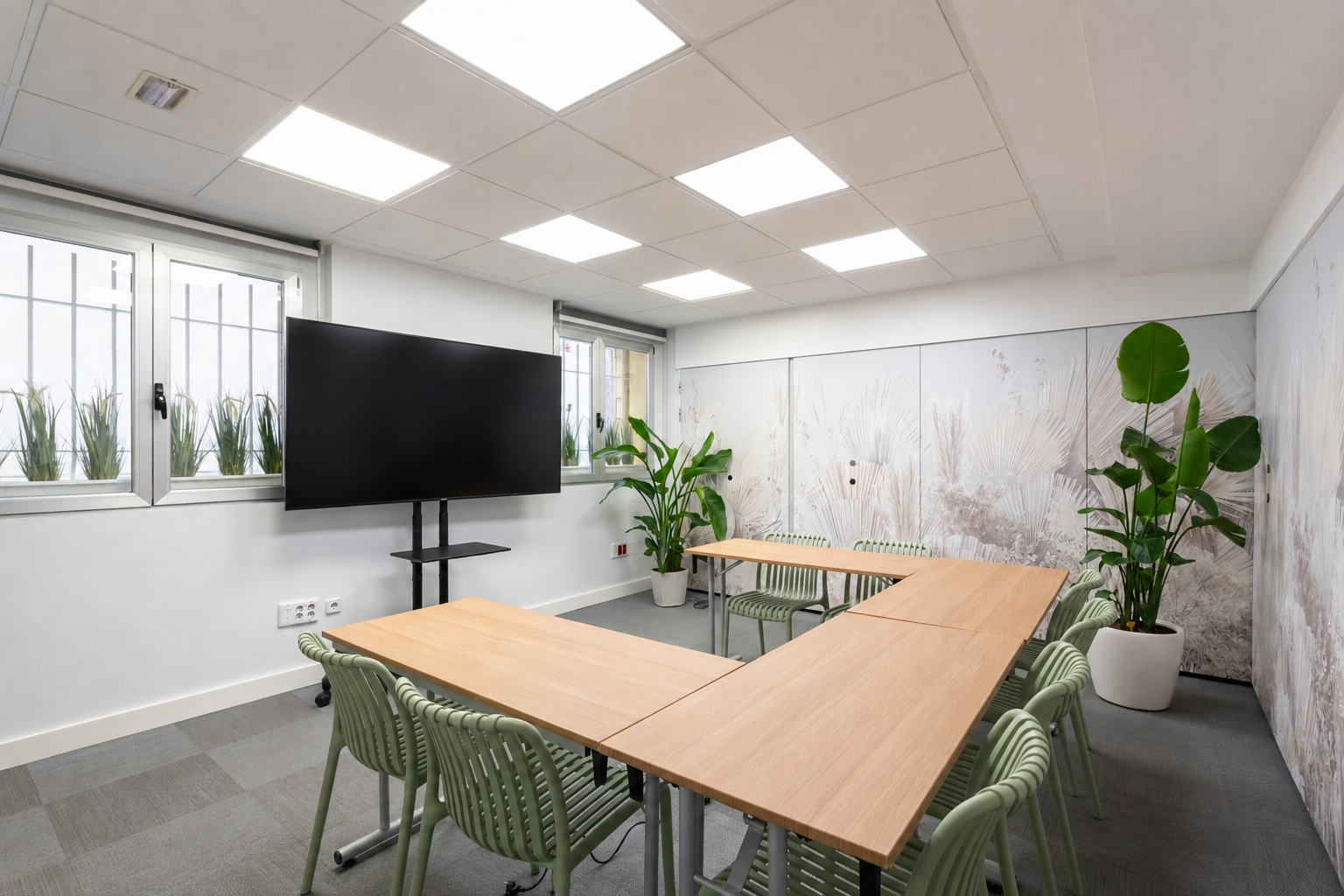
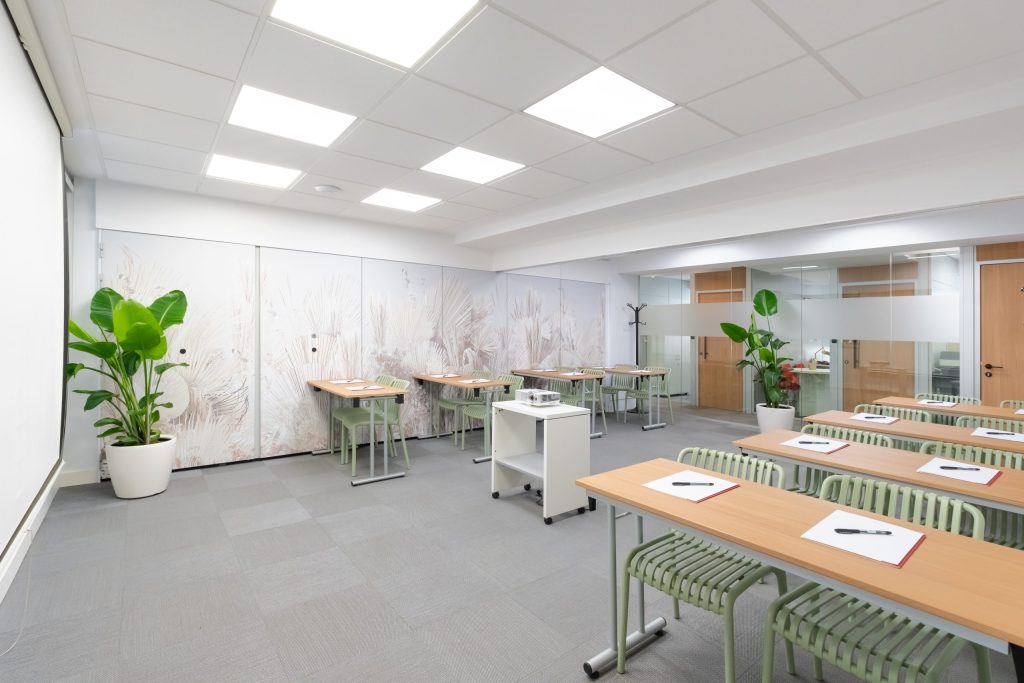
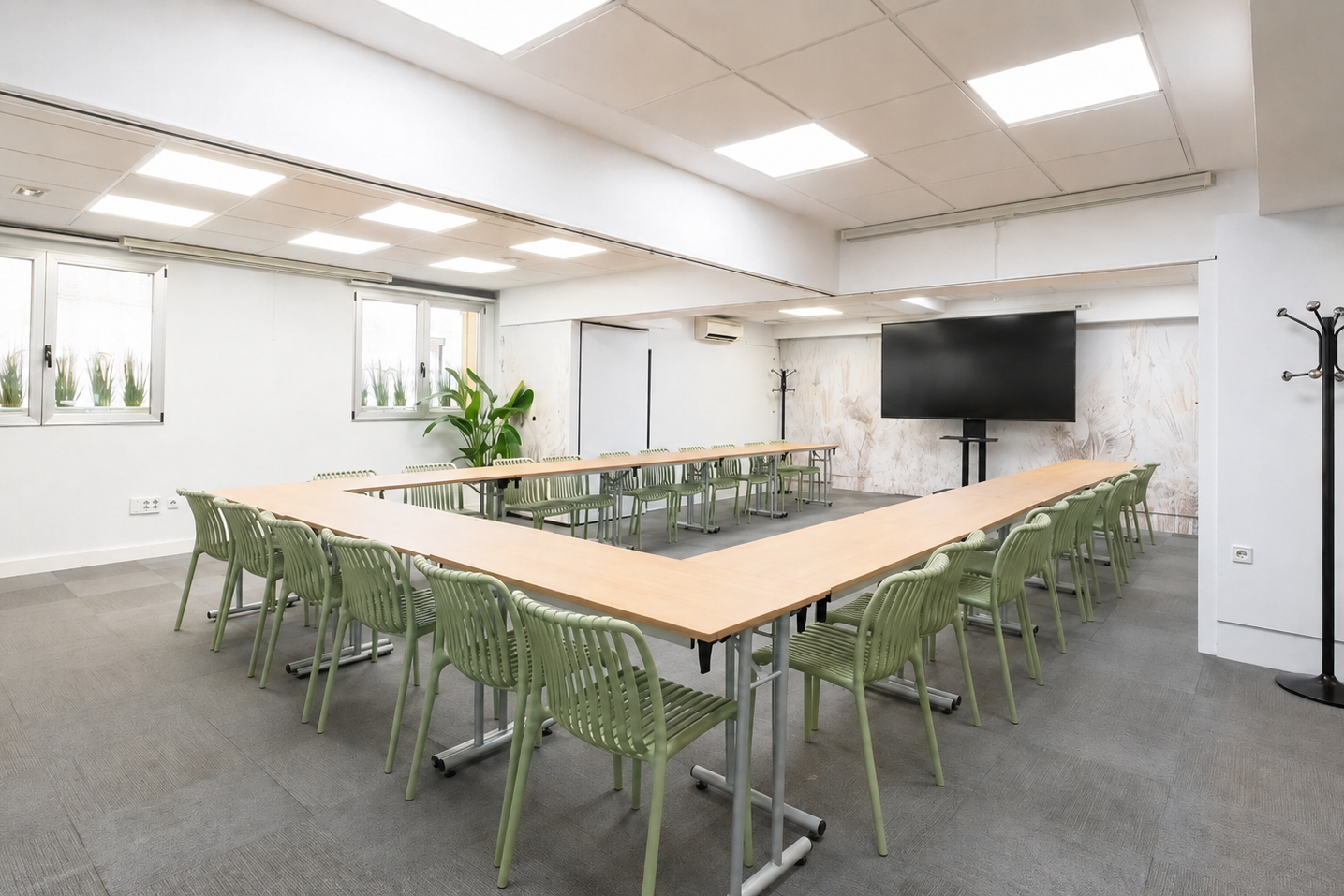
It needs to be easy for people to arrive. It needs to be possible to connect without wasting ten minutes dealing with cables. It needs to have privacy when discussing sensitive decisions. It needs to be a space that doesn't feel improvised if a client comes in. And it needs to be a place where the team doesn't leave feeling more stressed than when they arrived.
In a coworking space, a good meeting room It can help you change the pace. Saying "we'll make a quick call" is not the same as booking a room to work on a decision calmly. The gesture itself communicates something: this deserves attention.
For creative sessions, presentations, or strategic meetings, that detail matters.
Changing the environment doesn't fix bad dynamics, but it can make them visible.
Let's be honest. A coworking space alone won't fix a disorganized company, a poorly coordinated team, or a meeting without a purpose.
If a meeting has no agenda, it will remain confusing. If no one makes decisions, the space won't make them for you. If your team is overwhelmed, a beautiful room won't alleviate the workload.
But changing your environment can make those dynamics visible.
When you step outside your routine, you see more clearly what works and what doesn't. You can tell if the meeting really needed five people or just two. You can see if the problem was a lack of communication or too much noise. You can see if the team needs to work together, or simply coordinate better.
That diagnosis is also valuable. Many companies continue doing the same thing because the environment allows them not to question it. Changing location introduces a small disruption. And within that disruption arises an uncomfortable but useful question: Does what we're doing still make sense?
How to use a coworking space to spark ideas, without turning it into a theater
The key is to use the space intentionally.
There's no need to fill a day with artificial activities. In fact, it's often counterproductive. Nobody needs a whole morning of sticky notes if the real problem is that there are three pending decisions and nobody wants to take responsibility for them. You can start more simply.
Reserve a room to review an important project.Bring the team together on a specific day before a deadline. Use a morning away from the usual office to brainstorm the quarter's strategy. Replace a long meeting with two shorter sessions: one for discussion and one for decision-making. Leave time between meetings for people to talk without an agenda.
Is the team more involved? Are the conversations clearer? Are decisions that were previously postponed being finalized? Do people leave with a concrete idea of what to do next?
That's what matters. Not the aesthetics of coworking, but the real effect on the way we work.
For whom does this change make the most sense?
A coworking space can be useful if your company is in one of these situations:
Your team works in a hybrid environment and needs to see each other regularly, but not every day.
You have an office that has become too big, too small, or poorly adapted to its actual use.
You need to bring together people from different areas of Madrid at an easy meeting point.
You want to organize creative sessions, client meetings, or planning days without relying on a coffee shop or an impromptu room.
You're growing, but you don't want to take on a long-term contract yet.
You are self-employed or a freelancer and you notice that always working from home is starting to close you off mentally.
Not everyone needs a coworking space. But many companies need something more flexible than their current situation. And that's where it's worth taking a closer look.
The value lies in working differently, even if it's just for a few hours.
Changing your environment doesn't have to be a big decision. It can be a small trial.
One morning. One meeting. A day of shared work. A room reserved to carefully consider a decision you've been putting off for too long.
Coworking and creativity connect precisely there, in that specific act of stepping off autopilot. Not to appear more modern. Not to fill a LinkedIn page. To work more clearly, revisit useful conversations, and give your company a space that better reflects its current state.
Sometimes a new idea doesn't appear because of a lack of talent. It appears when you finally change the conditions so that it can emerge.
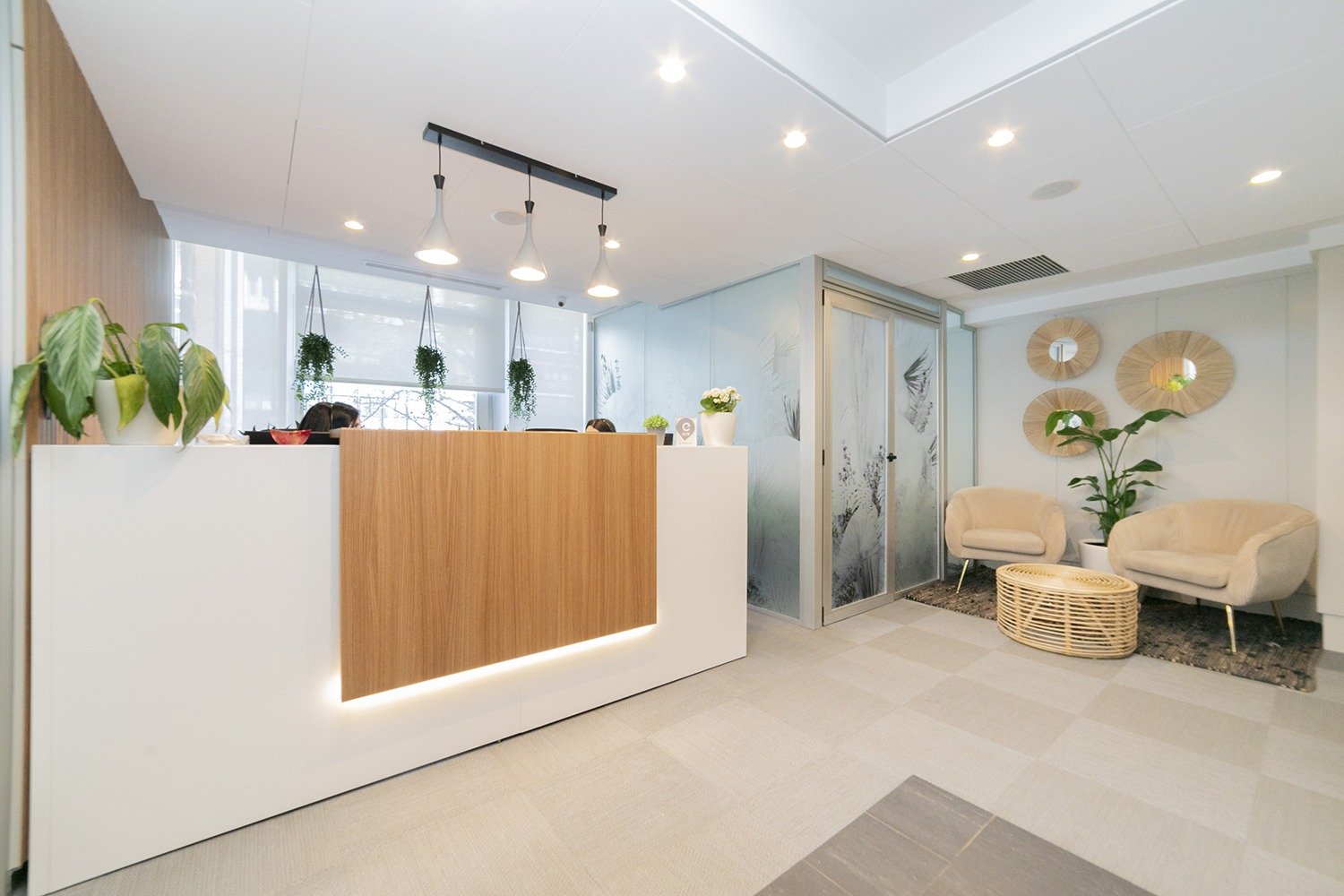
If your company needs a professional, flexible and well-connected environment in Madrid, Coworking Inspira can help you find the right formatWorkstations, meeting rooms, private offices, or more flexible solutions depending on your team's current needs. You can contact Inspira and assess which option best suits your requirements before making a larger decision.