The place, the space in which we dedicate our time and effort every day in the performance of our jobs, is a factor that indirectly determines our mood, our performance and our consequent productivity.
The place, the space in which we dedicate our time and effort every day in the performance of our jobs, is a factor that indirectly determines our mood, our performance and our consequent productivity.
However, in that space we are not the only ones who work, but we also live with more employees who They will not always have the same tastes nor will they feel the same way as we do when faced with a specific type of space. There are many interior designers who are committed to creating work spaces based on neutrality and always taking into account the character of each business. For companies that perform creative work, the largest and brightest spaces are the most suitable, since they promote these aspects. However, if it is a question of tasks more operational What will help us the most will be the lack of distractions, good ventilation, optimal temperature... More tasks Agreements will require environments where we can quickly get what we need. Professions Optimization They will appreciate being able to have privacy and versatile spaces to meet with our team. In short, There is a space for every need, and we could even say that there is a space for each person. This article Posted by interior design company Dika StudiesThey tell us what type of office is most recommended depending on the tasks we need to perform in our workplace.
In this post, we will talk about the concept Open Space, which have been making a strong impact since the beginning of the new millennium. The objective will be to analyze their and advantages, but also their disadvantages, since in some cases they can lead to achieving exactly the opposite of what was initially intended.
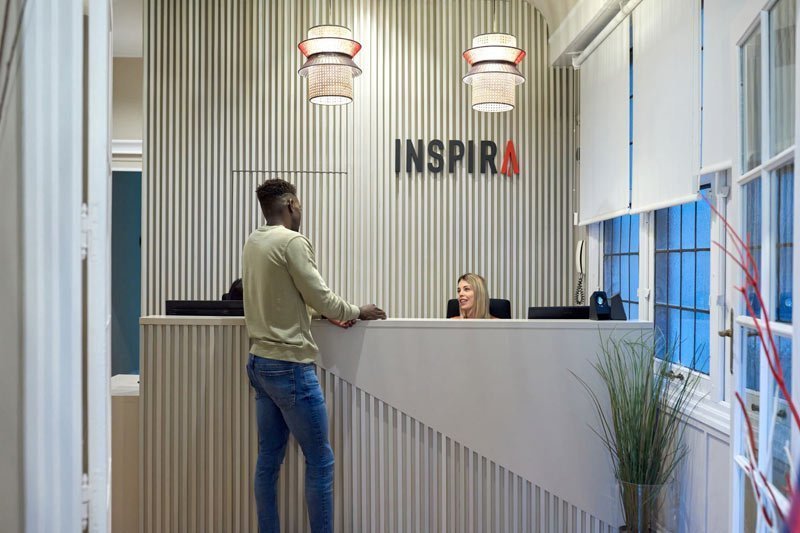
En Inspira Workspaces we carry 10 years in the Making We are analyzing the two sides of the same coin, in order to offer our clients spaces adapted to their needs, improving the user experience. Over time and with experience we have realized that mixed spaces are the best alternative. Ideally, the user can have different environments for different needs. The same user may need a space to be able to work concentrated, a different one to be able to meet with colleagues, another to talk on the phone, another to think and get inspired…The old days when a worker had to do the same mechanical task are gone, now we are all expected to be able to change register, to be creative, to be commercial, or analytical, and space has to accompany this need. Of course, we each have our own needs. strengths and weaknesses, so within the same work team we will have different profiles, obviously the space also has to respond to this diversity, offering different solutions to different people. Sometimes details as insignificant as the placement of the chest of drawers depending on whether the user is right- or left-handed, orientation with respect to sunlight, height of the chair, location with respect to the entrance door, distance from the radiator... can improve our daily life. Inspira Workspaces We pay close attention to these types of details to create a unique space for each user.
What benefits do Open Spaces bring us?
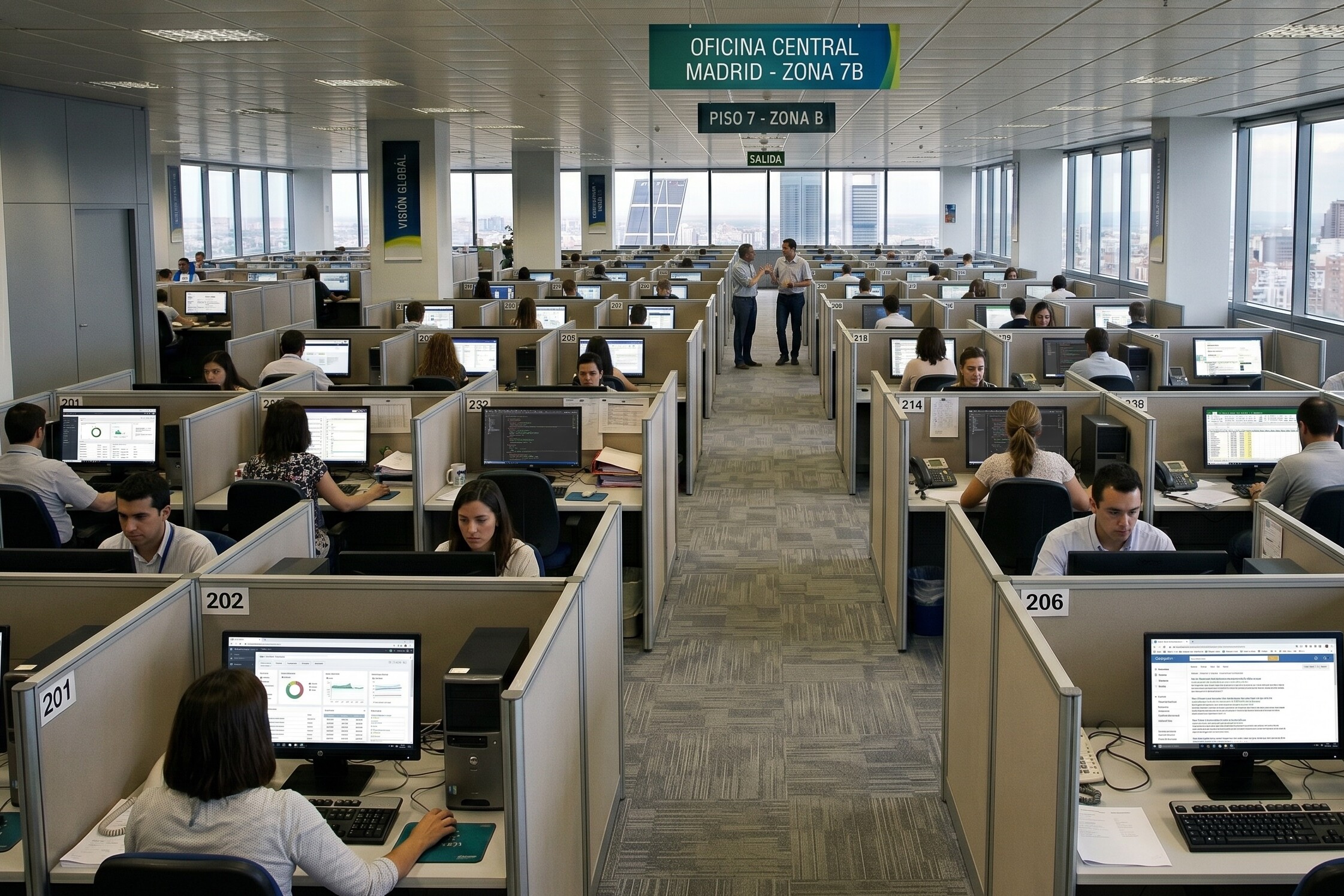
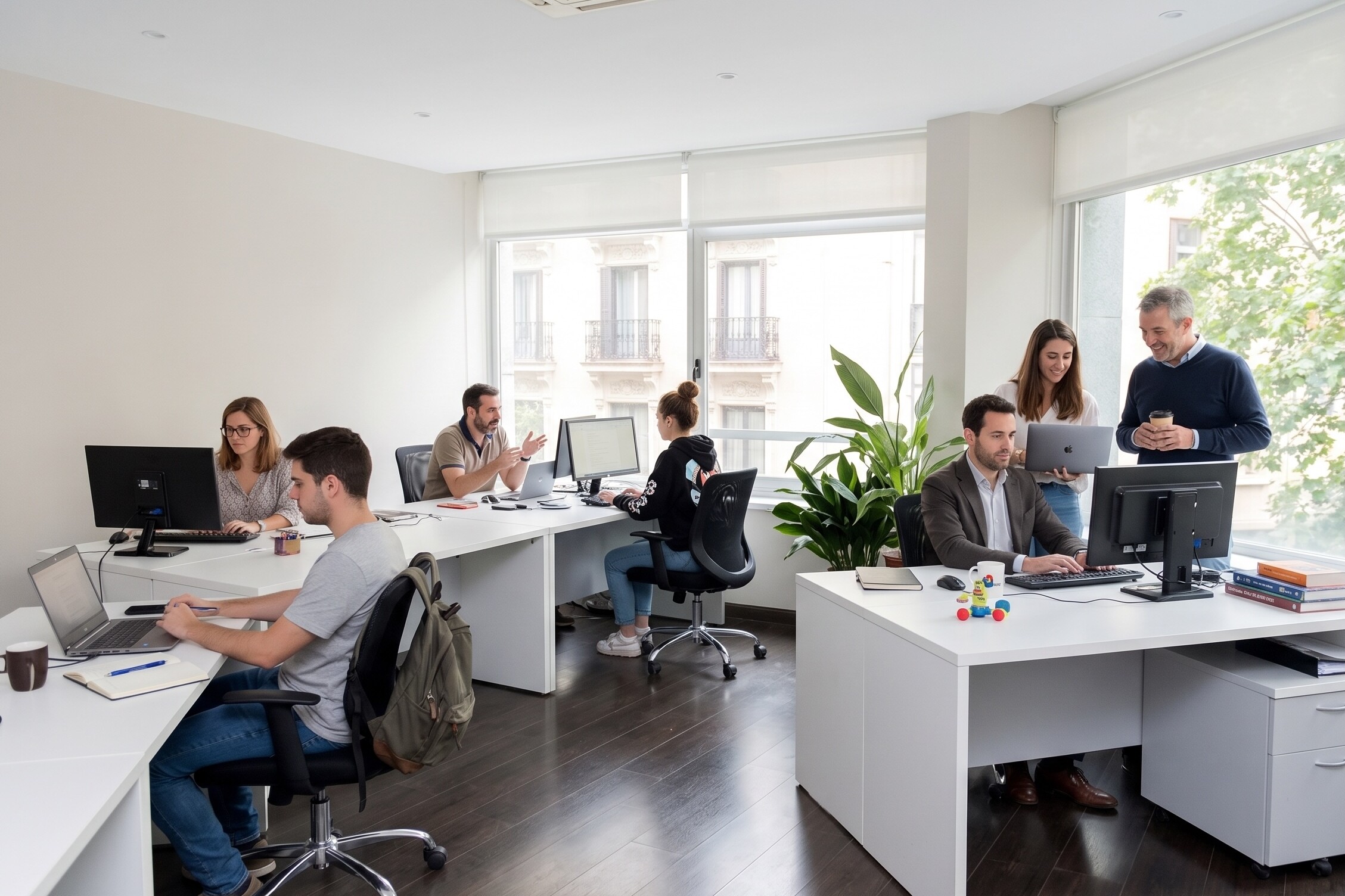
As I mentioned at the beginning of this post, open spaces or open space, foster creativity in people. This is because, by eliminating walls, we are promoting and encouraging communication between our employees, encouraging collaborative and teamwork. This, of course, leads to an increase in the company's productivity in all its processes. Another advantage of eliminating walls and physical barriers is that we also contribute to eliminating organizational hierarchies, which conveys a feeling of unity among the entire staff and an increase in the sense of belonging to the entity, fostering a much more intense and faithful internal connection. Finally, we must not forget the loneliness factor, an aspect that has highlighted the nature of many jobs that were carried out day after day within tiny cubicles and in the mere company of the cold screen of a computer.
The B-side of Open Spaces
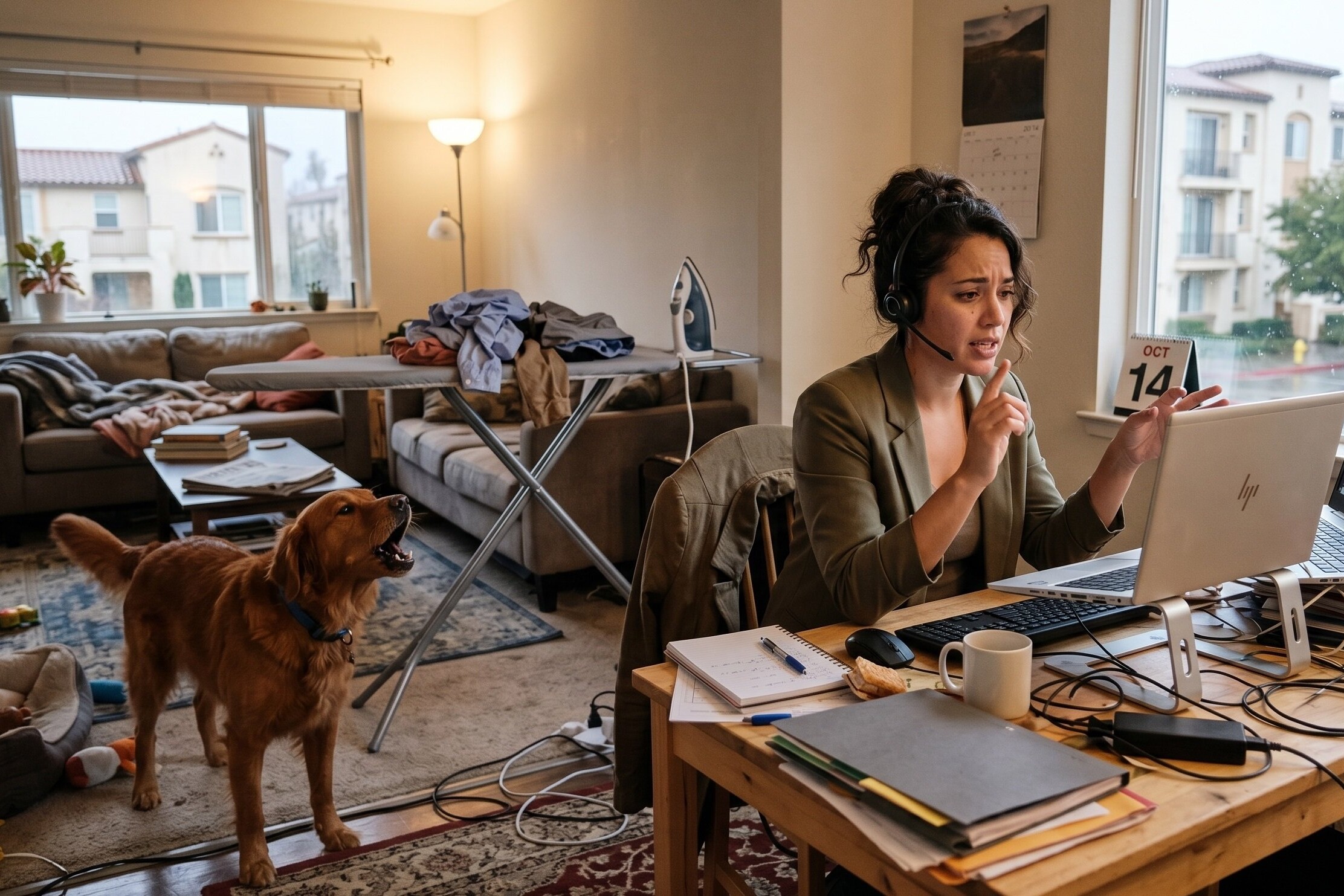
But not all that glitters is gold. Open Spaces have a B-side which is increasingly overwhelming the reality of millions of workers who carry out their duties in this type of spaces that they already consider as "too open”. What is the main factor that drives these users to despair? That we have set all our sights on improving communication within the business and we have forgotten how to improve something as basic and essential as communication. concentration. Open Spaces are becoming systems that cause a high level of distraction in people As it explains World Office Forum. They all say they feel uncomfortable when they are working on their project and have to listen to their colleagues next to them immersed in a very interesting conversation about how much fun they had at dinner last weekend. Or they lose track of their work because their colleagues from the marketing sector are just a chair away discussing how to implement the brilliant sales idea that the Marketing Project has come up with.
Constant interruptions, the feeling (and sometimes the reality) of a lack of privacy and difficulty concentrating mean that workers' productivity is severely reduced.
Do they enhance communication or deteriorate it to the point of making it almost uncomfortable?
I'll tell you about my personal experience at an events company where I worked during a period of my life. Yes, it was an Open Space and, I admit, I loved it at first. Also, almost all my colleagues were young and you could smell the good vibes in the air. I was assigned to my seat in the middle of the right side of a huge table. Next to me was a colleague who was in charge of booking management and on my other side were the members of the operations and customer service department. In front of me was a guy with whom I was already friends, as we had worked together before. So imagine my happiness.
The first few days were great. I felt motivated, I was making friends with the rest of my colleagues, since the fact that the whole team was gathered around the table gave us lots of opportunities to talk. However, as the days and months went by, I started to feel extremely irritable about everything. I thought it was just me, that I was stressed or in a bad mood. But no, I was just tired of not being able to hear my own thoughts, because there were other people's conversations all the time, hindering my attempts to concentrate.
Another thing that clashed with my belief that Open Spaces foster communication between workers is that people did not discuss issues face to face as expected. No, everything is communicated by email. I have had entire conversations with a colleague who sat two chairs away from me. And why is this inconsistency? Because everything has to be written down, since words are carried away by the wind. Many things must be recorded for future review or to avoid possible disagreements or differences of opinion on what was established.
All of this breaks with the essence of what is sought through the creation of an Open Space, based on transparency, pure communication and internal collaboration. On the contrary, we can obtain as a result irritated workers, a decrease in the relationships between colleagues and teams that leads to a lower predisposition for collaborative work, and can even encourage the isolation of some of our employees.
But like everything in life, there is always a solution: unite and you will win.
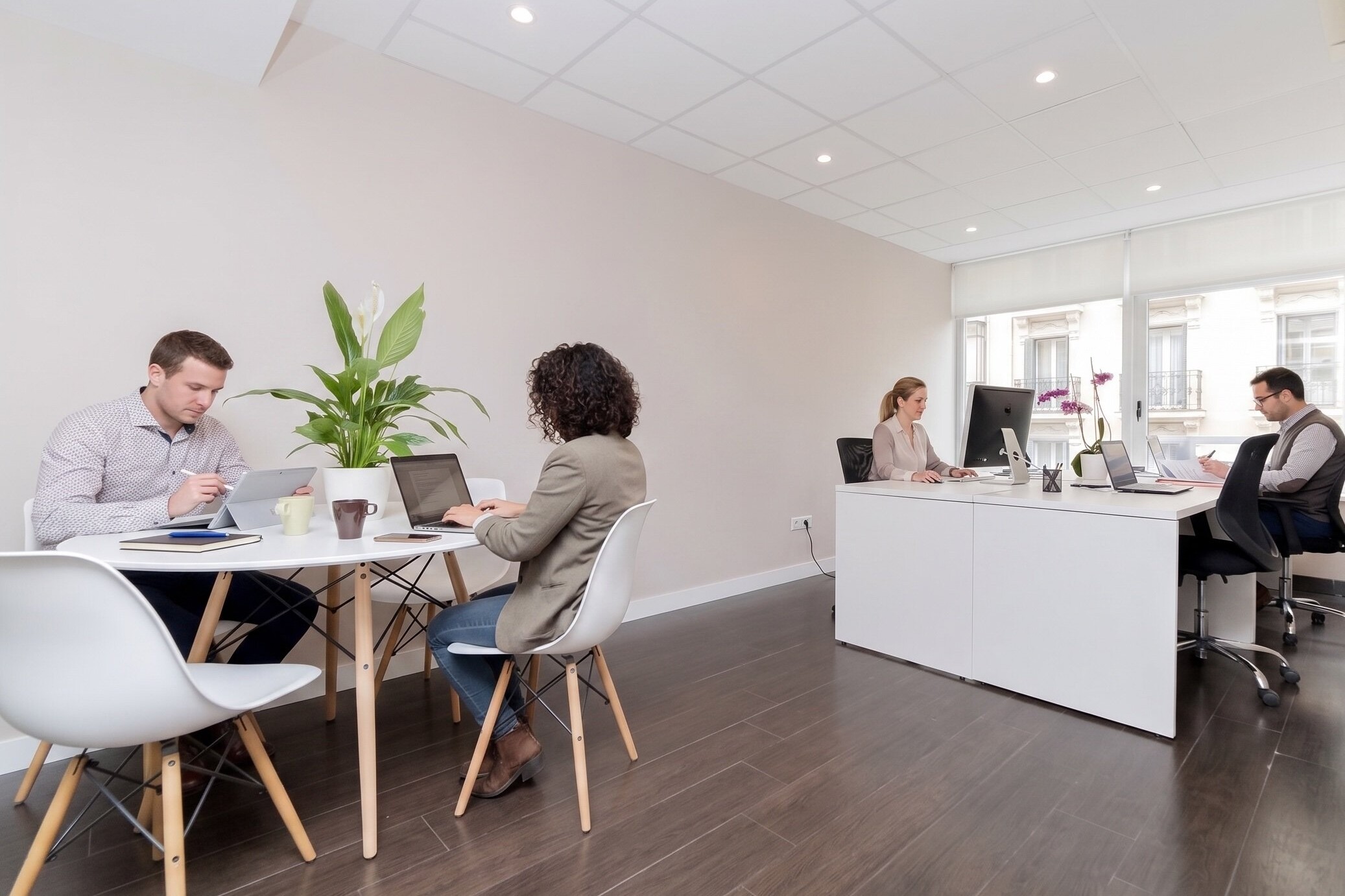
An ideal solution would be to create a new concept based on combining, under one roof, an open space with different closed spaces. Logically, this trend is born from the current importance that workers give to the possibility of being able to stay focused on the realization of their projects, so that they can become more productive, but without giving up the advantages that open work spaces provide, such as sociability and collaborative work, workshop hybrid.
Within this conception we have 2 currents:
- Let the space where the workstations are located be an open space, enabling small closed and isolated spaces intended for the use of employees who need to carry out work that requires their concentration. Let's call them "distraction-free sanctuaries." Of course, there must also be meeting rooms somewhat larger, but equally closed, intended for team meetings, or with suppliers or clients, thus avoiding distracting the rest of the colleagues by not holding the meeting close to their workstations.
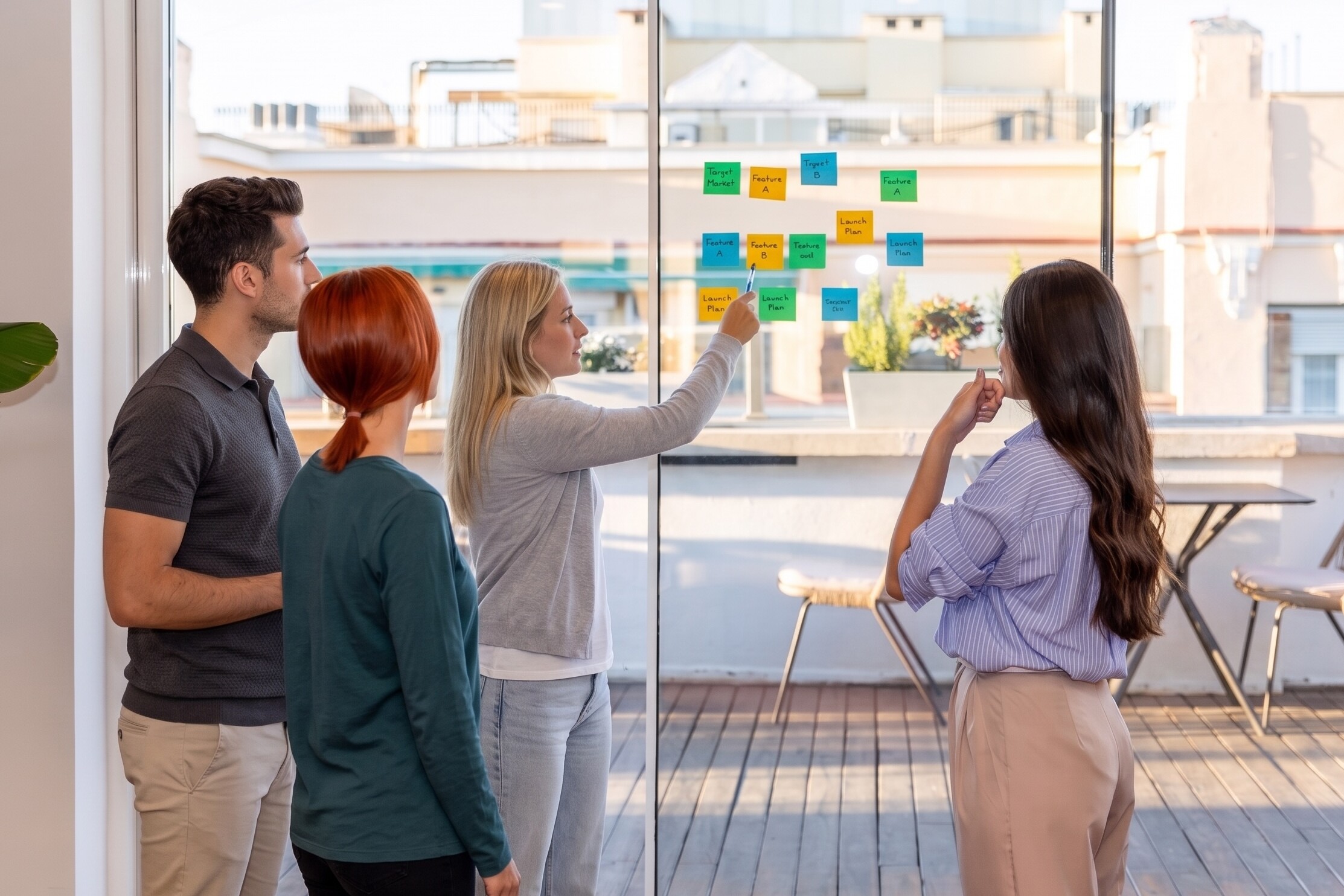
- Some of the workstations should be located in open spaces, for those profiles that do not come to the office every day, or rather rarely. The workstations that come to the office more frequently, or are profiles that require more concentration, or that talk a lot on the phone, should have more private spaces, either completely or partially closed. In the open spaces themselves there should be areas where users who wish to meet can meet, and we will try to ensure that these spaces are not next to the fixed workstations. We will also try to distribute the users according to their tasks, not forgetting to create interrelation zones between different types of users.
En Inspira WorkspacesIn our experience, we are more inclined to the second option, as it highlights the best of both systems, and also offers us great possibilities to adapt to any change. It is very important to have spaces for meetings, both more formal and private, as well as more informal and in more open spaces.

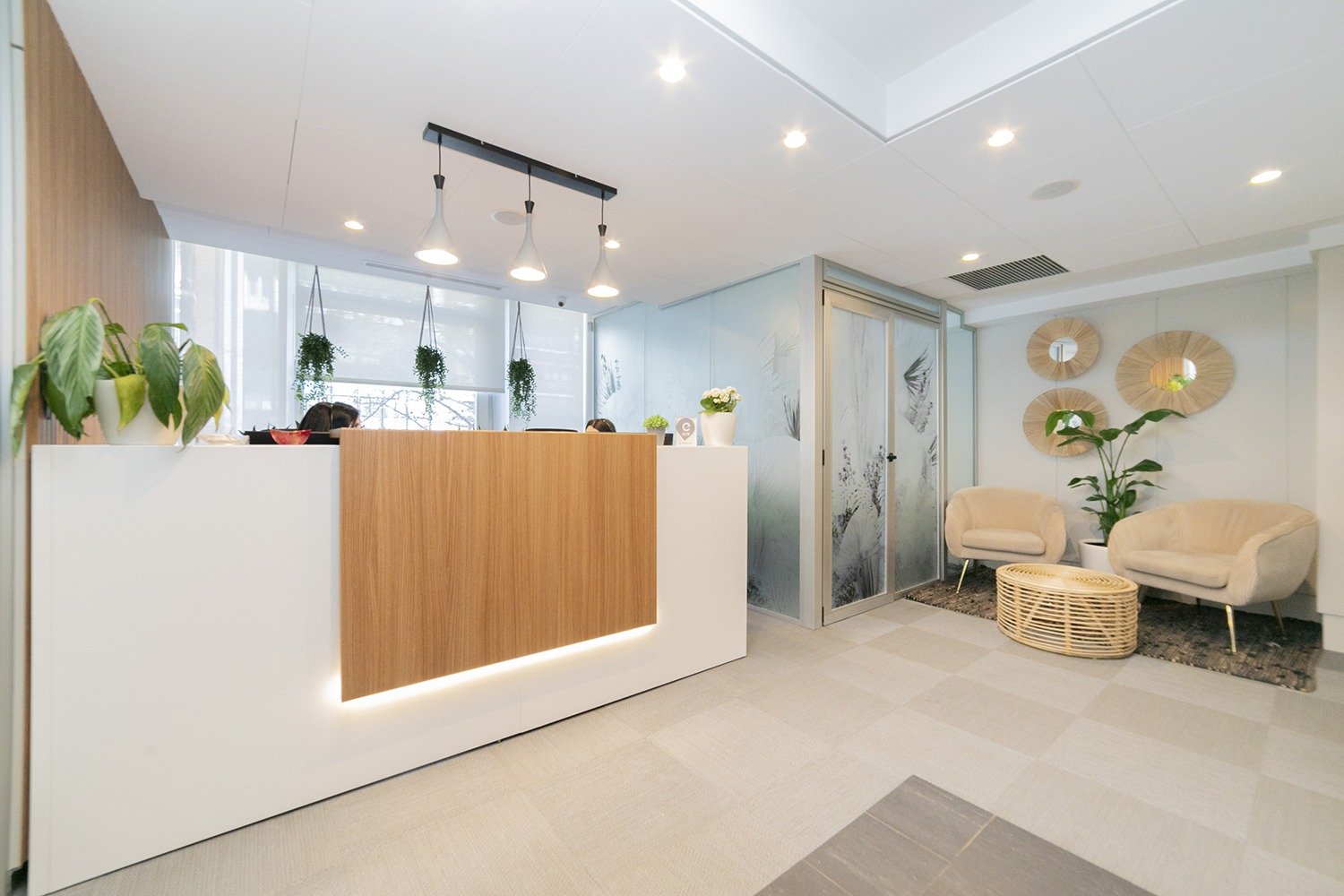
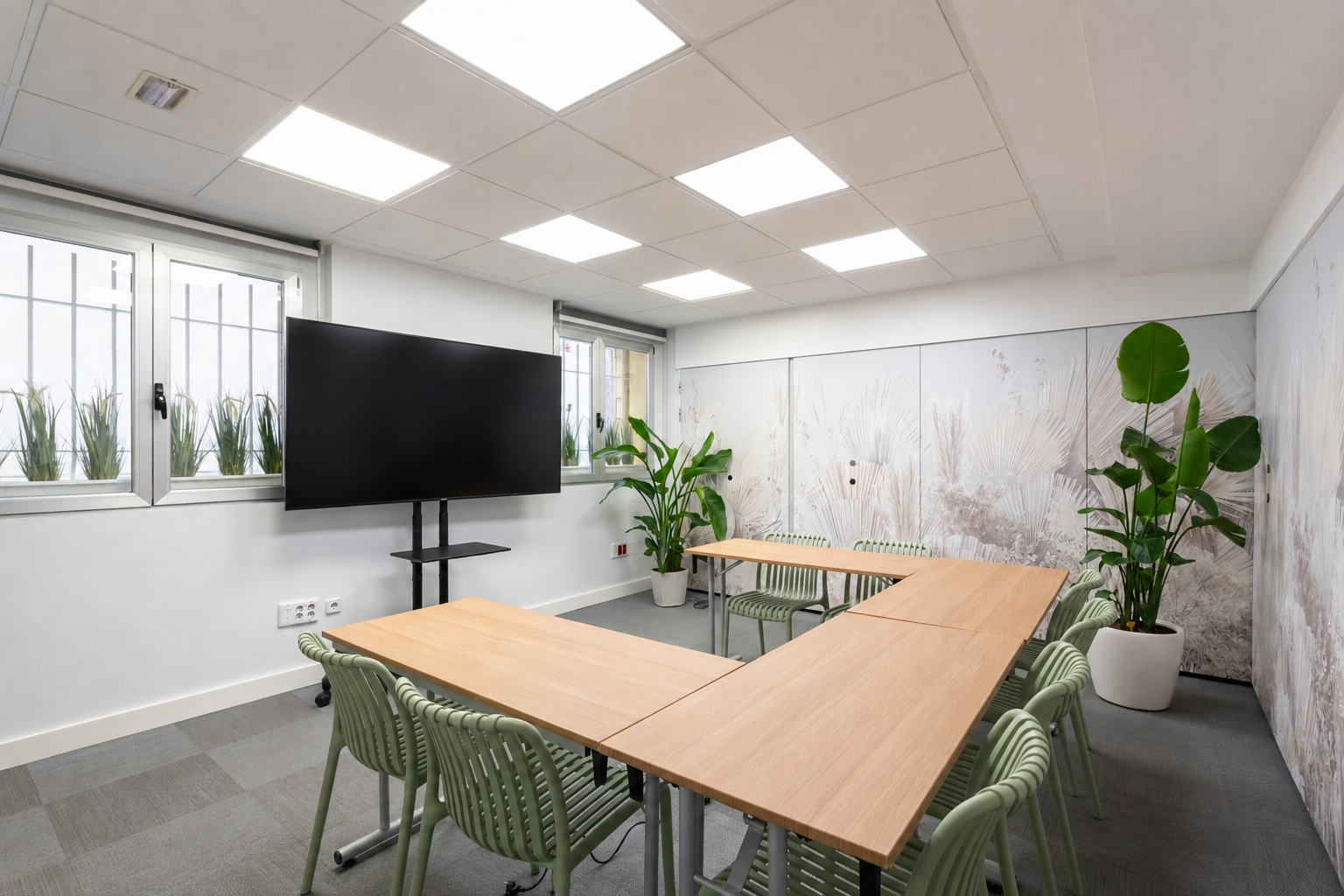
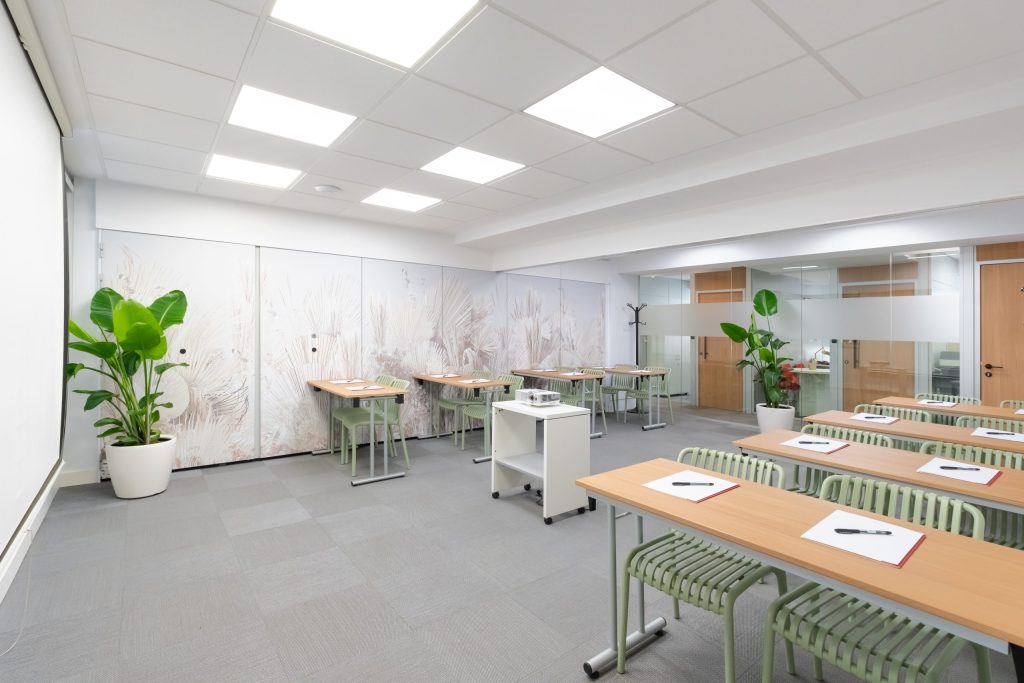
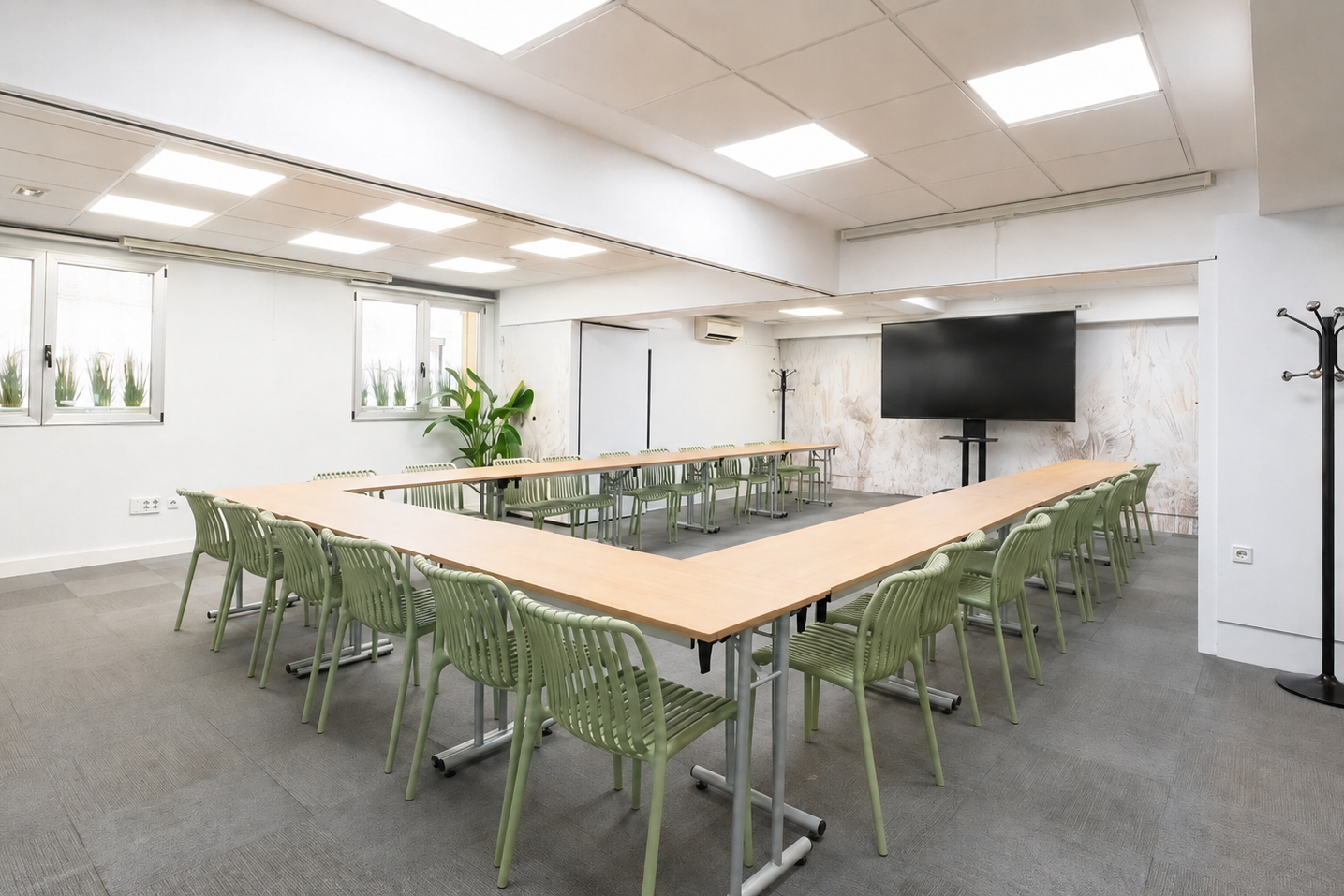
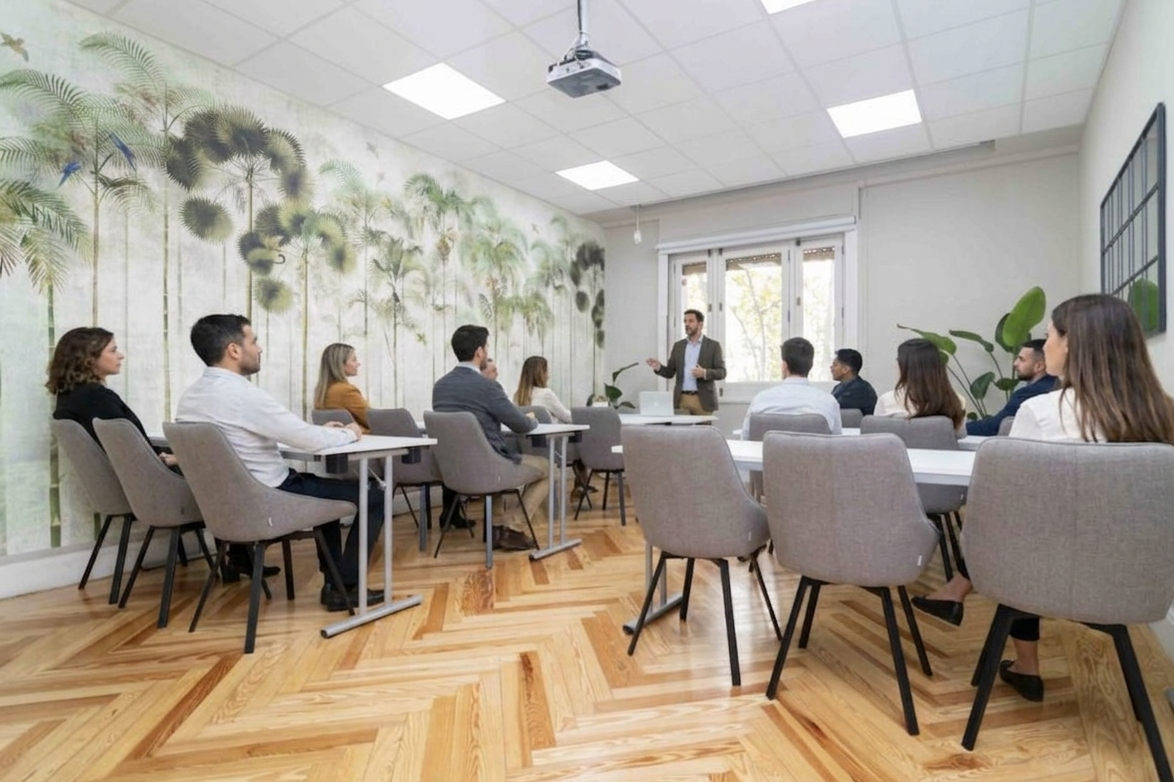
Some years ago our centers They were adapted with this philosophy in mind, creating a multitude of meeting spaces, as well as a varied offer of meeting rooms with the latest technology in video conferencing systems, projection, network functionalities... In addition, we began to expand our offer of service of restauration, with the idea that our users do not have to worry about anything other than their work, taking care of providing their breakfasts and meals for long meetings. Our service offering was consolidated by offering mixed proposals through the so-called Virtual Offices, in this way the user can have a physical address for their clients or meetings, someone who manages all their correspondence or telephone calls, accounting, storage space... at a very competitive price. The idea is to pay per use, making the proposal a strong commitment to flexibility. Our rooms are designed for very varied types of meetings; from large, bright spaces in which to hold talks, presentations and even training sessions, to intimate offices that ensure privacy for working or meeting with a colleague.
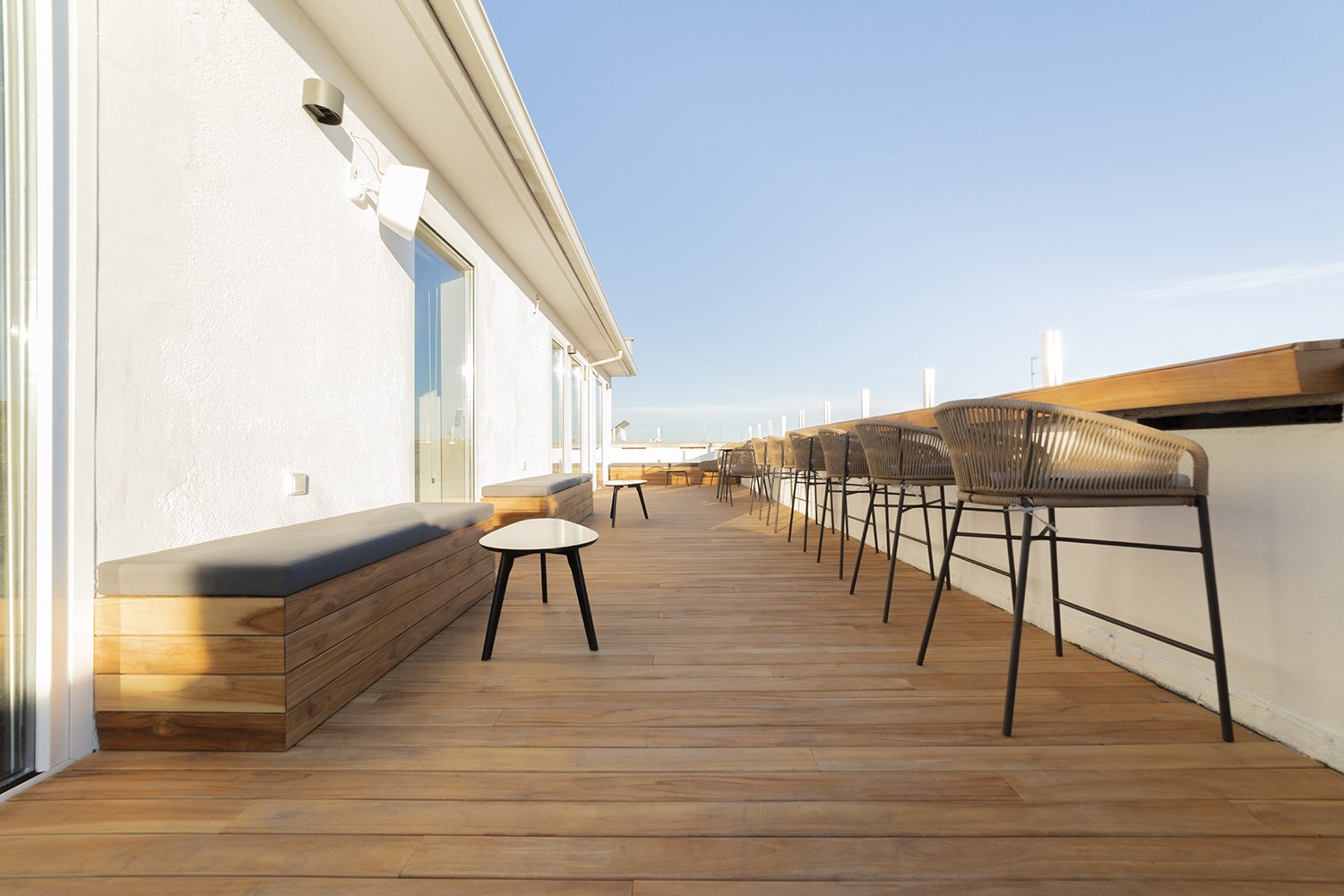
As we said, we believe that it is very beneficial, even essential, to have other open spaces for leisure and rest. For this reason, we have several areas for all users where you can relax by having a coffee looking at the sky, or read the newspaper with bossa nova background.
If you are thinking of choosing one of these options, I recommend that you seek professional advice on how to do so. You should take into account both the nature of your business and the number of work stations you need, the acoustics or the lighting of the space. Do not hesitate to count on us for any advice you may need. We will be happy to advise you and show you the best options that perfectly match what you are looking for: a union between communication, privacy and comfort.
Boost your company's productivity with us!